
The fastest way to cold drinks in the garden is a bucket of ice, water and a good handful of salt: in a test by Swiss radio SRF, a can in it dropped from 23.8 to 13.5 degrees within five minutes, a fall of just over 10 degrees. For comparison: according to the German newspaper Stuttgarter Zeitung, beer takes 20 to 30 minutes in the freezer to reach a drinking temperature of 5 to 8 degrees, and around 9 hours in the fridge. So salt is the trick.
If you want cold drinks all evening, and within arm's reach, a built-in outdoor fridge is the convenient solution. Here you'll find all the options, with figures, costs and the typical mistakes.
The fastest method: ice, water and salt
The quickest way to chill drinks is in a mixture of ice, water and salt. The salt lowers the freezing point of the water, so the ice starts to melt even below 0 degrees. That melting takes heat, and the iced water draws it from your cans and bottles. In the SRF test, a can was 10.3 degrees colder after five minutes in salted iced water, considerably faster than in a bucket with ice alone.
The ratio matters little: fill a bucket with cold water and a large bag of ice cubes, add a few heaped tablespoons of salt, stir once and put the drinks in. If you like precision: the Swiss salt producer Schweizer Salinen gives 23 g of salt per 100 g of ice as the most effective ratio. One detail is often overlooked: you really do have to add water. Ice cubes alone only touch a can at a few points, whereas iced water surrounds it completely.
Cooling with what you have to hand
You can also keep drinks cool with what you have to hand: evaporation, shade and the ground. Wrap bottles in a wet tea towel and put them in the breeze; the evaporating water draws heat from the bottle. Put everything you don't need right now in the shade. In full sun, a chilled can is lukewarm again after a quarter of an hour, and according to the German Weather Service (DWD), summer 2026 brought around 22 hot days of at least 30 degrees on average across Germany.
If you have a sink in your outdoor kitchen, fill it with iced water as a temporary cooling tub. With the plug in, that works surprisingly well. And a bucket with a lid, half buried in a shady patch of garden, stays noticeably cooler than the outside air. These tricks bring drinks down noticeably, but they only get properly fridge-cold with permanent cooling. They're fine for a birthday afternoon, but as soon as the sun is full on the patio, it becomes hard work.
Permanent cooling in your outdoor kitchen
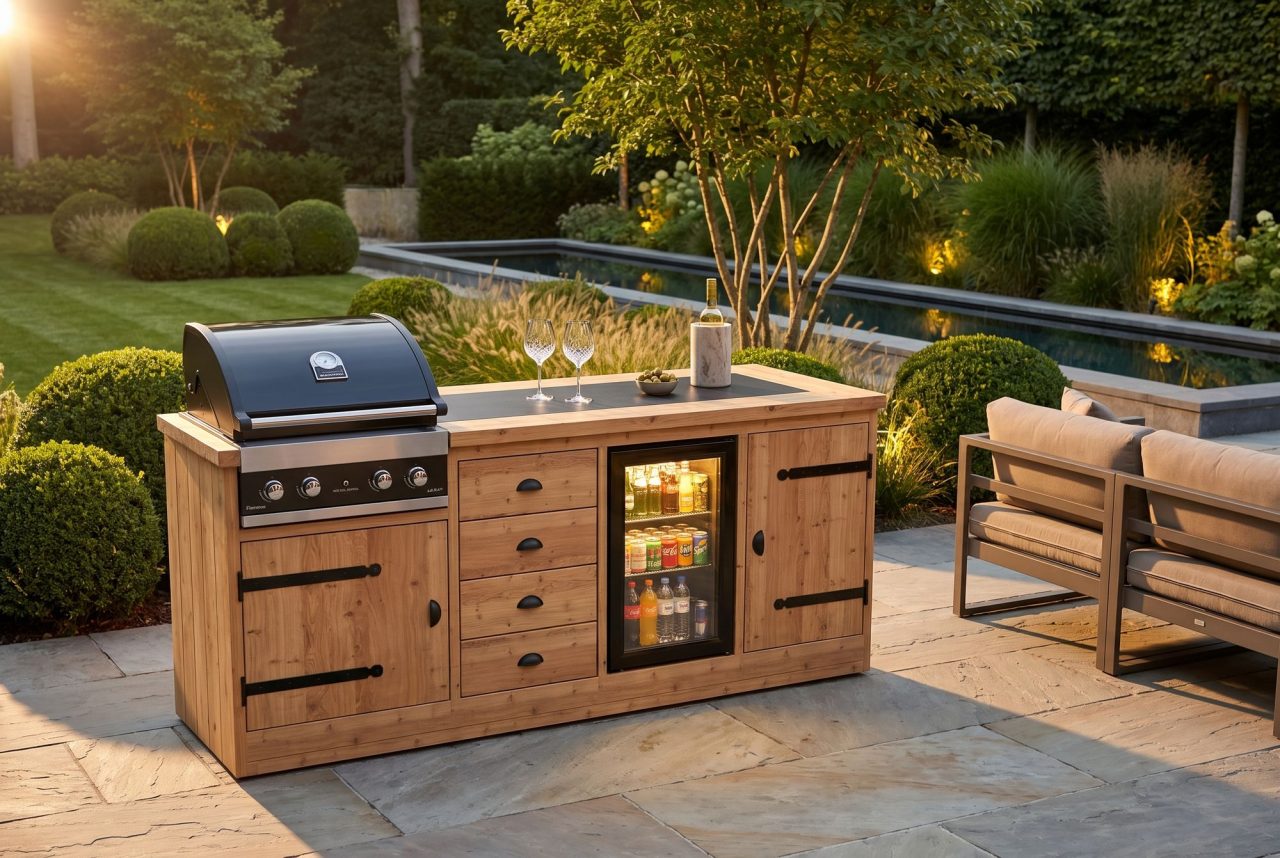
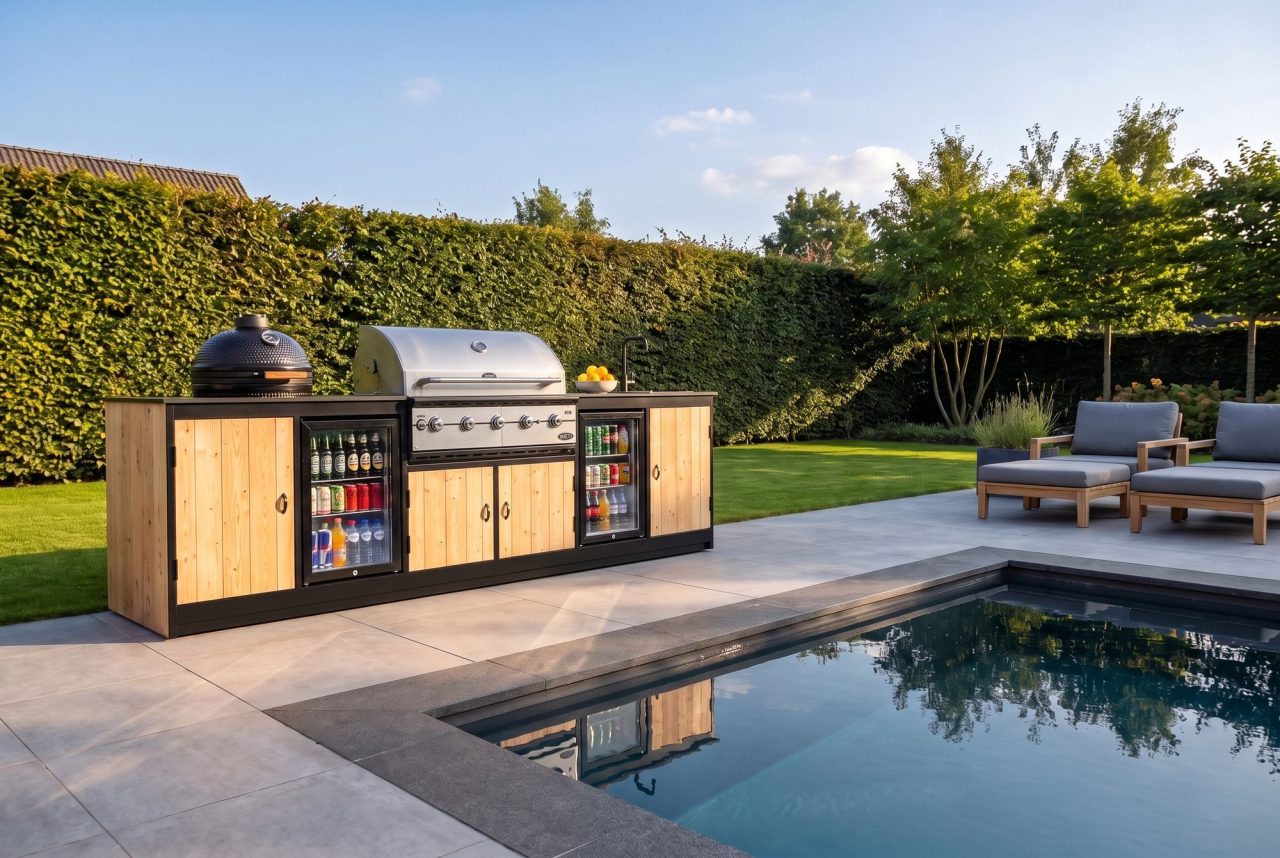
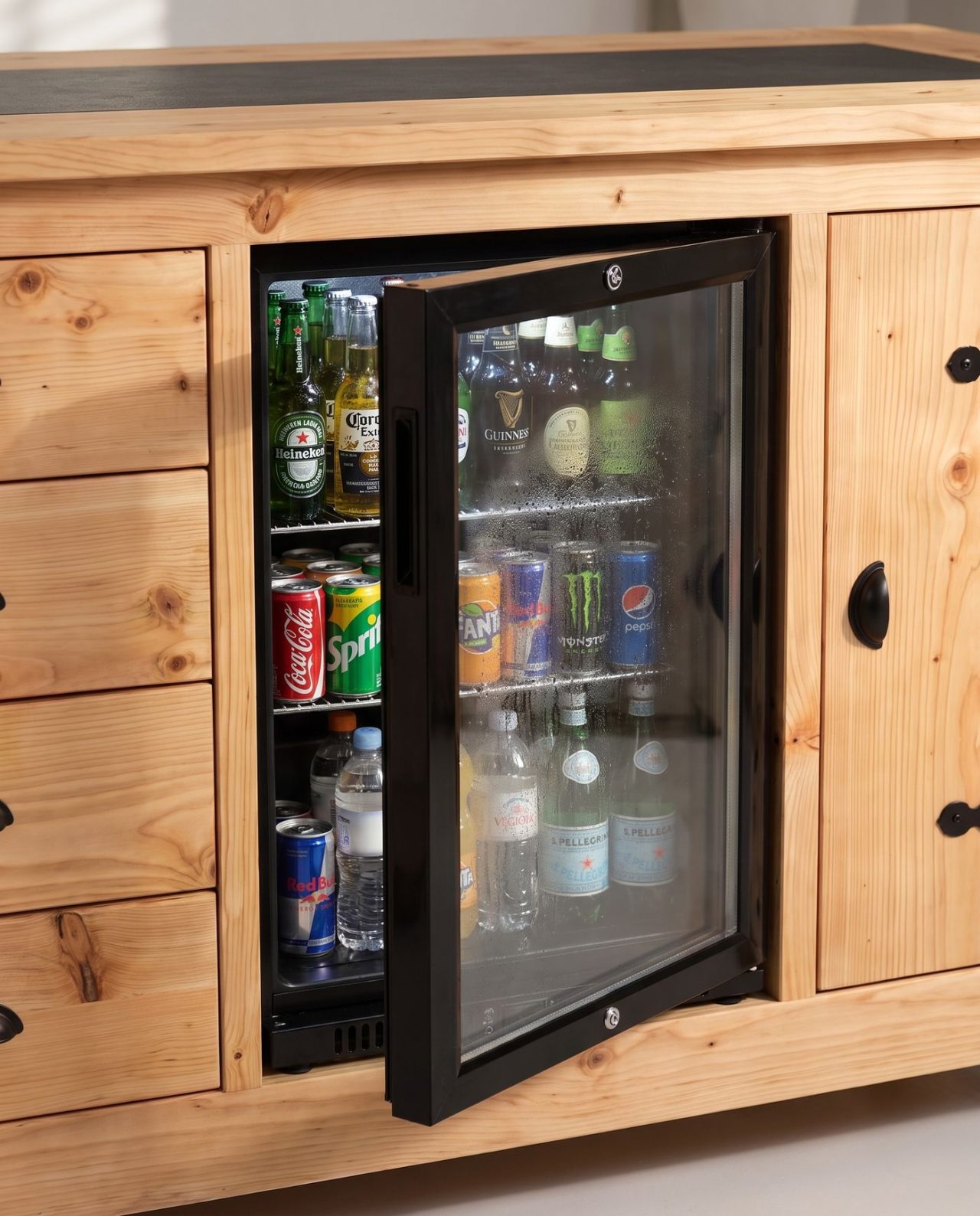
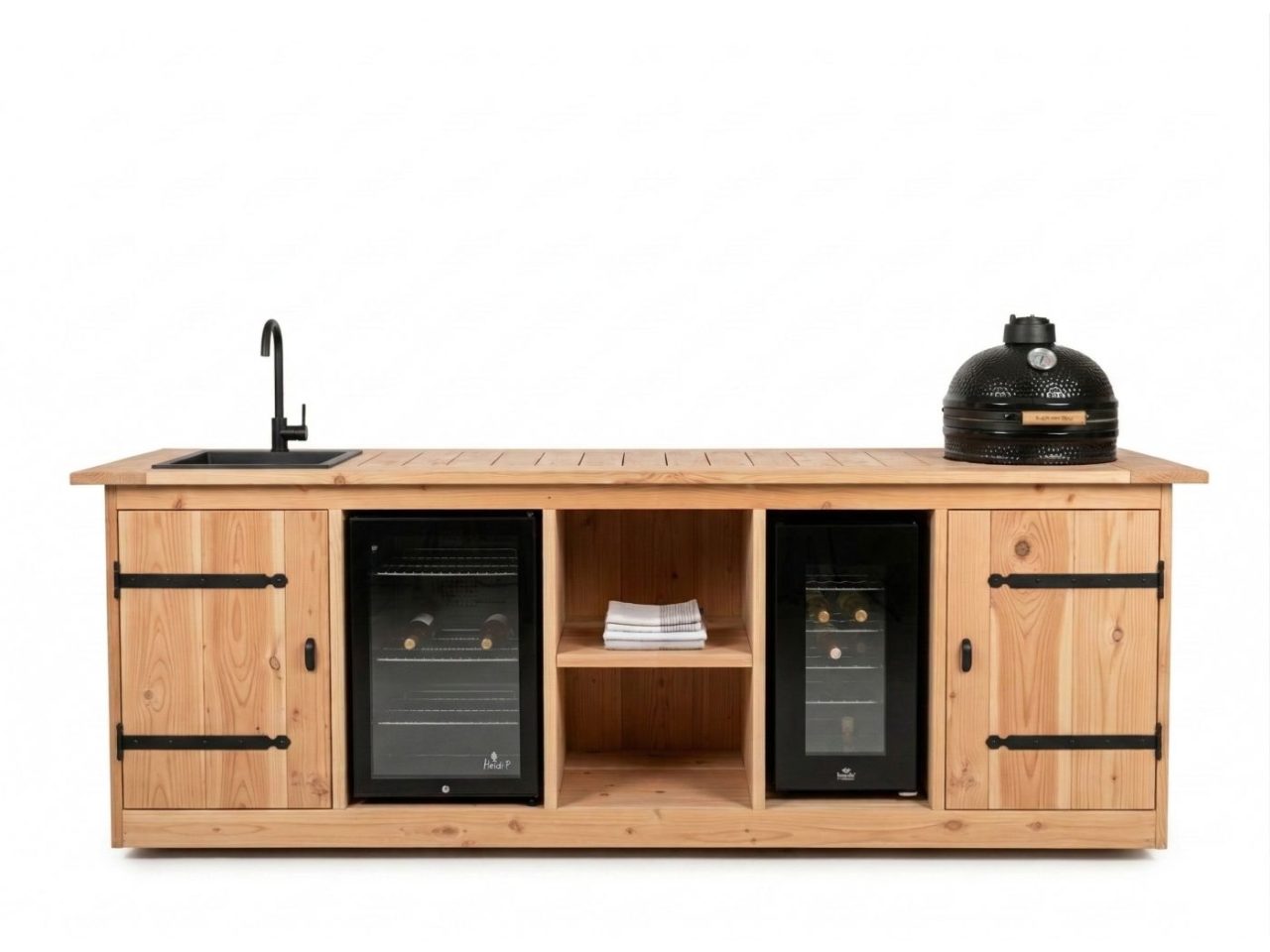
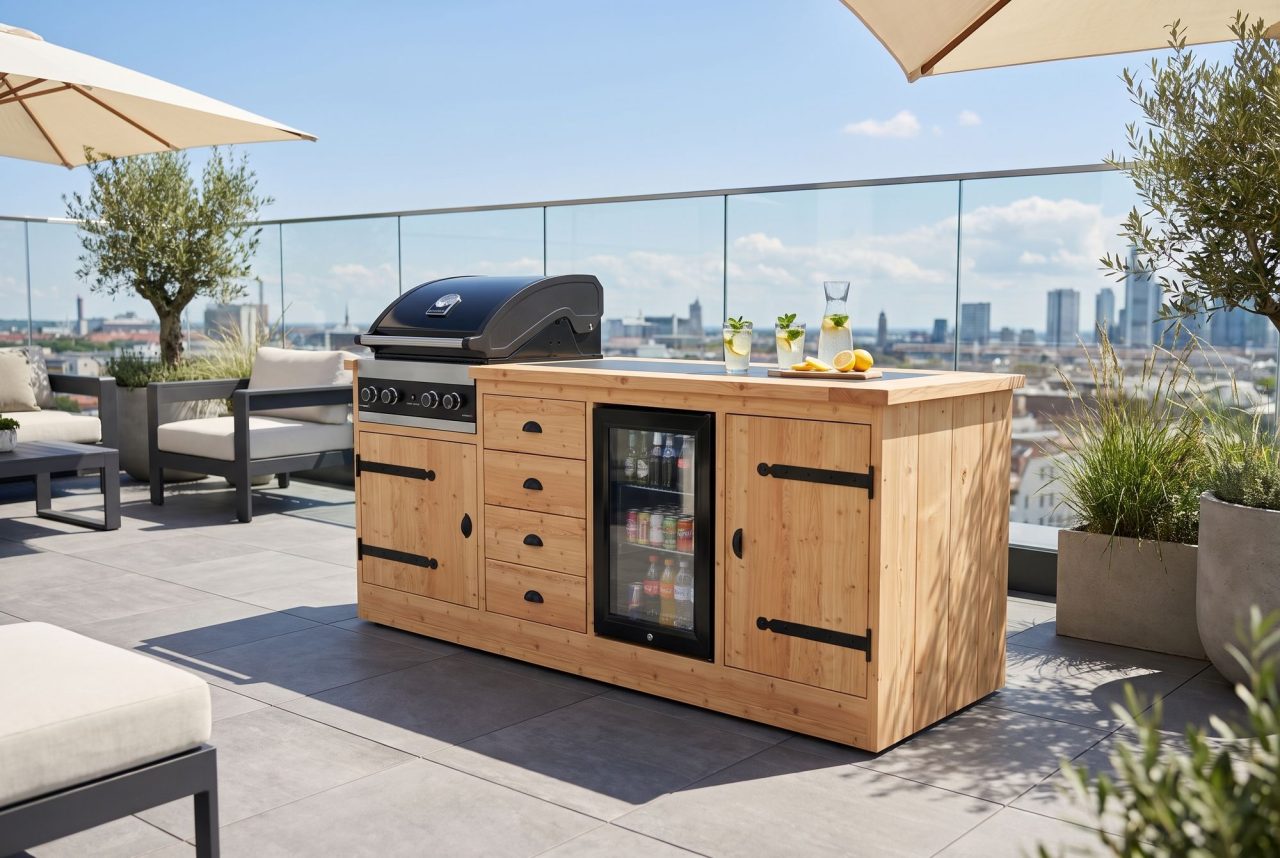
If you cook outdoors often, you can solve the cooling problem for good with cooling in the outdoor kitchen itself. In an outdoor kitchen with a fridge and sink we fit a 70-litre fridge which, at 0 to 10 degrees, keeps a crate of drinks plus the meat for eight people cold. For wine lovers there's a wine cooler with room for 18 bottles, so white wine and rosé have their own place and the beer bottles share the fridge. You'll notice the difference from a cool box above all in the second half of the evening: the drinks stay cold by themselves, there's no trip to the kitchen, and the cold bottle is within arm's reach.
Good to know: it is an investment, and for a single afternoon a simple cool box chills just as well. An outdoor fridge also needs a socket in the right place, so plan that in from the start.
The nice part: melted ice all over the garden is a thing of the past.
How much electricity does an outdoor fridge cost?
Outdoor cooling costs around 120 to 165 euros a year in electricity, depending on the model. Of our fridges for the outdoor kitchen, the compact 35-litre model uses 445 kWh a year, the larger 52-litre model 321 kWh. At the average German household electricity price of 37.0 cents per kWh (BDEW electricity price analysis, as of August 2026), that's about 165 euros versus 119 euros a year.
Notably, the smaller model is the more expensive one to run, because insulation and compressor matter more than size. If you care about consumption, look at the annual kWh figure first and only then at the number of litres. Unplugging it out of season saves a good deal more, because an empty fridge in November is mainly chilling for the birds.
How much ice do you need for a party?
If you're planning a barbecue evening with friends and family for ten people, 5 to 7 kg of ice is usually enough. For twenty guests, allow 10 to 15 kg; from thirty upwards, 20 kg is well spent. That sounds like a lot. Yet ice disappears faster than you think: it chills the drinks, ends up in glasses and simply melts away in the sun. Keep your supply in the freezer or in a separate cool box just for ice, and use large blocks for the cooling bucket: they melt more slowly than small cubes. If necessary, ask the neighbours to freeze a few trays in advance.
Don't forget the charcuterie board
Outdoors, food is subject to a stricter limit than drinks: the German Federal Institute for Risk Assessment (BfR) points out that salmonella multiply in food at temperatures above 7 degrees, and the Federal Centre for Nutrition (BZfE) advises using up food you can't keep chilled on the same day.
So on a summer evening, a board of cheese, cold meats and dips is best left on the table only briefly. Set small bowls on a bed of ice or serve small portions and top up from the fridge. Drinks spoil more slowly. But the milk for the coffee and the opened bottle of rosé are no different from the Brie: after a few hours in the warmth, they belong back in the fridge.
Frequently asked questions
How do I chill drinks for a garden party?
You chill drinks for a garden party with a combination of permanent cooling and a cooling bucket. Feel free to add this to your garden party checklist. Put your supply in the fridge or outdoor fridge a day ahead (70 litres chills a crate plus food) and at the party itself use a bucket of ice, water and salt to re-chill warm bottles in a few minutes. Allow 5 to 7 kg of ice per ten guests.
How do I keep cans cold with simple means?
You can keep cans cold with simple means: with iced water in a bucket or the sink, a wet tea towel in the breeze, or a spot in the shade. Iced water works best because it surrounds a can completely. Add salt and the temperature drops by around 10 degrees in five minutes. The wet tea towel cools by evaporation and works best when there's a breeze.
How many minutes does it take to chill a can in salted iced water?
A can is a good 10 degrees colder after five minutes in salted iced water, as measured by Swiss radio SRF: from 23.8 to 13.5 degrees. That's considerably faster than the freezer (20 to 30 minutes) and the fridge (several hours). The salt lowers the freezing point, so the melting ice draws extra heat from the drink.
Which fridge is suitable for an outdoor kitchen?
A suitable fridge for an outdoor kitchen is a 70-litre built-in fridge that cools to 0 to 10 degrees and is made for outdoor use. When choosing, look first at the annual consumption in kWh and only then at the size: a 35-litre model at 445 kWh a year can use more than a 52-litre model at 321 kWh. For wine, a separate 18-bottle wine cooler is an option.
How long can a charcuterie board stay outside?
A charcuterie board should only stay outside briefly: according to the BfR, salmonella multiply in food above 7 degrees, and the BZfE advises using up unchilled food on the same day. Cheese, cold meats and dips spoil faster in the summer sun than you can see or smell. So serve small portions, set bowls on ice and top up from the fridge.