Looking for kamado recipes that simply work? Here you will find 12 dishes grouped by technique: grilling, low and slow, smoking and baking. Each recipe gives the three numbers you actually need: the temperature in the kamado, the core temperature at which the meat is done, and a guide time. That way you know in advance whether a dish fits into a weekday evening or becomes a Sunday project.
Whether you use charcoal or briquettes, allow some lead time before you can get started: lump charcoal takes about 20 to 30 minutes to get glowing, briquettes a little longer, and in a kamado the ceramic has to heat up as well.
Only put the food on once the heavy initial smoke has passed. That is the advice of Germany's Federal Institute for Risk Assessment (BfR): once this first smoke has cleared, noticeably fewer PAHs settle on the food. Plan all of this in, especially when guests are coming. A circle of hungry people around a cold kamado is the least cosy start to an evening.
All kamado recipes in one table
Here you can see at a glance, for each dish, the dome temperature (what the thermometer in the lid shows), the core temperature and the guide time for all 12 kamado recipes on this page.
| Dish | Technique | Kamado | Core | Time |
|---|---|---|---|---|
| Picanha (rump cap) | Grilling + indirect | 250, then 180 degrees | 52 to 55 degrees | 60 to 75 min. |
| Bavette | Direct grilling | 250 to 300 degrees | 52 to 54 degrees | 6 to 8 min. |
| Chicken thighs | Indirect grilling | 180 to 200 degrees | at least 75 degrees | 40 to 50 min. |
| Grilled vegetables | Direct grilling | 200 to 230 degrees | n/a | 4 to 6 min. |
| Whole chicken | Indirect | 160 to 180 degrees | 75 degrees | 75 to 90 min. |
| Pulled pork | Low and slow | 107 to 110 degrees | 90 to 96 degrees | 8 to 12 hrs |
| Spare ribs (3-2-1) | Low and slow | 110 to 120 degrees | meat pulls away from the bone | 6 hrs |
| Brisket | Low and slow | 107 to 110 degrees | 90 to 96 degrees | 10 to 14 hrs |
| Hot-smoked salmon | Smoking | 90 to 110 degrees | 55 to 60 degrees | 45 to 75 min. |
| Smoked chicken breast | Smoking | 110 to 120 degrees | 75 degrees | 60 to 90 min. |
| Pizza | Baking on a stone | 300 to 350 degrees | n/a | 4 to 6 min. |
| Bread | Baking | 200 to 220 degrees | 92 to 96 degrees | 30 to 40 min. |
Save the table on your phone. The rest of the page goes through the techniques and explains, recipe by recipe, where things go wrong and how to avoid it.
Grilling on a kamado
Grilling means cooking directly over the embers at 200 to 300 degrees. It is quick and packs in plenty of flavour. These are the recipes for a weeknight, because you will be sitting down to eat within the hour.
Picanha. Pat the rump cap dry, score the fat cap in a diamond pattern, only a few millimetres deep so the fat stays on as a protective layer, and rub it with coarse sea salt and lemon juice. That is all it needs. Sear the meat at 250 degrees, fat side first, let the kamado drop back to 180 degrees and finish the picanha indirectly to a core temperature of 52 to 55 degrees. Wrap it, let it rest for a quarter of an hour and slice it against the grain. According to the BfR, it is best to put a layer of baking paper between salted meat and aluminium foil.
A true picanha weighs about 1 to 1.2 kilos. If it weighs much more, your butcher has cut it more generously towards the rump (picanha simply costs more per kilo, so this happens more often than you might think).
Bavette. It hardly gets quicker than this. Grill the bavette for 3 to 4 minutes per side at 250 to 300 degrees to a core temperature of 52 to 54 degrees, let it rest for 5 minutes and slice it thinly against the grain.
Sticky chicken thighs. Stir together honey, grated ginger (a piece of about 5 centimetres), 5 cloves of garlic and 2 tablespoons of ketchup to make a glaze. Cook the thighs indirectly at 180 to 200 degrees and brush them with more glaze every 5 minutes for the last 15 minutes. Poultry has to be cooked right through: insert the probe thermometer and wait until it reads at least 75 degrees.
Germany's Federal Centre for Nutrition (BZfE) gives 72 degrees for at least two minutes as the lower limit, and according to the BfR the meat should be white to grey even at the bone. Cut away any charred bits. The BfR recommends browning food to a golden colour and only heating it as hard and as long as necessary, because high heat produces polycyclic aromatic hydrocarbons (PAHs) and heterocyclic aromatic amines (HAAs).
Low and slow on a kamado
Low and slow means cooking at 107 to 120 degrees for hours with the lid closed. This is what a kamado is built for, because the ceramic keeps the temperature stable on a single load of charcoal. To be honest, it is also the category in which things most often go wrong, usually through impatience.
Pulled pork. Take a pork shoulder (neck end), rub it with a spice rub and put it on indirectly at 107 to 110 degrees. At around 65 degrees core, the temperature stalls for a few hours. This is the notorious plateau, the stall. Stay calm: leave the fire as it is and sit it out, or wrap the meat in butcher paper. At 90 to 96 degrees core, pull the meat apart with two forks. Allow 8 to 12 hours.
3-2-1 spare ribs. Three hours of smoking at 110 to 120 degrees, two hours wrapped in foil with a splash of apple juice, then one more hour unwrapped with a coat of barbecue sauce. After these six hours the meat visibly pulls back from the bone. If you like firmer ribs with more bite, shorten the foil stage to an hour and a half.
Brisket. The ultimate challenge: brisket demands more patience and feel than any other dish on this page, and a good beef brisket does not come cheap. The same temperature range as pulled pork, 107 to 110 degrees, but because of its thickness it takes 10 to 14 hours. Cook to 90 to 96 degrees core. If it is your first time, start with a smaller point.
Smoking on a kamado
Smoking works with a few chunks of smoking wood on the embers and a low temperature, between 90 and 120 degrees. Use a deflector stone (plate setter) so the heat flows around the food and cooks it indirectly.
Hot-smoked salmon. Rub a side of salmon with a rub of brown sugar and ancho chilli powder and leave it for 20 to 60 minutes. Smoke the salmon at 90 to 110 degrees to a core temperature of 55 to 60 degrees, which takes 45 to 75 minutes. Stay below 110 degrees. At higher temperatures the protein visibly coagulates and you get that white film on the fish. A shame for a lovely side of salmon.
Smoked chicken breast. Brine the fillets in salted water for an hour, pat them dry and smoke them at 110 to 120 degrees to 75 degrees core. Thinly sliced, it makes a sandwich filling with genuine smoky flavour that keeps for a few days in the fridge.
Baking on a kamado
Baking works well on a kamado because the closed ceramic dome behaves like a fan oven with a hint of smoke. Two dishes stand out.
Pizza. Heat the kamado with a pizza stone to 300 to 350 degrees. At this temperature a thin pizza is ready in 4 to 6 minutes, with a blistered, crisp crust. Let the stone heat up for at least 20 minutes, otherwise the base stays pale. For the dough, per pizza, use 250 grams of flour (tipo 00 or plain white flour, German type 405), 150 millilitres of lukewarm water, 4 grams of salt and 2 grams of yeast, and leave it to rise for at least an hour.
Bread. Bake a sourdough or farmhouse loaf at 200 to 220 degrees for 30 to 40 minutes. Bread is done at a core temperature of 92 to 96 degrees. So the same thermometer you use for meat works here too.
Which kamado do you need for these recipes?
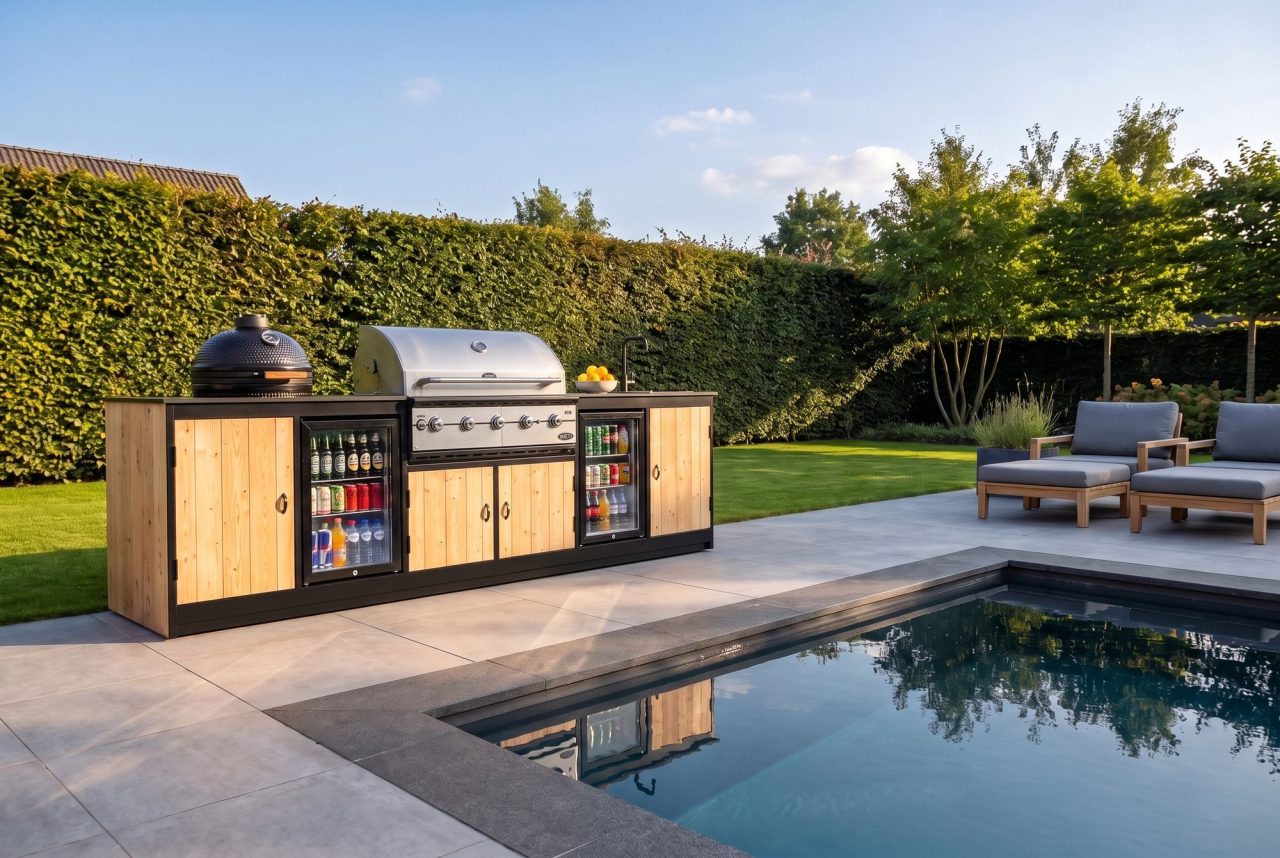
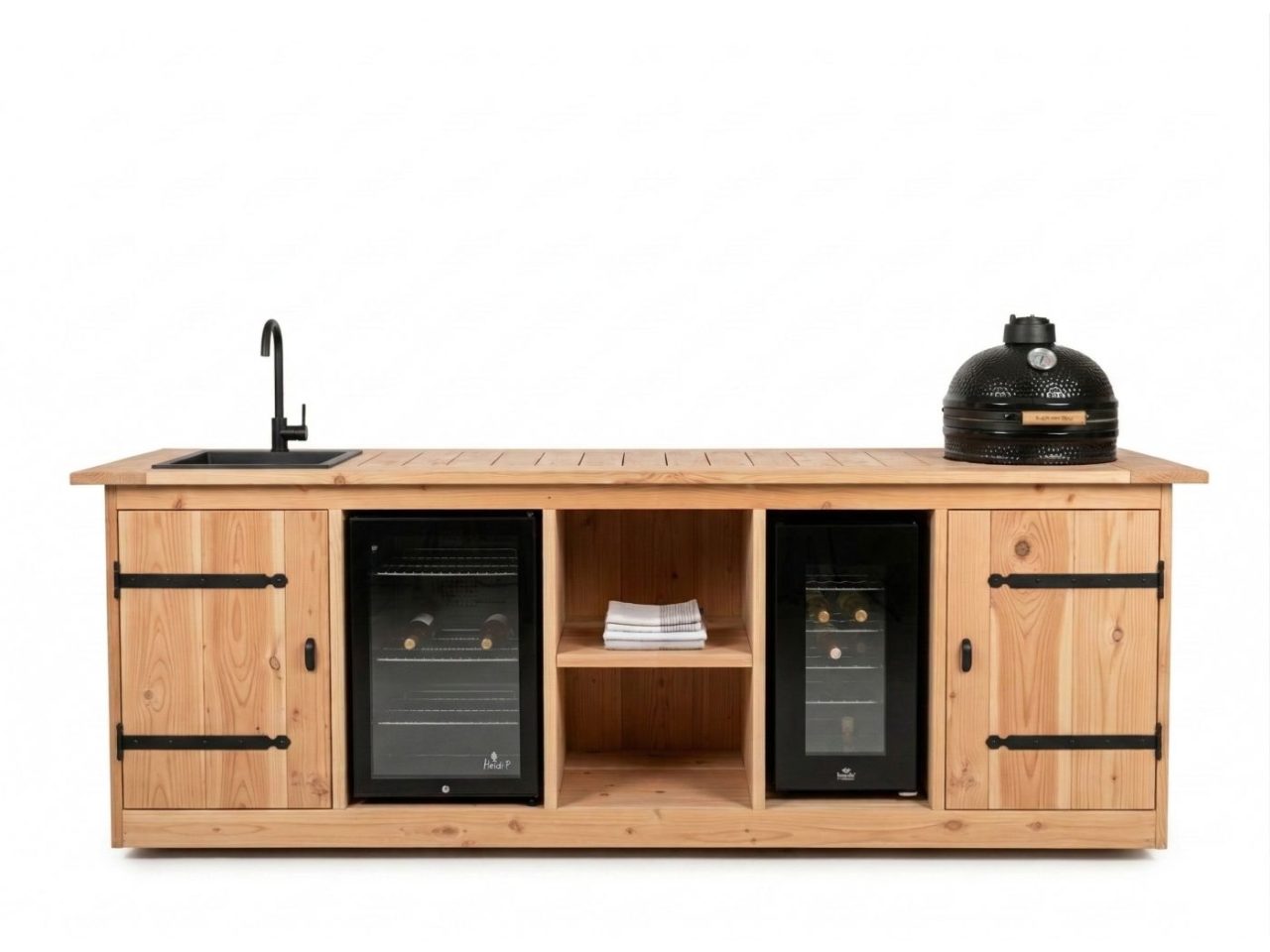
For almost every recipe on this page a 16-inch kamado is enough, with a grid of about 40 centimetres in diameter, good for 4 to 6 people. If you regularly cook brisket, whole chickens or several racks of ribs at once, an 18-inch model gives you the extra grill space. In the worktops of an outdoor kitchen with a kamado we allow for a cut-out of up to 60 centimetres, so both sizes fit in comfortably. We supply the kamado in 16 or 18 inches as an option on every width, from 109 to 301 centimetres.
Handling meat safely around the kamado
Working safely around the kamado comes down to two rules from Germany's Federal Institute for Risk Assessment (BfR). First: separate tongs and plates for raw and cooked meat, ideally marked so you can tell them apart. Second: keep everything chilled. According to the BfR, salmonella and other germs start to multiply from as low as 7 degrees, so salads, sauces and raw meat belong in the fridge until it is time to grill.
This matters all the more with low-and-slow cooking times of 10 hours: take your meat out of the fridge just as it goes onto the grill. An outdoor kitchen with a fridge makes that easy. Raw meat and salads then stay cold until you need them.
Frequently asked questions
What are easy kamado recipes for beginners?
Easy kamado recipes for beginners are bavette, sticky chicken thighs and grilled vegetables: all three are grilled directly and ready within an hour. Start with bavette, because it is very forgiving and only needs a probe thermometer set to 52 to 54 degrees. Low-and-slow classics such as pulled pork come later; they demand 8 to 12 hours of patience.
Which meat tastes best from a kamado?
The meat that tastes best from a kamado is meat with fat or connective tissue, because it benefits most from the stable temperature: picanha with its fat cap, pork shoulder for pulled pork, and spare ribs. On weeknights bavette is the favourite. Lean meat such as chicken breast works too, ideally smoked at 110 to 120 degrees so it stays juicy.
What should you know before buying a kamado?
Before buying a kamado you should know four things: charcoal needs lead time to get glowing, the ceramic body weighs considerably more than a steel grill, it is an investment to buy, and you control the temperature with air vents, which takes a little practice. Once you understand exactly what a kamado is and how it works, you get stability and smoky flavour in return.
What temperature do you use for pulled pork on a kamado?
For pulled pork on a kamado, use a dome temperature of 107 to 110 degrees and cook the pork shoulder to a core temperature of 90 to 96 degrees. Allow 8 to 12 hours. At around 65 degrees core, the temperature stalls for a few hours; that is normal and resolves itself.
Can you bake pizza on a kamado?
Baking pizza on a kamado works brilliantly, with a pizza stone and a dome temperature of 300 to 350 degrees. A thin pizza is then ready in 4 to 6 minutes. Let the stone heat up for at least 20 minutes, otherwise the base stays pale. At Varetti a pizza stone is available as an accessory for the kamado.
Which kamado fits in a Varetti outdoor kitchen?
A 16- or 18-inch kamado fits in Varetti outdoor kitchens; the cut-out in the worktop is up to 60 centimetres. The 16-inch model is good for 4 to 6 people, while the 18-inch gives you room for brisket or several racks of spare ribs. Both sizes are available on every width from 109 to 301 centimetres.