A nano coating on wood is an invisible impregnation made of microscopically small particles that bond to the wood fibres. Water and oil bead off, while the wood stays breathable. On an outdoor kitchen made of Douglas fir, a coating like this protects against moisture, grease splashes and UV radiation, and the colour and texture of the wood stay just as they are. Handy in many situations, with one clear limitation: the coating needs refreshing after a few seasons.
What exactly a nano coating is
A nano coating, often also called nano sealing, consists of particles a few dozen nanometres in size that soak into the top layer of the wood. Unlike varnish or stain, the surface remains film-free: the wood looks the same as before and stays breathable.
You measure the effect by the contact angle of a water droplet: on a well-treated surface a droplet forms an angle of more than 150 degrees and rolls off like a marble. Researchers call this superhydrophobic. Rolling water picks up loose dirt, so the surface partly keeps itself clean.
What the research shows
A 2024 study in the journal Materials tested a superhydrophobic wood coating made of tung oil, carnauba wax and 80-nanometre silica particles. After 360 hours in water, the treated wood had absorbed around 49 per cent water, untreated wood 113 per cent, so less than half.
The coating also still worked after 600 cm of abrasion with sandpaper; the contact angle only dropped from 155.5 to 150 degrees. It is a lab test, and outdoors conditions are milder, but the direction is clear: the wood's water absorption falls considerably.
What it does on a Douglas fir outdoor kitchen
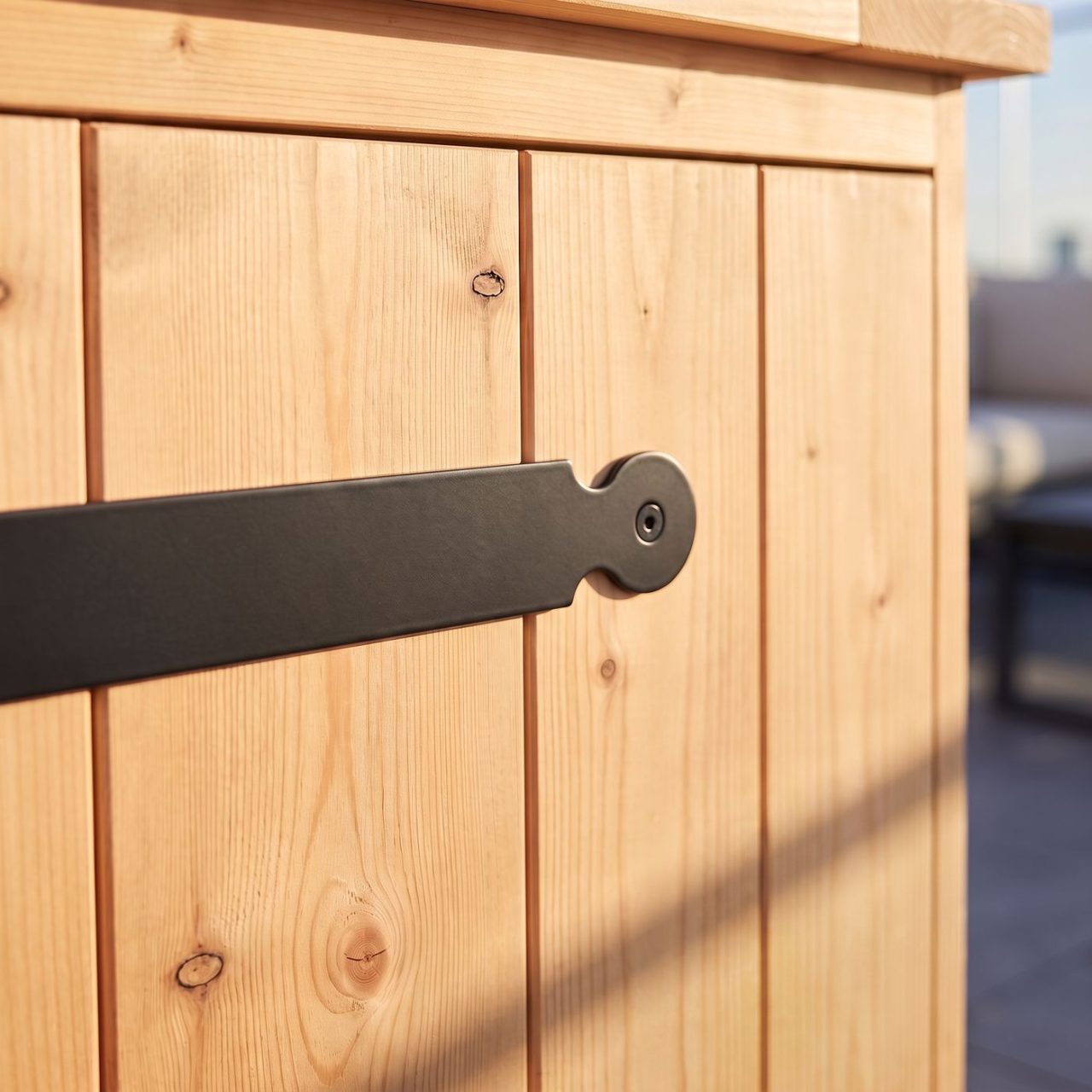
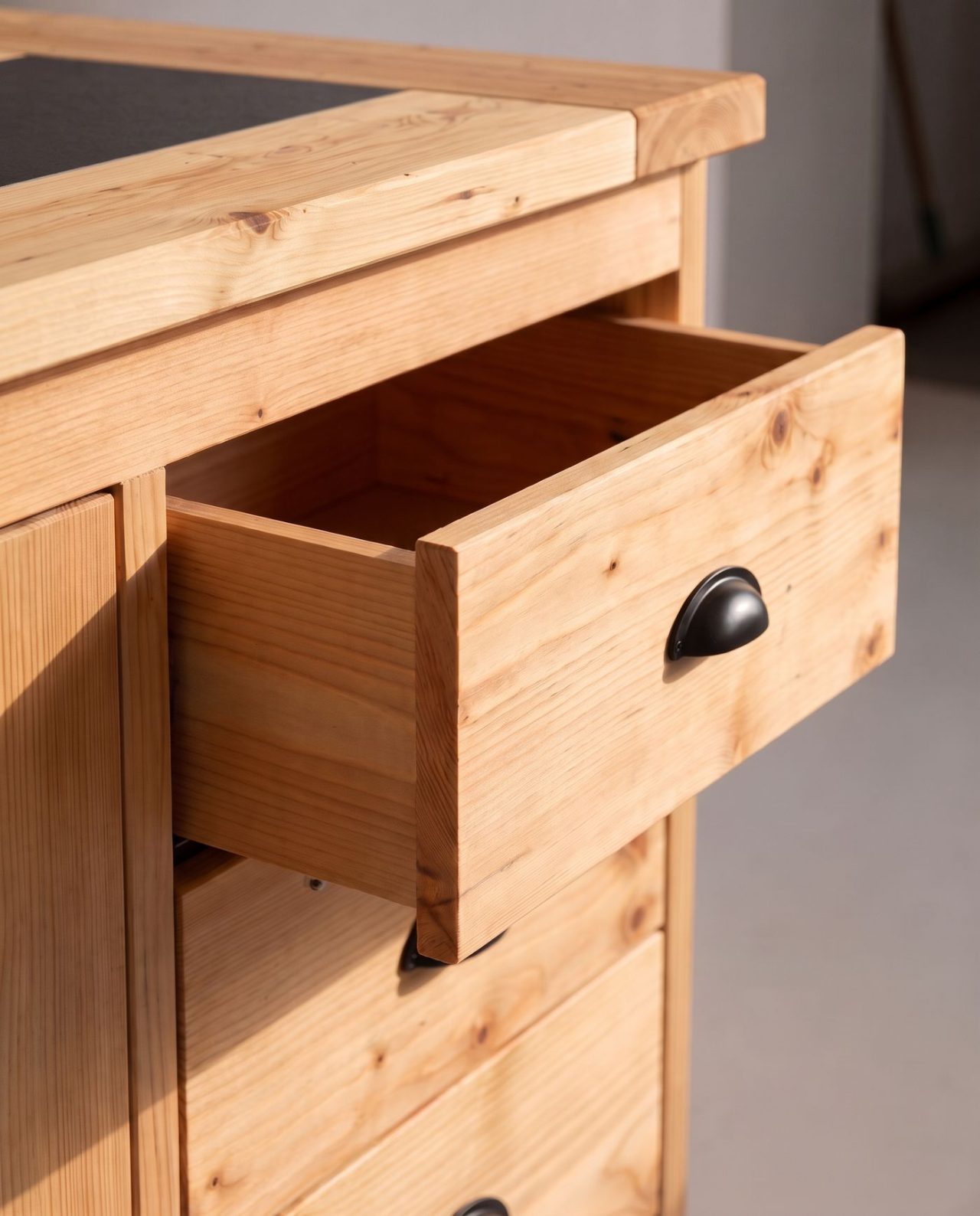
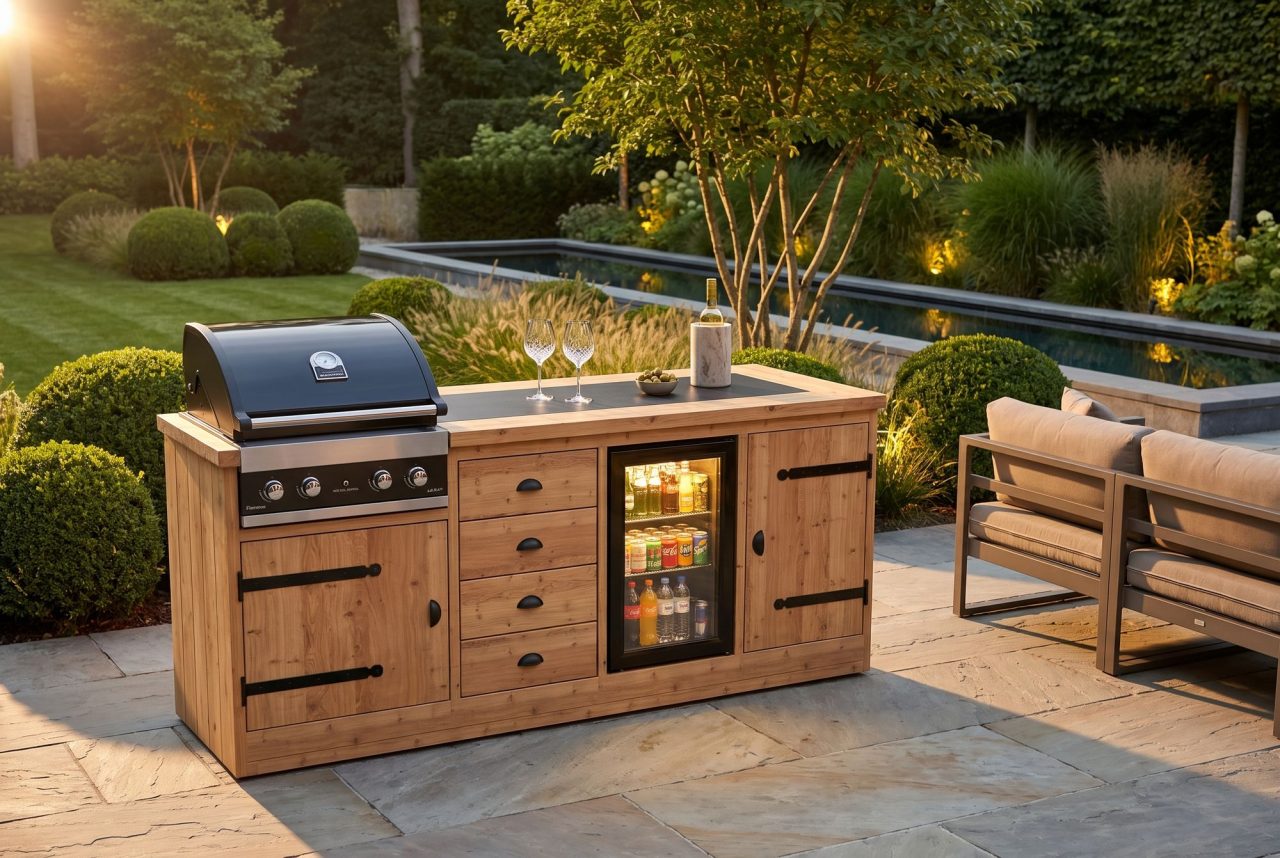
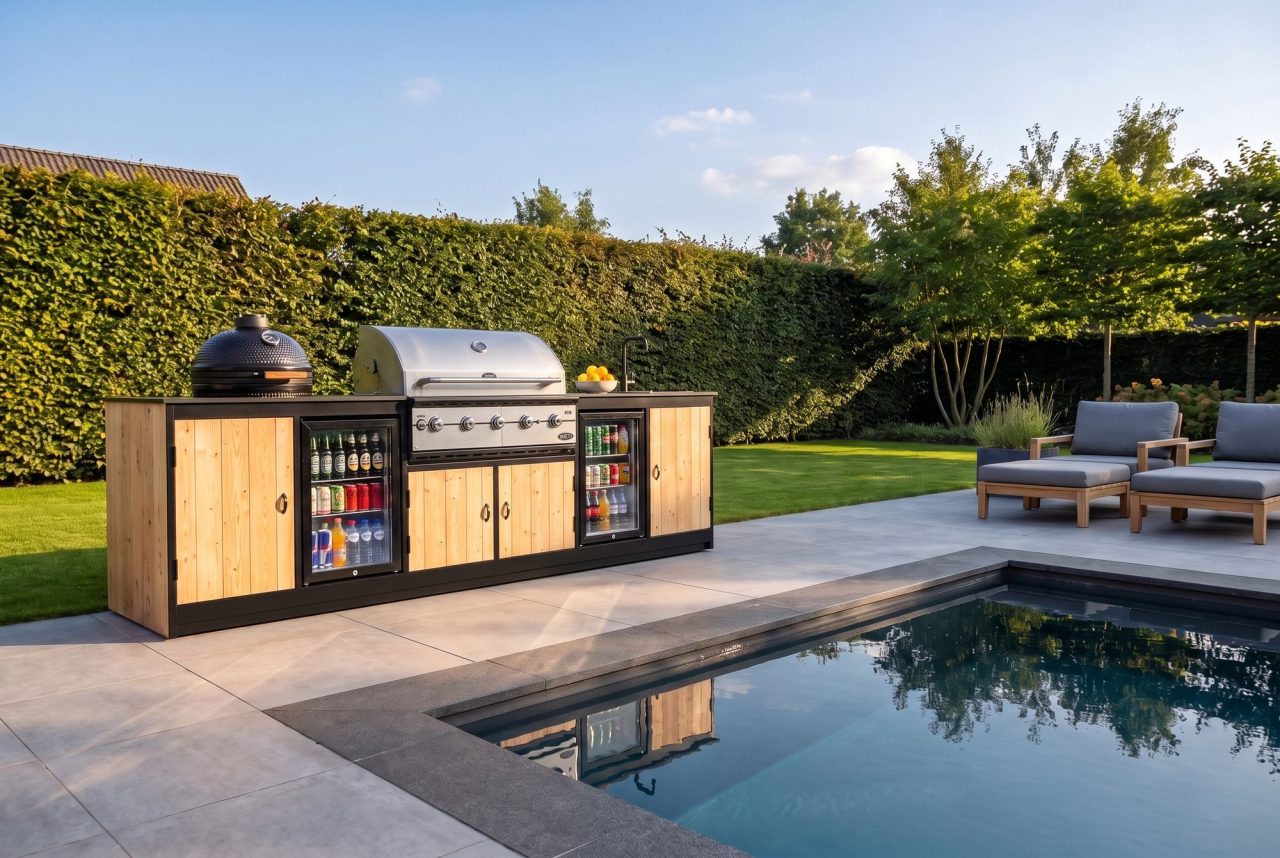
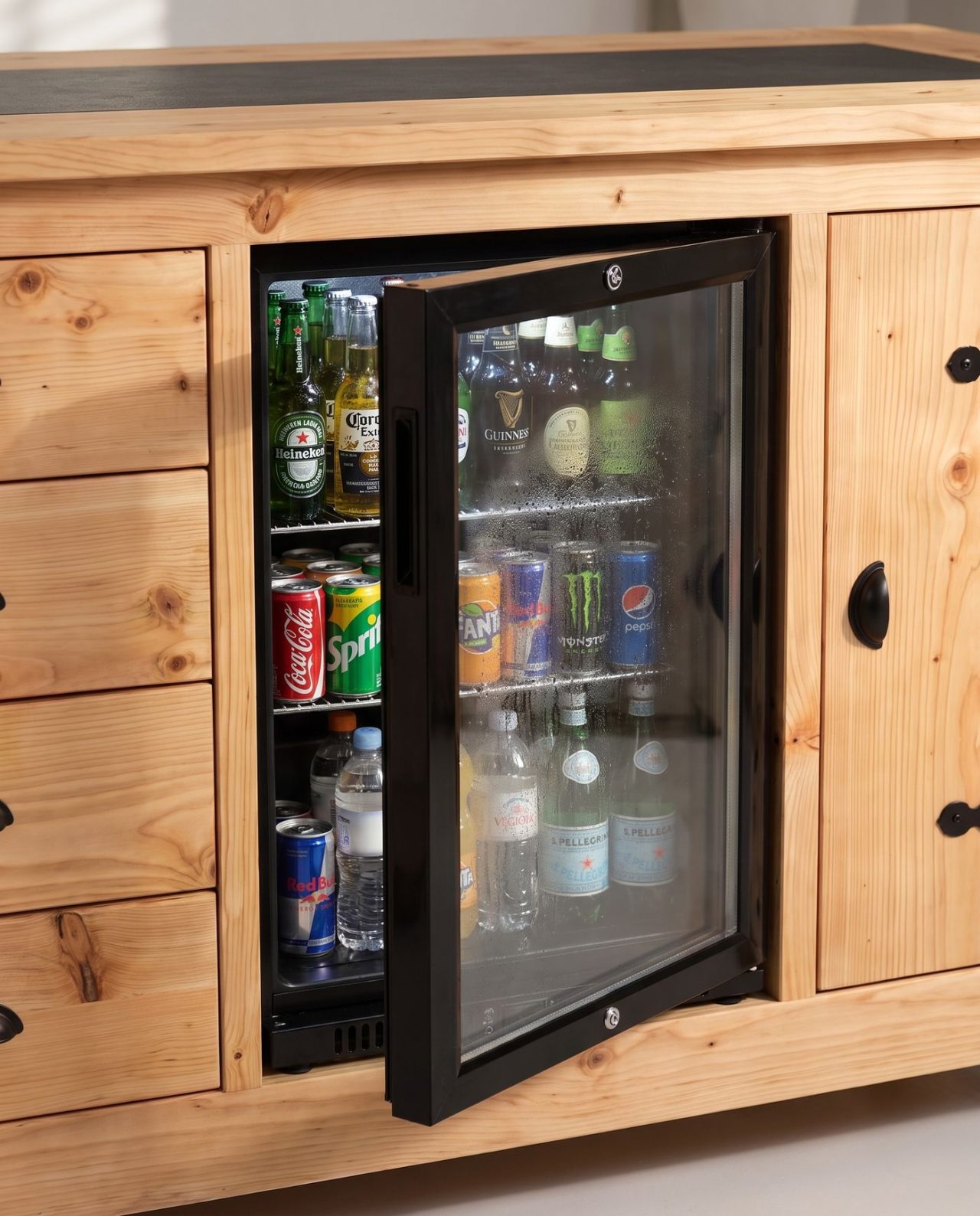
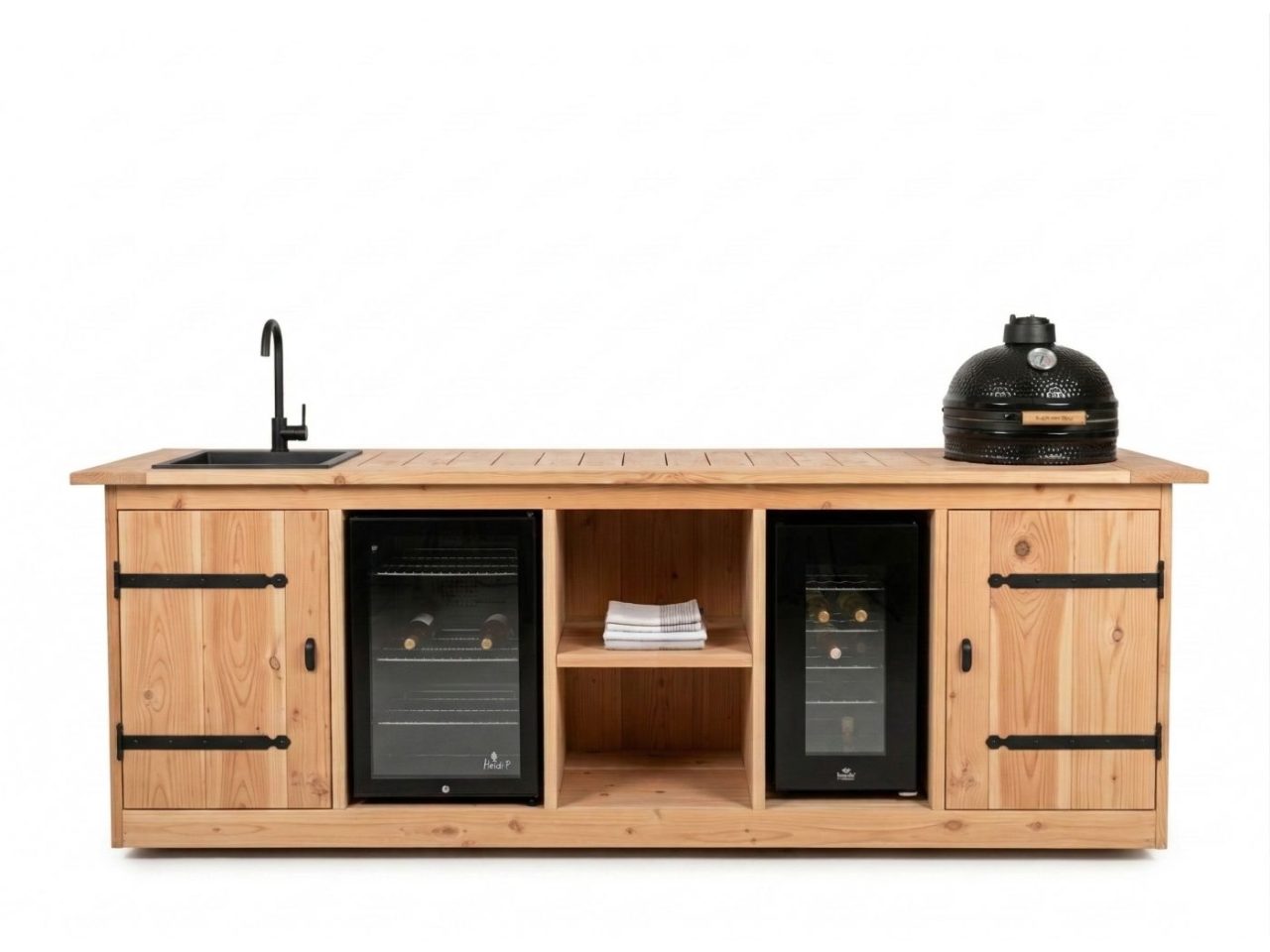
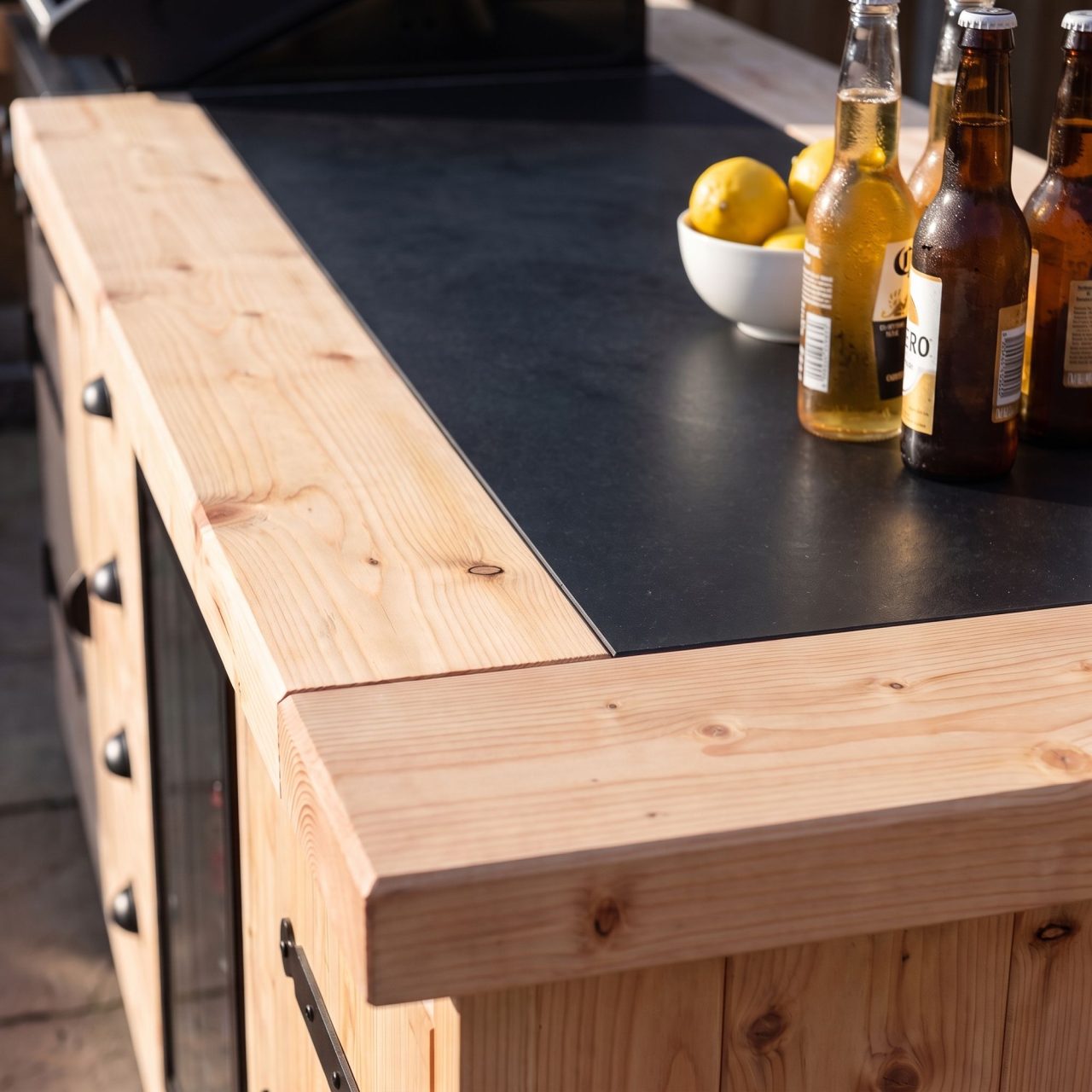
Varetti outdoor kitchens are built from 2.8 cm Douglas fir planed on both sides, in our own workshop in Almelo. Untreated Douglas fir stands up well outdoors, but a kitchen takes more punishment than a garden fence: grease splashes from the grill, a knocked-over glass of red wine, marinade on the worktop.
The nano coating we use is water- and oil-repellent, fully breathable and has a UV filter. For anyone who likes the light Douglas fir tone, the UV filter is the most interesting part: UV radiation drives the greying, and the filter slows that process down. Stains soak into the wood more slowly, and you can wipe them away with a damp cloth.
Nano coating, stain or oil?
Stain and nano coating differ mainly in colour and film formation. A stain colours the wood and lays a thin layer on top, which after a while you sand back and renew. Oil nourishes the wood and deepens the colour, but needs regular reapplication, often every season. A nano coating leaves the colour unchanged and integrates into the wood, so there is nothing that could flake off.
If you want your kitchen darker or opaque, a stain is the logical choice. If you want to nourish the wood and deepen its tone, read our article on wood oil for your outdoor kitchen. If you want pure protection with an unchanged look, the nano coating is the right choice.
When a nano coating is worth it
A nano coating is worth it if your Varetti outdoor kitchen is fully exposed to wind and weather, if you want to keep the light Douglas fir tone, or if you work a lot with grease and marinades. Horizontal surfaces such as the worktop benefit most, because that is where water and dirt sit.
You can just as well let the wood age naturally. If you like a kitchen weathered to silver grey, leave it alone: the greying is purely cosmetic and does not affect the strength of the Douglas fir. If your kitchen stands under a closed roof, it gets hardly any rain or direct sun. Then oiling is usually enough. And a 12 mm sintered stone worktop is impermeable by nature. The coating is meant for the wood.
How to apply the nano coating
Applying a nano coating is an afternoon's work. Four steps:
-
Clean the wood thoroughly and make sure it is free of grease.
-
Let the surface dry completely. Moisture in the wood interferes with adhesion.
-
Apply the coating in thin, even layers with a spray bottle or a cloth. A thin layer protects just as well as a thick one.
-
Observe the manufacturer's drying time. It ranges from a few hours to 24 hours.
The most common mistakes: applying it to a dirty or damp surface, applying it too thickly, and choosing a product intended for other materials. So always check that the product is suitable for softwood such as Douglas fir.
How long does a nano coating last?
A nano coating lasts a few seasons and then needs refreshing, whatever the packaging promises. The layer wears first in places you touch often and where rain falls, so on the worktop sooner than on the sides. The simplest check is the droplet test: splash a little water onto the wood. If it beads off, the coating is intact. If it soaks in, it is time to retreat that area. Because the coating stays film-free, there is no sanding involved. Cleaning and reapplying is enough.
Frequently asked questions
What are the limitations of a nano coating on wood?
The limitations of a nano coating on wood are modest but real. The coating lasts a few seasons: on heavily used surfaces such as a Douglas fir worktop you reapply it after a while. The coating leaves the colour unchanged, so if you want an opaque or dark finish, go for a stain. And it adheres best to clean, dry wood, which is why preparation matters.
How long does a nano coating on wood last?
How long a nano coating on wood lasts depends on use and location. Horizontal surfaces that catch the rain and that you work on wear faster than vertical sides. Use the droplet test as your guide: if water soaks into the Douglas fir, reapply the coating in that spot. No sanding is needed; cleaning is enough.
What is the difference between a nano coating and a stain?
The difference between a nano coating and a stain lies in visibility and build-up. A stain colours the wood and lays a thin layer on top, which can weather and which you sand back before the next treatment. A nano coating soaks into the wood fibres, is invisible, lets the wood breathe and stays film-free. Choose stain for colour, and nano coating for invisible protection against water, oil and UV.
How water-repellent does a nano coating make the outdoor kitchen?
A nano coating makes your outdoor kitchen highly water-repellent, while the wood stays breathable. Droplets bead off the surface and the wood's water absorption drops considerably, in the study in Materials from 113 to 49 per cent. At the same time, solid Douglas fir can still exchange moisture with the air, which is exactly what you want. A cover in winter therefore remains a good addition.
Is a nano coating suitable for Douglas fir?
A nano coating is well suited to Douglas fir. Douglas fir is a soft conifer wood whose fibres the particles penetrate deeply, and the coating we use on our outdoor kitchens is water- and oil-repellent, fully breathable and equipped with a UV filter. That way you protect the worktop from grease splashes and slow down the greying, and the light tone of the Douglas fir is preserved.