Looking after an outdoor kitchen comes down to four tasks: protecting the Douglas fir with oil or stain (or deliberately letting it weather to grey), keeping the worktop and stainless steel clean, keeping the kamado or grill in good shape, and getting the kitchen ready for winter. All together it costs you a few hours a year and a bottle of wood oil. Let it slide and you pay more: a rotten frame or a tap split by frost is hard to fix with washing-up liquid. Here is the complete guide, step by step.
Oiling, staining or letting Douglas fir go grey
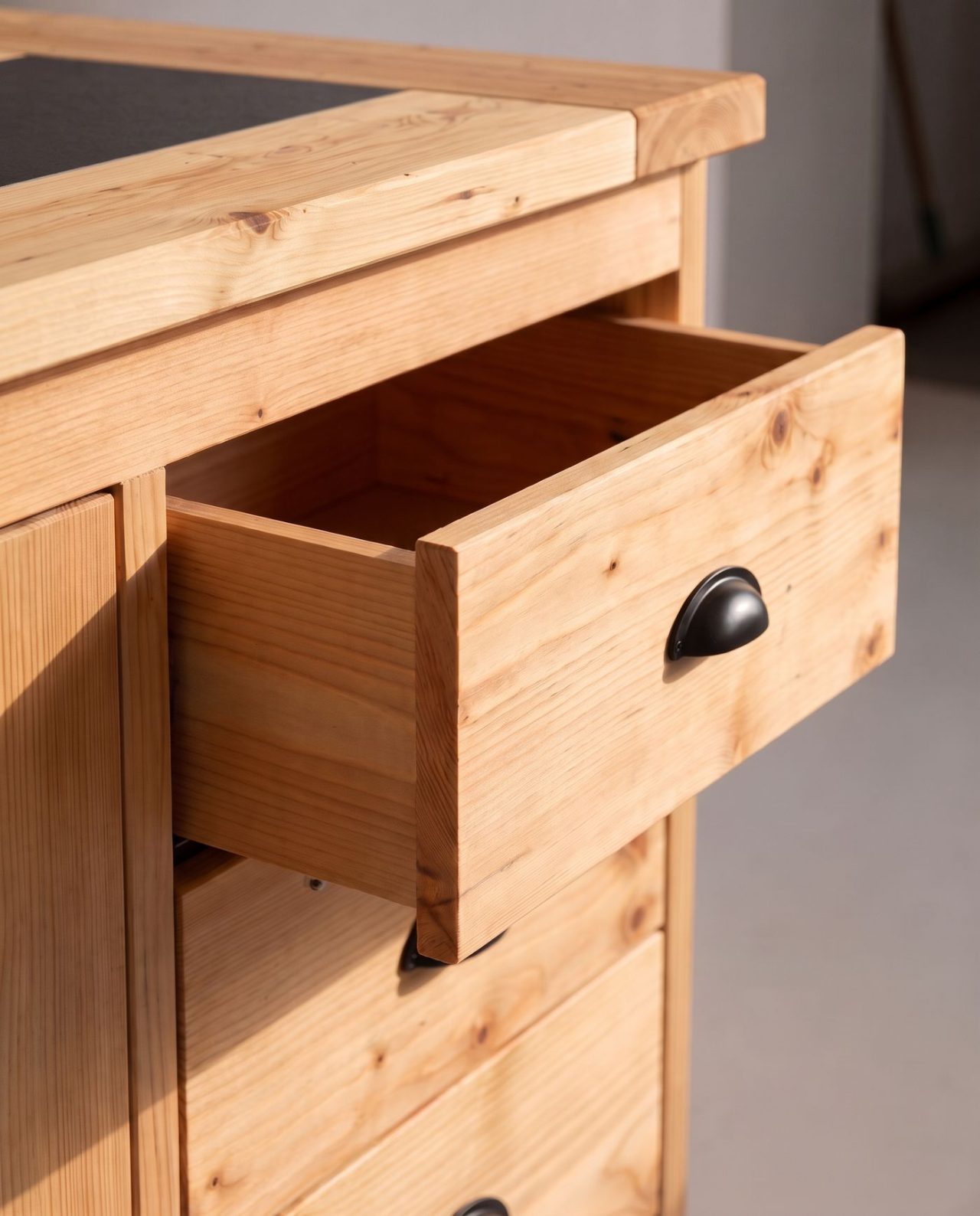
You have three options for the Douglas fir in your outdoor kitchen, and each of them is right. Letting it go grey is the most honest: the wood turns an even silver grey, remains just as structurally sound and needs next to no maintenance.
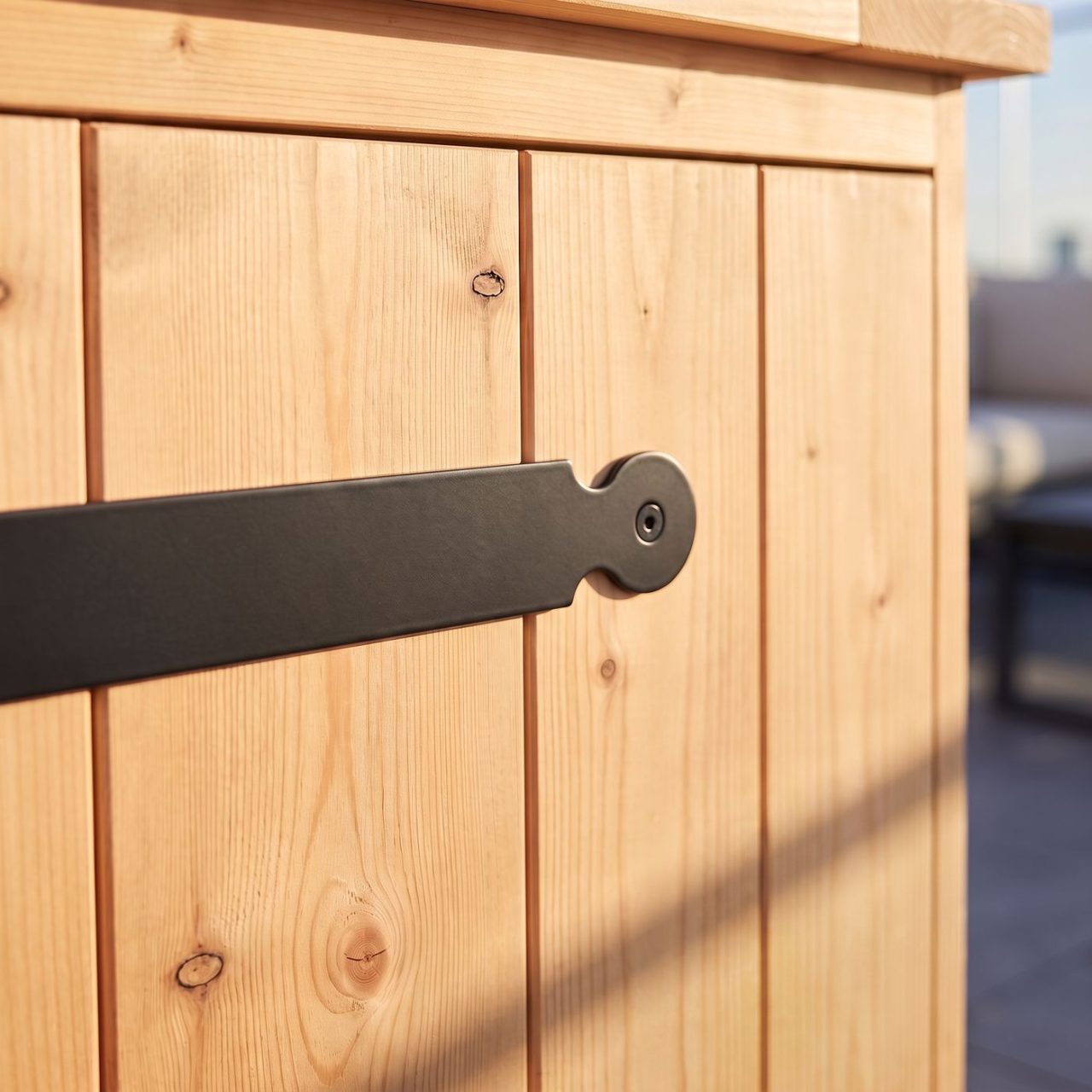
If you want to keep the warm wood tone, work with natural oils for your wooden outdoor kitchen. The tried-and-tested build-up according to the wood protection retailer Holzschutz-24: two to three thin coats, letting each soak in for about 15 to 40 minutes and wiping off the excess with a cloth so the surface does not stay tacky. After that, refresh the top coat as soon as the wood looks dull and dry, in practice about once a year on surfaces that get plenty of sun. The German home improvement site Hausjournal.net recommends once or twice a year.
A stain covers the wood in any colour you like, but be clear about the maintenance afterwards: you have to sand back and repaint any damage, and wood stained black fades in full sun. Our Douglas fir is planed on both sides and dried, so oil and stain adhere evenly. And it all starts with which wood you choose for an outdoor kitchen.
Each worktop material needs its own care
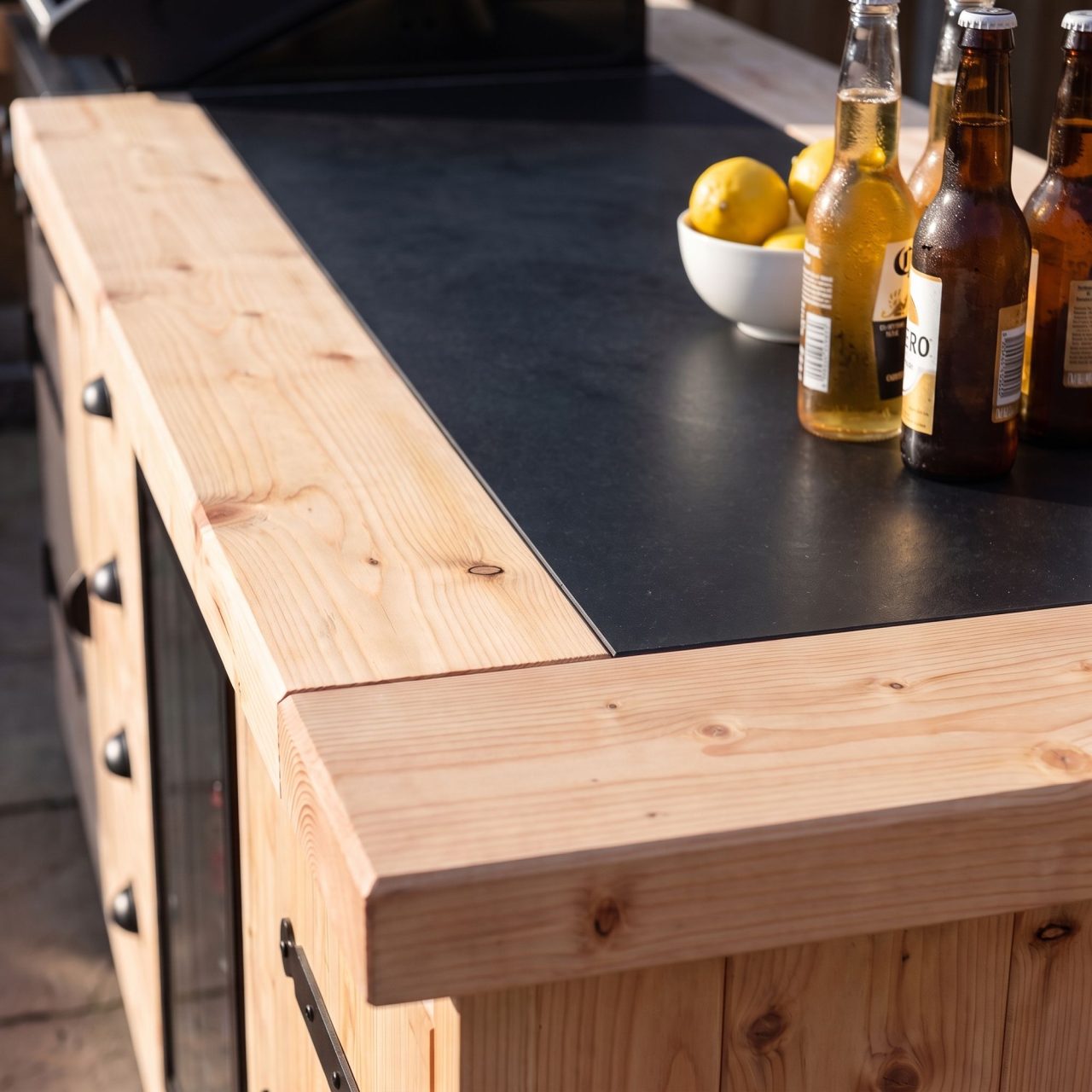
For the worktop options in an outdoor kitchen, stone and wood are cleaned differently. A worktop of 12-millimetre sintered stone (four colours with us, from Black Betty to Gold Flames) is the easiest to care for. Warm water, a squirt of washing-up liquid, done. The material is dense, so grease and red wine never soak in to begin with. A soft sponge is all you need; leave scouring powder and steel wool in the cupboard.
A wooden worktop needs more attention. Wipe away crumbs and grease after every cook, because grease stains soak into Douglas fir and can then only be sanded out. Cover the worktop if you are leaving the kitchen unused for weeks. That halves the cleaning.
Keeping stainless steel, tap and fridge in good shape
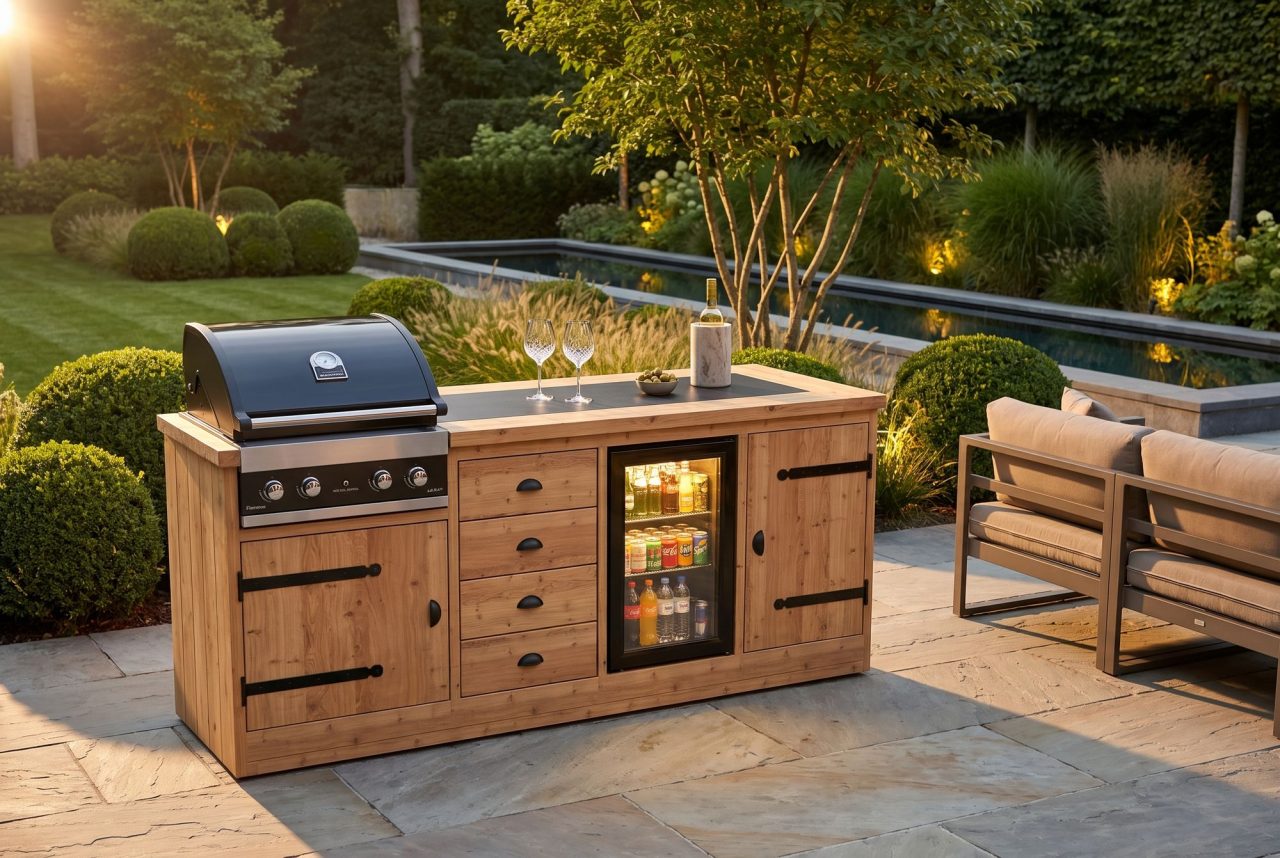
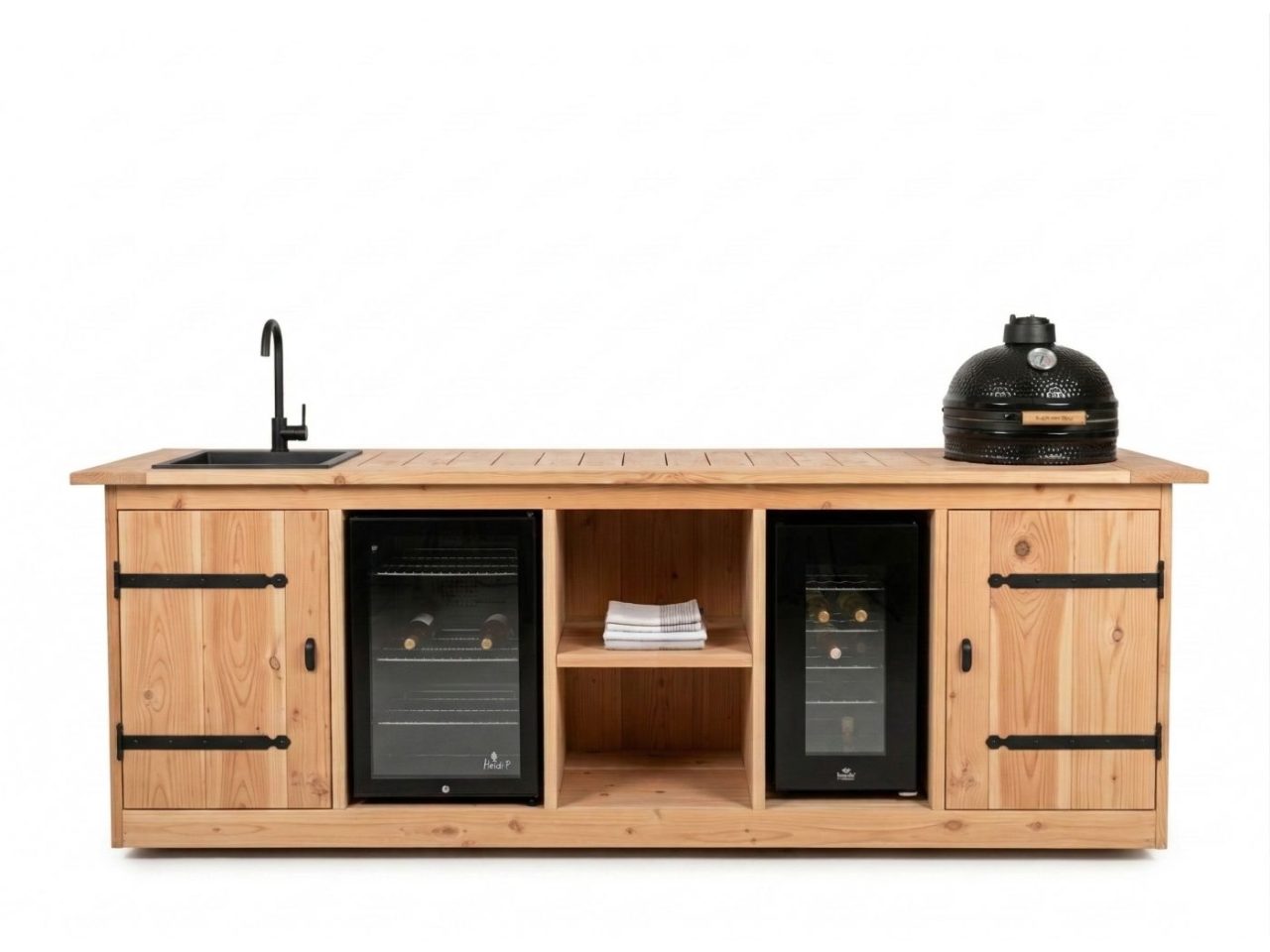
The tap, sink, grids and fridge front of an outdoor kitchen are stainless steel, and you keep them in shape with a mild solution of washing-up liquid and a soft cloth. Clean them a few times a season, more often if you live near the coast: salty air causes surface rust, tiny rust spots that you can polish away with stainless steel cleaner as long as you catch them early. Remove limescale marks on the black tap with diluted household vinegar. Rinse well afterwards, because vinegar and stainless steel only get along briefly.
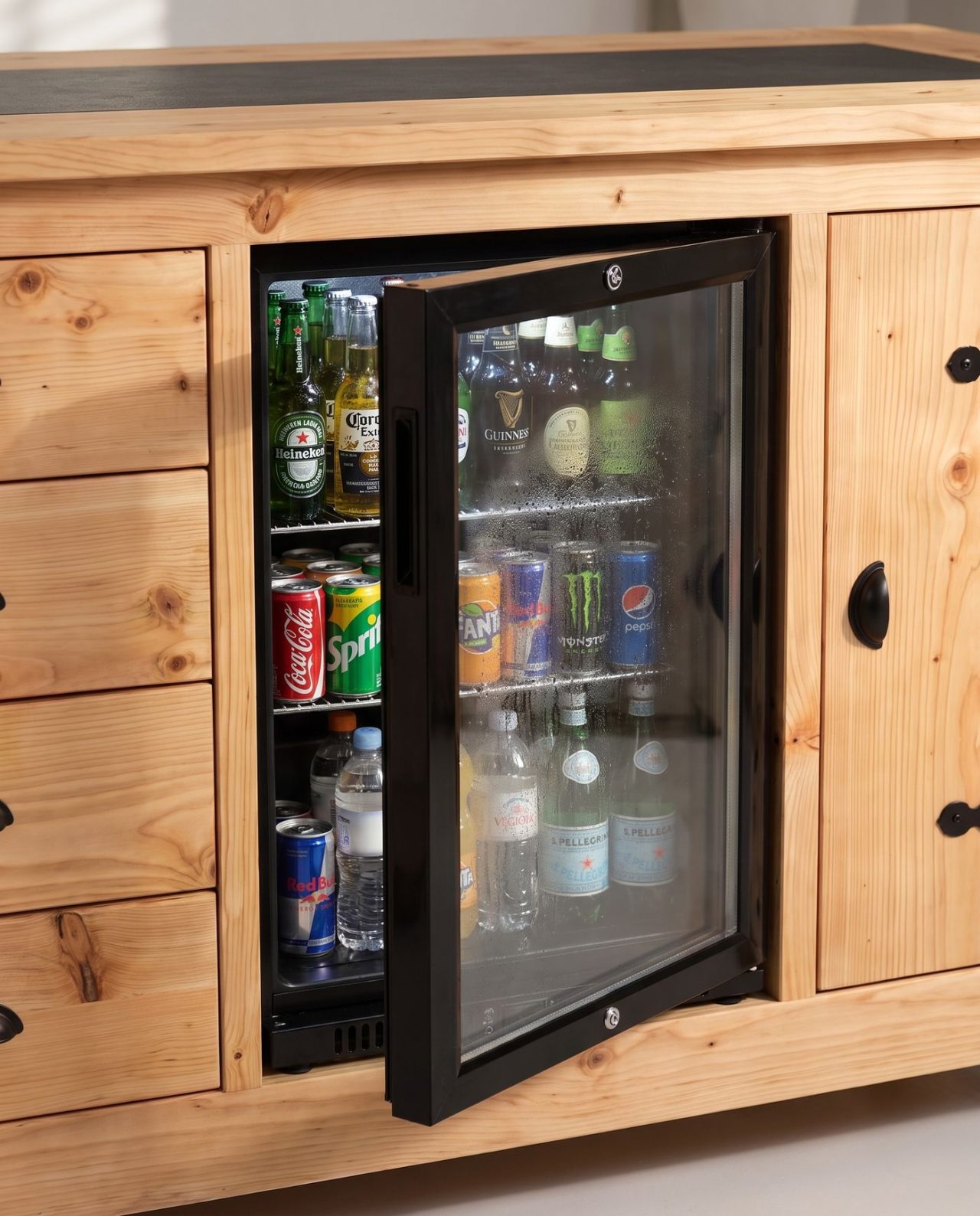
The 70-litre fridge is undemanding. Defrost it now and then, keep the ventilation grille free of dust and leave the door ajar when it is switched off, otherwise next spring you will smell exactly what you forgot the year before.
Cleaning the kamado and grill
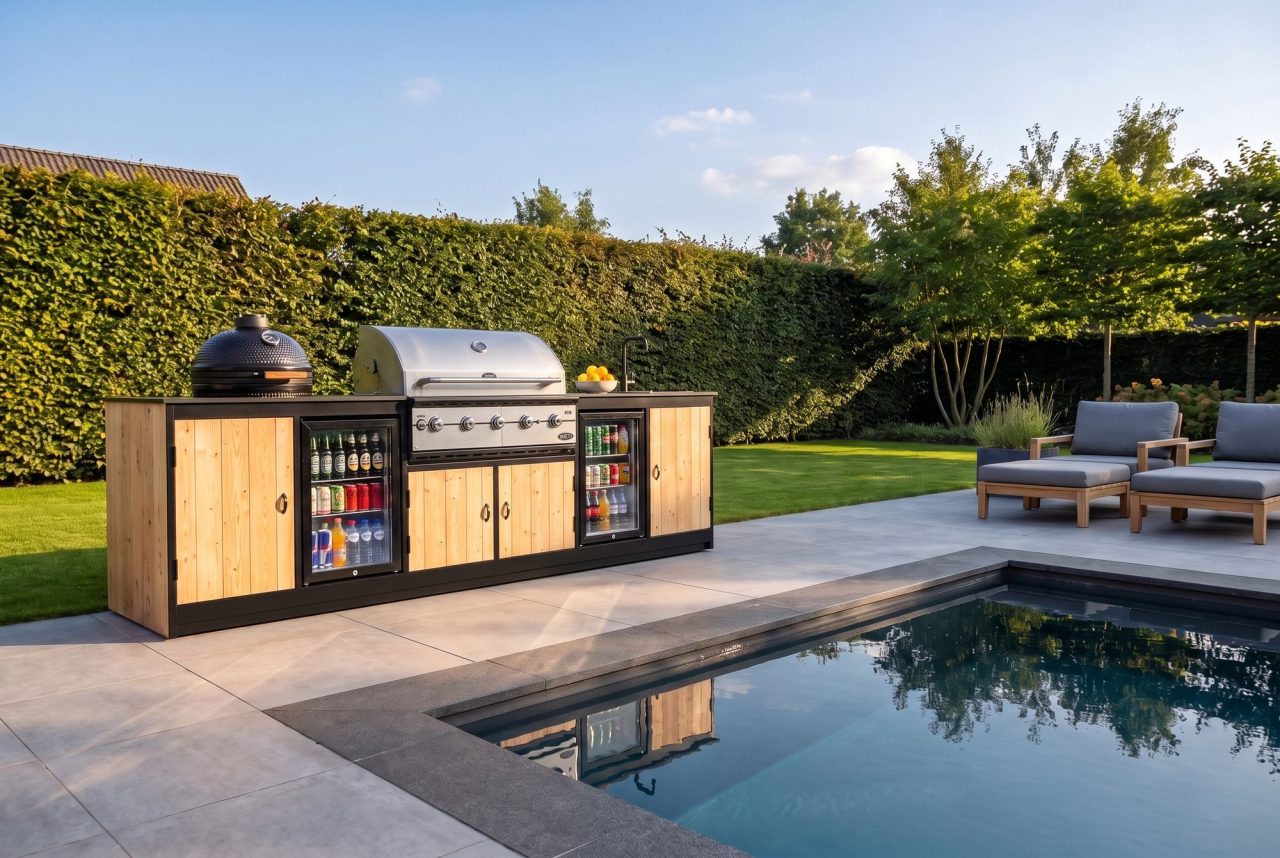
You look after a kamado mainly with heat and a brush: the ceramic inside stays dry, because it is porous, soaks up soapy water and passes the taste on to your food. What works: remove cold ash after every second or third barbecue, brush the grids while they are still warm, and every so often run the kamado really hot so that grease residue burns off. Check the felt gasket between lid and base while you are at it. After cooking, close the lid and the vents. The charcoal suffocates by itself, and whatever is left you simply use next time.
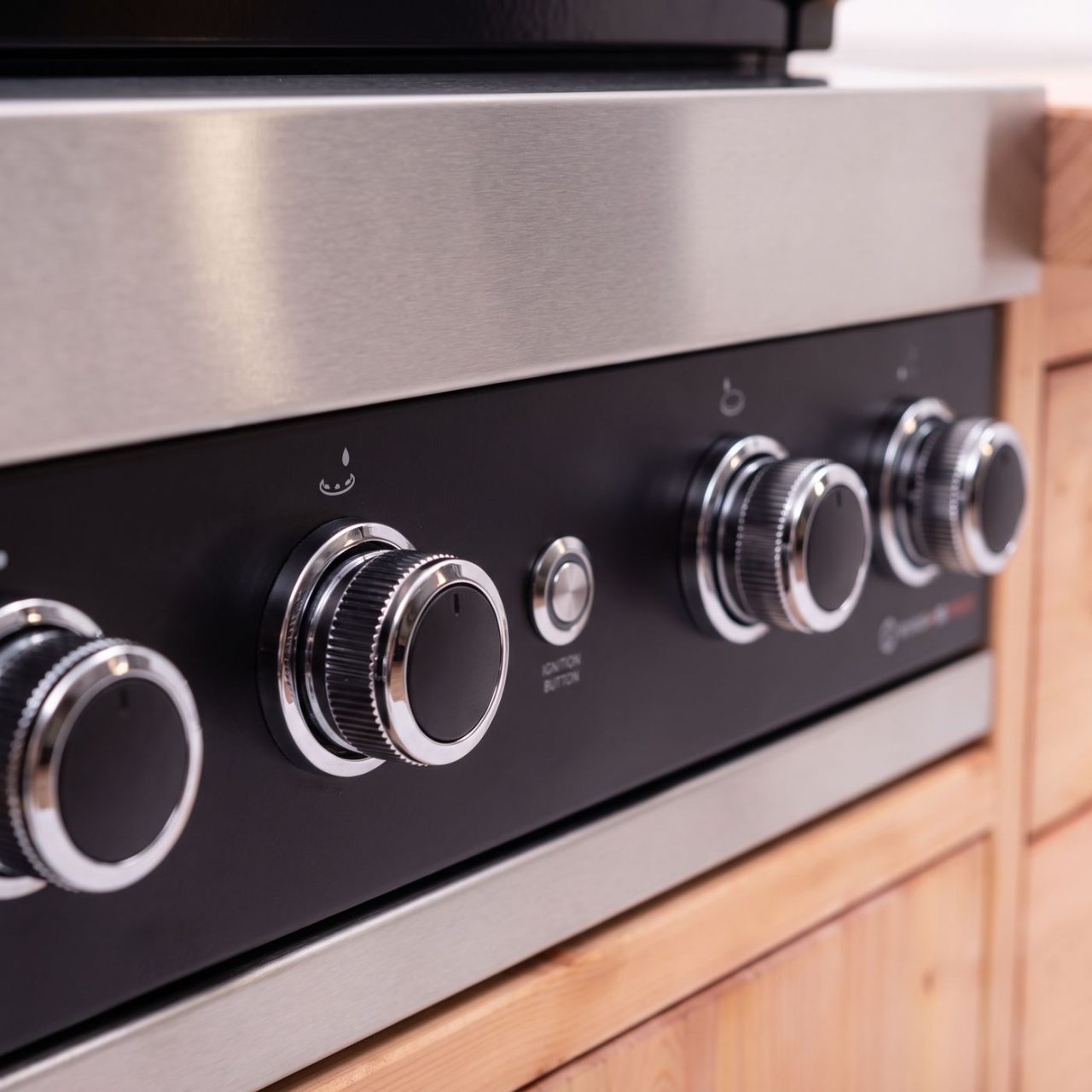
Built-in gas grills from Grandhall or Boretti are simpler: cleaning the grill there means keeping the burners dry, brushing the grids and emptying the grease tray. Everyone forgets that tray until it starts smoking one day.
Ready for winter in 15 minutes
Getting your outdoor kitchen ready for winter takes a quarter of an hour and prevents the two most expensive kinds of damage: frost and standing moisture. Disconnect the garden hose, drain the tap and, if you have one, the under-sink water heater, and leave the tap open. Any water left inside expands when it freezes and bursts the tap body.
Switch off the fridge, clean it and leave the door ajar. Switching off also pays financially: our fridges use 321 to 445 kWh a year. At the average German household electricity price of 37.0 cents per kWh that the German energy industry association BDEW reported for 2026 in August 2026, that is 119 to 165 euros a year, and half a year's winter break saves roughly half of it.
Cover the wooden worktop or put the kitchen under a roof. The kitchen itself can stay outside; that is what it is built for. In spring, when you reconnect the water supply to your outdoor kitchen, let the tap run for a while before you use the water. The German Environment Agency (Umweltbundesamt) advises running stagnant water out of the pipe, and the German gas and water association DVGW gives 25 to 45 degrees as the range in which legionella multiply most rapidly. In a pipe that has been standing in the sun all winter, that is quickly reached.
What does care cost per year?
Looking after an outdoor kitchen costs mainly time and hardly any money: an afternoon in spring for oiling, flushing through and switching on the fridge, a quarter of an hour in autumn for draining and covering, plus a bottle of wood oil and a little washing-up liquid. If you let the wood go grey, you can even skip the oiling, and surprisingly little remains. Nano coating for your outdoor kitchen is optional: the coating repels moisture and dirt, we apply it in our workshop in Almelo, and it extends the intervals between maintenance rounds.
The real cost falls on whoever does nothing at all. A rotten back panel or a cracked tap costs more than ten years of wood oil put together.
Frequently asked questions
What does it cost to look after an outdoor kitchen each year?
Looking after an outdoor kitchen costs about a bottle of wood oil and some cleaning products a year, plus an afternoon's work in spring and a quarter of an hour in autumn. If you let the Douglas fir go grey, the annual oiling falls away and only cleaning and winterising remain. The biggest costs arise if you do nothing at all: frost damage to the tap or rot in the wood.
How often do you need to oil a wooden outdoor kitchen?
On average you re-oil a wooden outdoor kitchen once a year, especially in spots that get full sun. Hausjournal.net suggests once or twice a year. Go by the condition of the wood: as soon as the Douglas fir looks dull and dry but still has colour, it is time for a fresh top coat. Build up the first treatment in two to three thin coats, letting each soak in for 15 to 40 minutes.
Can you simply let Douglas fir go grey?
Letting Douglas fir go grey works well and is actually the lowest-maintenance choice for an outdoor kitchen. The wood turns an even silver grey, remains just as structurally sound and only needs cleaning now and then. It is purely a matter of taste: if you want to keep the warm reddish-brown Douglas fir tone, choose oil. If you like grey, you do almost nothing.
How do you clean a kamado?
Clean a kamado dry on the inside, with heat and a brush: the porous ceramic would soak up soapy water and release it into your food. Remove cold ash with an ash tool, brush the grids after grilling and every so often run the kamado really hot so that grease residue burns off. Check the felt gasket between lid and base while you are at it. The outside can be wiped with a damp cloth.
How do you get an outdoor kitchen ready for winter?
You winterise an outdoor kitchen by disconnecting the garden hose, draining the tap and water heater and leaving the tap open, switching off the fridge and leaving the door ajar, and covering the wooden worktop. That takes a quarter of an hour. The kitchen itself can withstand winter weather and simply stays outside. Only water and standing moisture cause damage.
Which worktop is the easiest to look after?
The easiest worktop to look after in an outdoor kitchen is sintered stone: the 12-millimetre worktop is dense, so grease, wine and moisture stay on the surface, and a solution of washing-up liquid is all it takes. Douglas fir feels warmer but needs oiling once a year and quick action on grease stains. If you decide mainly on convenience, stone wins. If you decide on atmosphere, you will happily accept the maintenance.