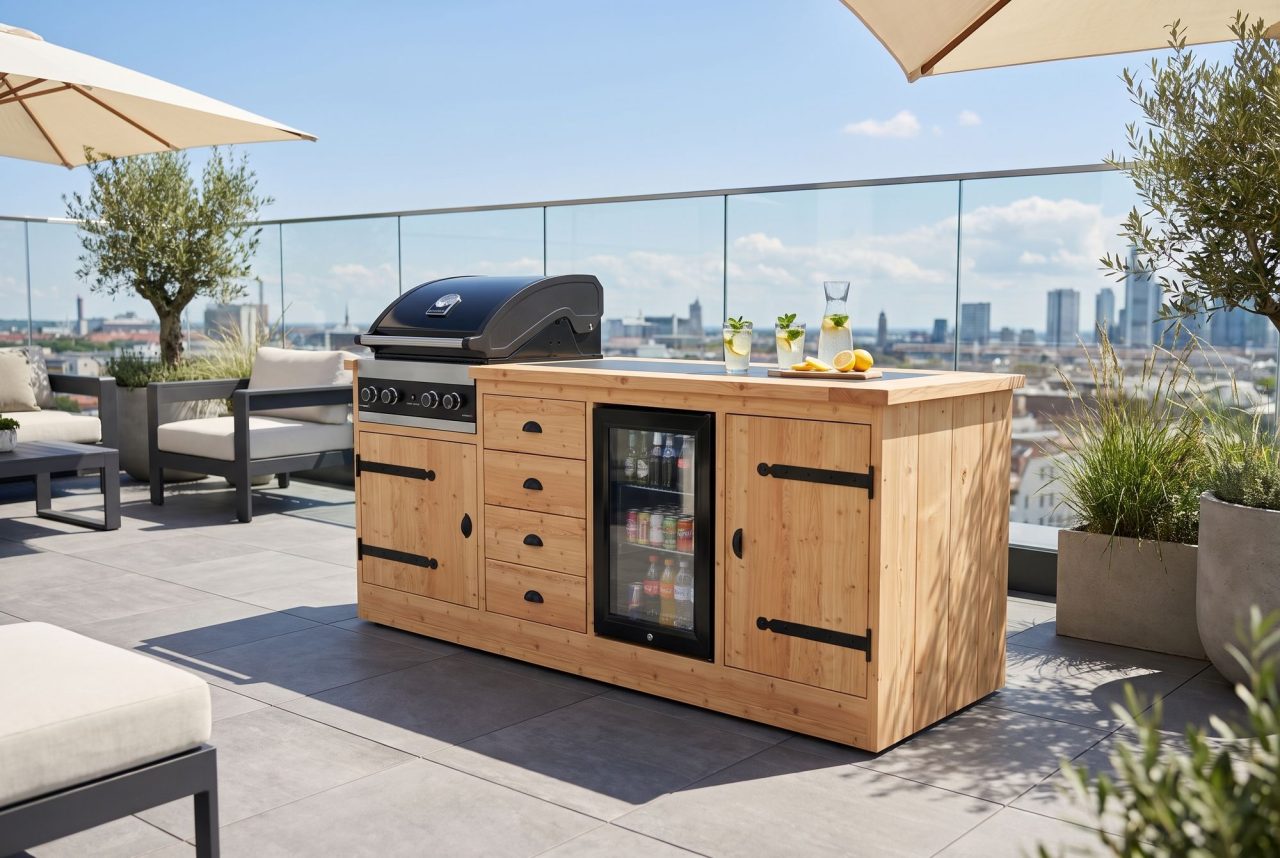
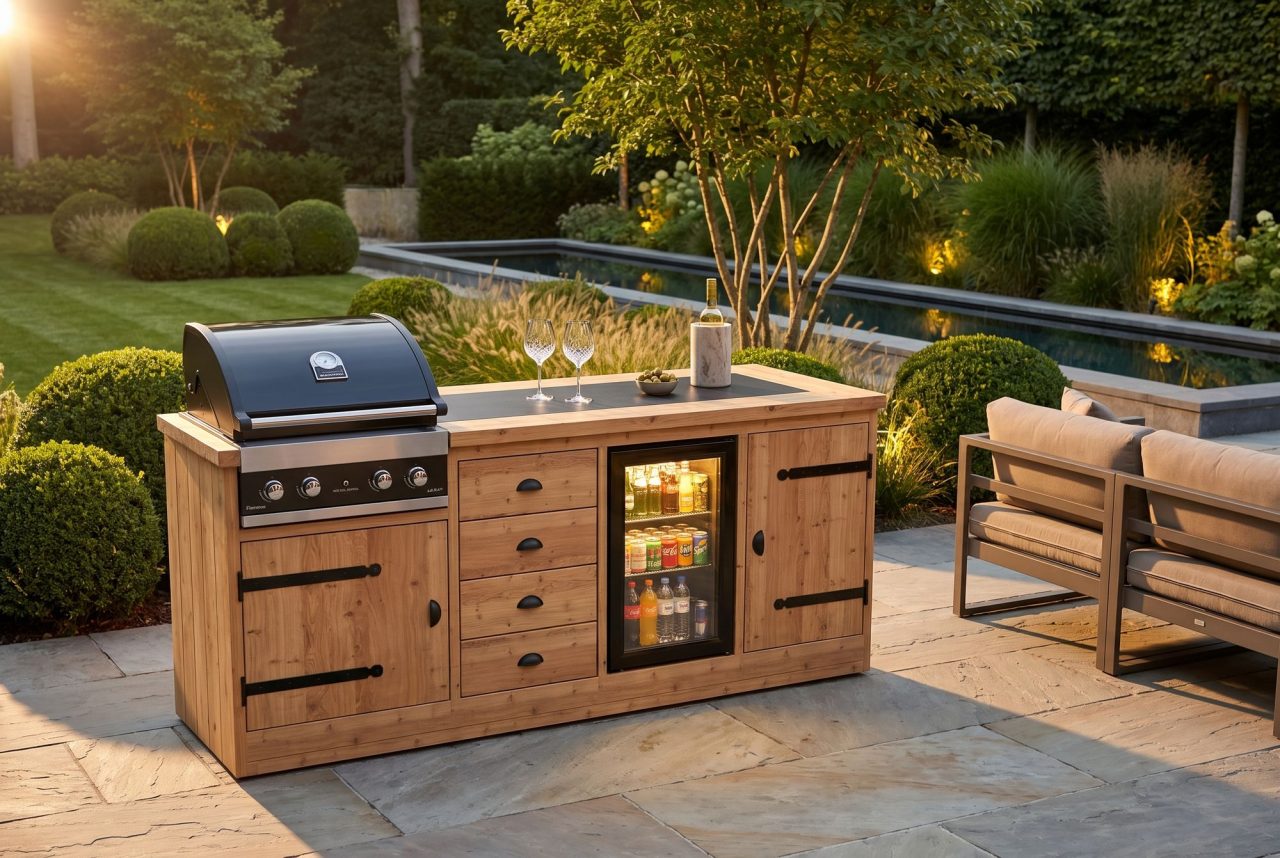
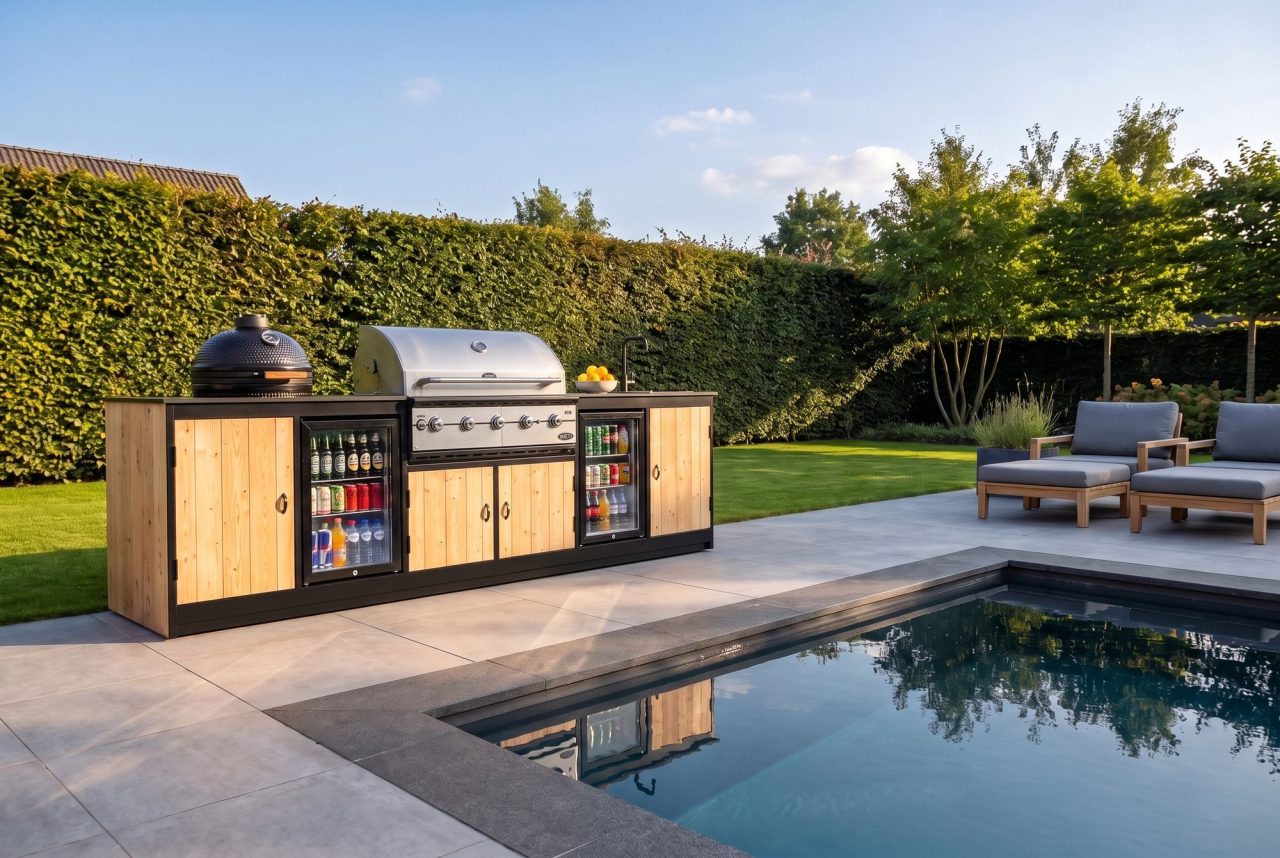
Styling your outdoor kitchen starts with warm 2700 K light and greenery that truly belongs to the space, and ends with tableware, colours, textiles and a heat source for the late hours. The kitchen itself is usually beautiful already. The styling decides whether it also becomes a meeting place where people linger. Here you'll find what works, step by step, with concrete dimensions and values, because advice on styling in particular often stays surprisingly vague.
Lighting that is warm and can handle rain
Good lighting around the outdoor kitchen has two layers. Above the worktop you need directed light, a spotlight or wall light, so you can see whether the steak is done even in the dark. Around the table and seating area, go for mood lighting: festoon lights, for example, or a lantern on the worktop. Choose bulbs at 2700 K for this, the extra warm white light you know from the old incandescent bulb. Cooler white at 4000 K quickly feels like a car park outdoors.
When buying, check the IP rating. Under a roof, according to the lighting retailer Lampenwelt, IP23 is enough for wall lights directly under the roof. IP44 (splash-proof) is the relaxed choice there. Fully exposed to the weather, you need at least IP65, because only that rating withstands water jets in heavy rain, and an autumn storm with driving rain is exactly that. The code is on the packaging. A quick check saves you new lights next spring.
Greenery that belongs to the kitchen
Plants work best when you treat them as part of the outdoor kitchen and plan them as a permanent fixture. Place a raised bed or a large pot of kitchen herbs right next to the kitchen. According to the gardening magazine kraut&rüben, thyme and rosemary come through winter well as long as the soil stays dry and drains well. Sow basil afresh every spring. Herbs within arm's reach of the chopping board are practical and smell wonderful while you cook.
A climbing plant takes on the role of a wall. A pergola or wire frame with Virginia creeper or passion flower provides shade, breaks the wind and blurs the line between kitchen and garden. Ivy works too, but clings permanently to walls and fences, so only plant it where it can stay. A row of lavender along the edge frames the cooking area and draws bees to the flowers, well away from the table.
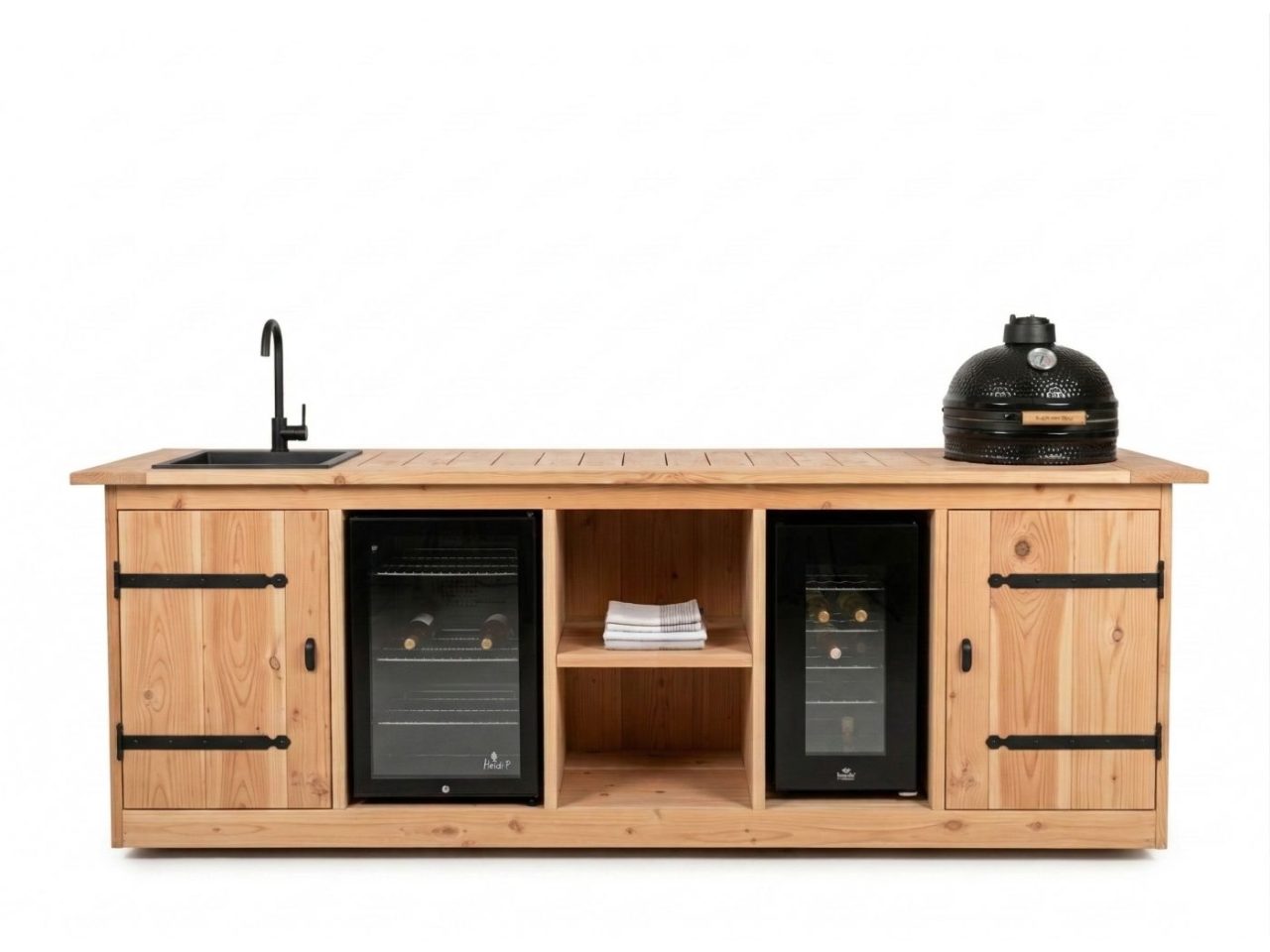
Incidentally, the wood itself is part of the styling too. Treat Douglas fir with natural oil and the grain stays visible. Left untreated, Douglas fir weathers to silver-grey. For us that is a colour and a perfectly legitimate look, even if tastes differ.
The right height makes cooking comfortable
Styling is more than decoration: the dimensions also decide whether the space feels good. The German kitchen industry association Arbeitsgemeinschaft Die Moderne Küche (AMK) recommends a working height 10 to 15 cm below elbow height, measured with your arm at a 90-degree angle. The classic 90 cm, which used to apply to people 165 to 170 cm tall, is now considered outdated by the German kitchen portal Küchen-Atlas, because people have grown taller and their backs feel it every evening.
So take a quick measurement before you buy bar stools or a side table. It takes two minutes. A few centimetres decide whether you cook standing upright or spend the whole evening hunched over.
Choose colours starting from the worktop
The easiest way to choose colours is to start from the largest surface, and that's the worktop. A worktop in 12 mm sintered stone comes in distinctive colours, from deep black Black Betty to light Snowy White, with Granny Grey and Gold Flames in between. With a black worktop and a black tap, copper or wooden accessories look superb. With a light worktop, you'll tend to work with earthy tones and terracotta.
If you go for an outdoor kitchen with a black frame, bear in mind that black-stained wood slowly fades in full sun. A spot with a little shade or a refresh every few years keeps the look crisp. Good to know: a kitchen in natural Douglas fir is more forgiving in that respect.
Tableware, glasses and textiles complete the picture
Proper plates and glasses suit a wooden kitchen with a stone worktop. Plastic cups are more reminiscent of camping. Put a set of sturdy plates and wine glasses in one of the kitchen cabinets, with cutlery to match, and you'll never carry stacks of crockery through the patio door again.
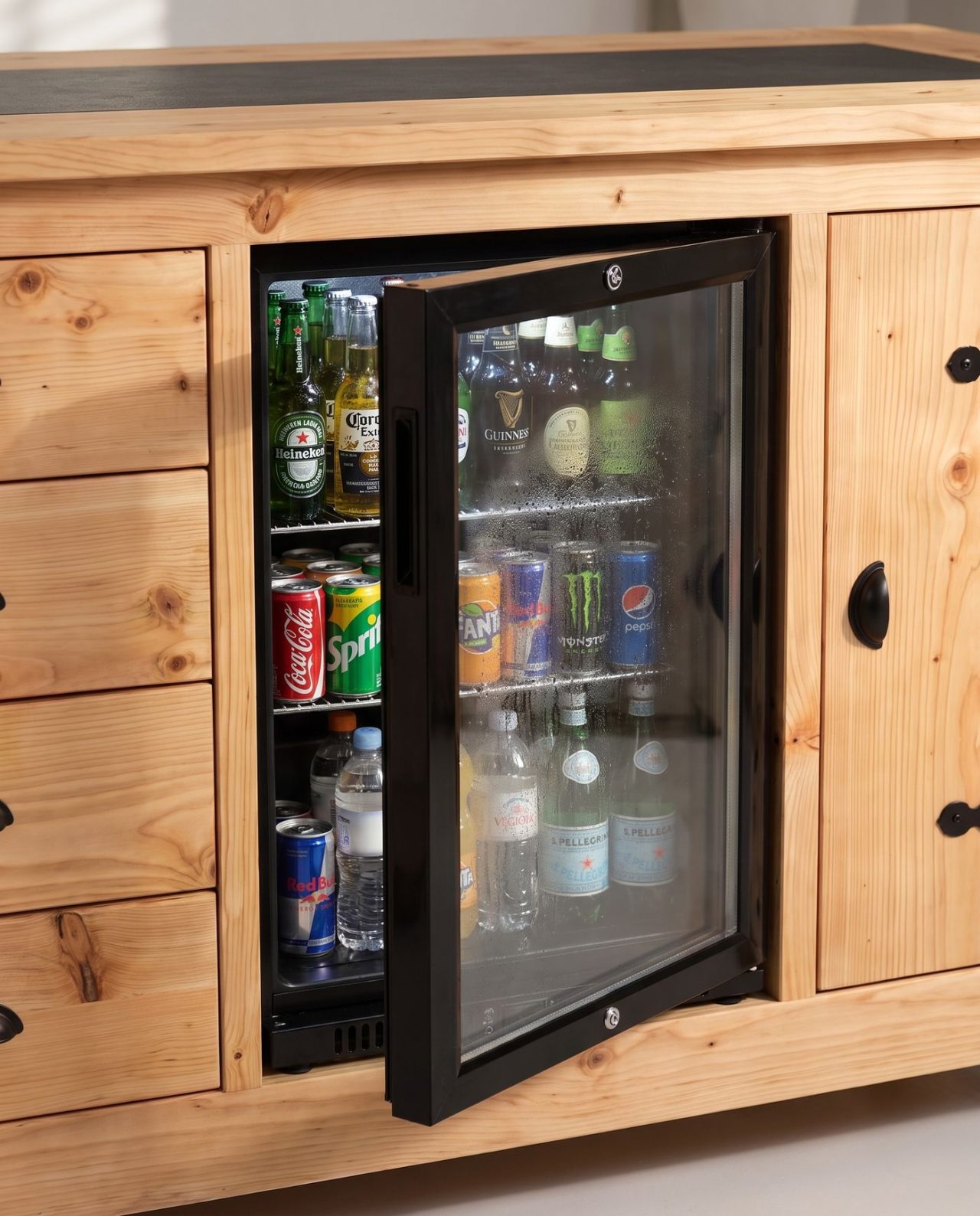
Meanwhile, a wine cooler with room for 18 bottles keeps the wine at drinking temperature. Outdoor cushions and a rug in the seating area dampen sound and soften the space. Choose textiles that can cope with moisture.
That's really all you need in an outdoor kitchen: clear worktop, light, herbs, tableware within reach. The rest is a matter of taste.
Warmth and something personal for the evening
Fire keeps a patio liveable once the sun has gone. A fire table or patio heater by the seating area makes sure guests stay put and leave their jackets on the hook. Place the heat source by the table, because that's where everyone gathers. The space next to the grill then stays a work area. If you have a kamado in your kitchen, use the residual heat after dinner for marshmallows or a grilled dessert.
Finally, hang up something that says something about you: a wall shelf, souvenirs from your travels, a print that can cope with the outdoor air. A few well-chosen pieces make a stronger impression than a wall full of things. How to hang things up while leaving the Douglas fir unharmed is something we haven't fully solved ourselves yet. A hook over the edge of a shelf works best so far.
Frequently asked questions
How do you make an outdoor kitchen cosy?
You make an outdoor kitchen cosy with warm 2700 K lighting, herbs and climbing plants as a permanent part of the space, real tableware in the cabinets and a fire table or patio heater by the seating area. Match the colours to your worktop, for example sintered stone in Black Betty or Snowy White, and keep the worktop itself as clear as possible.
What do you need in an outdoor kitchen?
In an outdoor kitchen you need a clear worktop, directed light, tableware and glasses within reach and cooling for drinks. A 70-litre fridge, a sink with a tap and a herb box next to the chopping board are also practical. Atmospheric touches such as festoon lights and cushions complete the space, but they are the second step.
What is the ideal working height for an outdoor kitchen?
According to the German kitchen industry association Arbeitsgemeinschaft Die Moderne Küche (AMK), the ideal working height for an outdoor kitchen is 10 to 15 cm below your elbow height. The classic 90 cm applied to people 165 to 170 cm tall and, according to Küchen-Atlas, is now considered outdated. Measure with your arm bent before you buy bar stools or a side table, and your back will stay relaxed all evening.
What kind of lighting suits an outdoor kitchen?
An outdoor kitchen suits a combination of directed light above the worktop and warm 2700 K mood lighting around the seating area. Under a roof, IP44 lights are enough. Fully exposed to the weather, choose at least IP65. Festoon lights and a lantern on the worktop together add depth while staying pleasantly soft.
Which plants suit an outdoor kitchen?
Kitchen herbs and climbing plants suit an outdoor kitchen best. Thyme and rosemary come through winter in dry soil and sit next to the chopping board all year round; replant basil every spring. Virginia creeper or passion flower on a pergola provide shade and shelter from the wind, and a row of lavender along the edge smells lovely and draws bees away from the table.