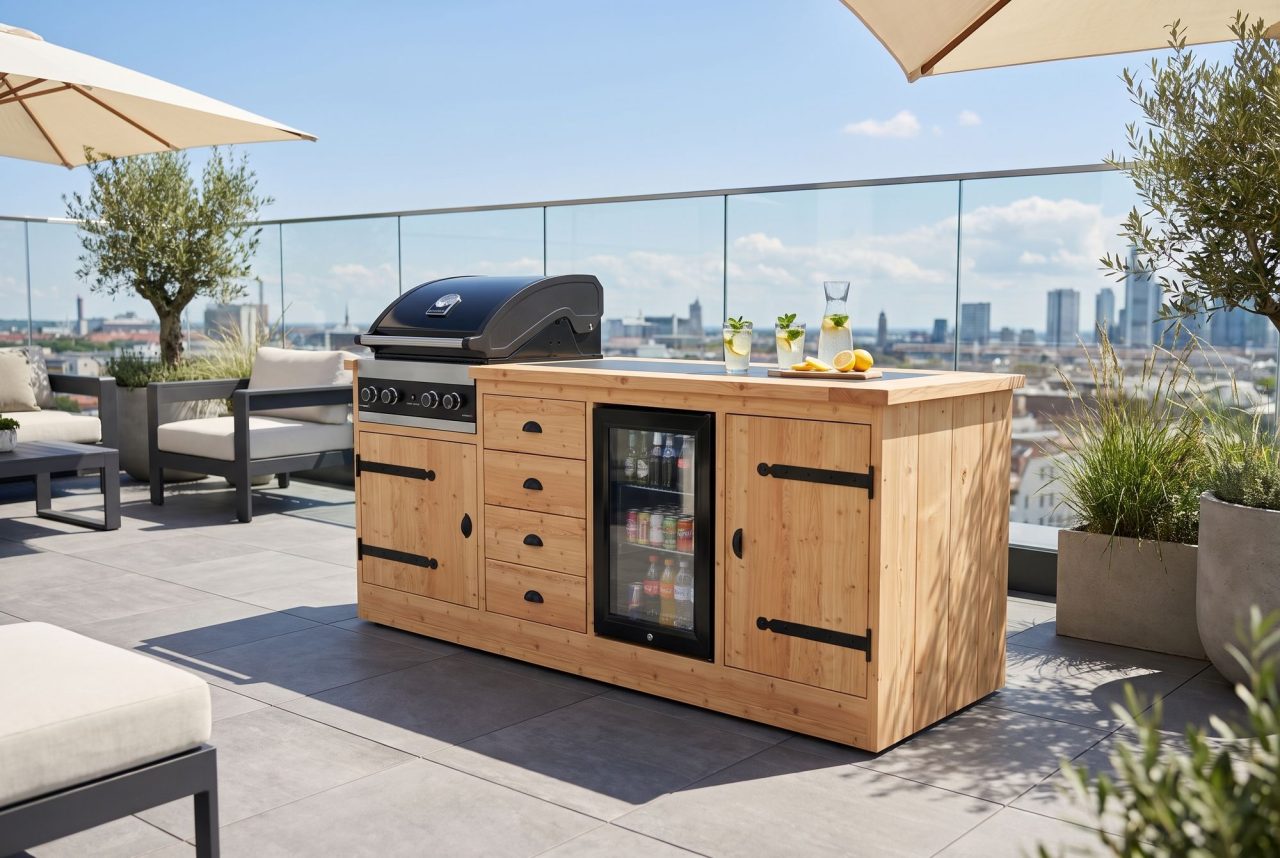
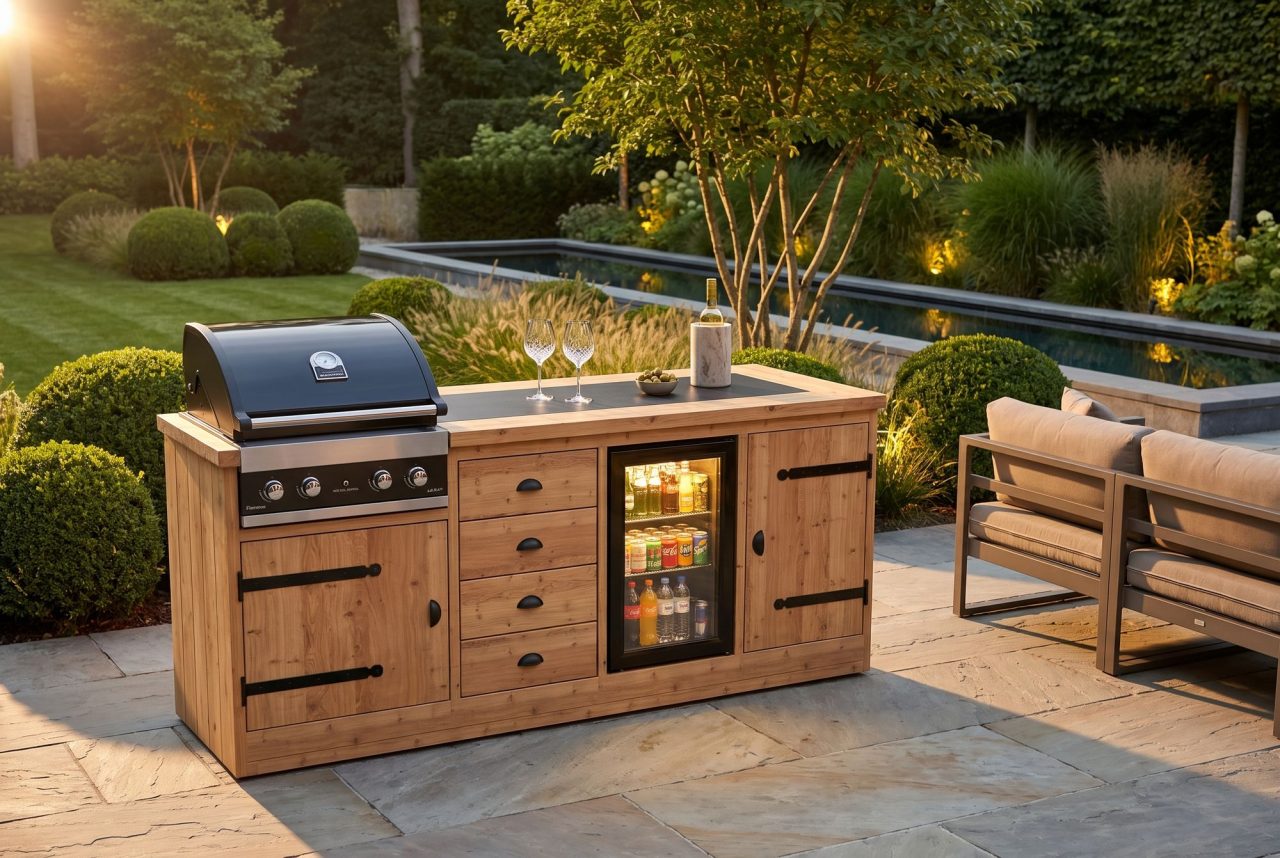
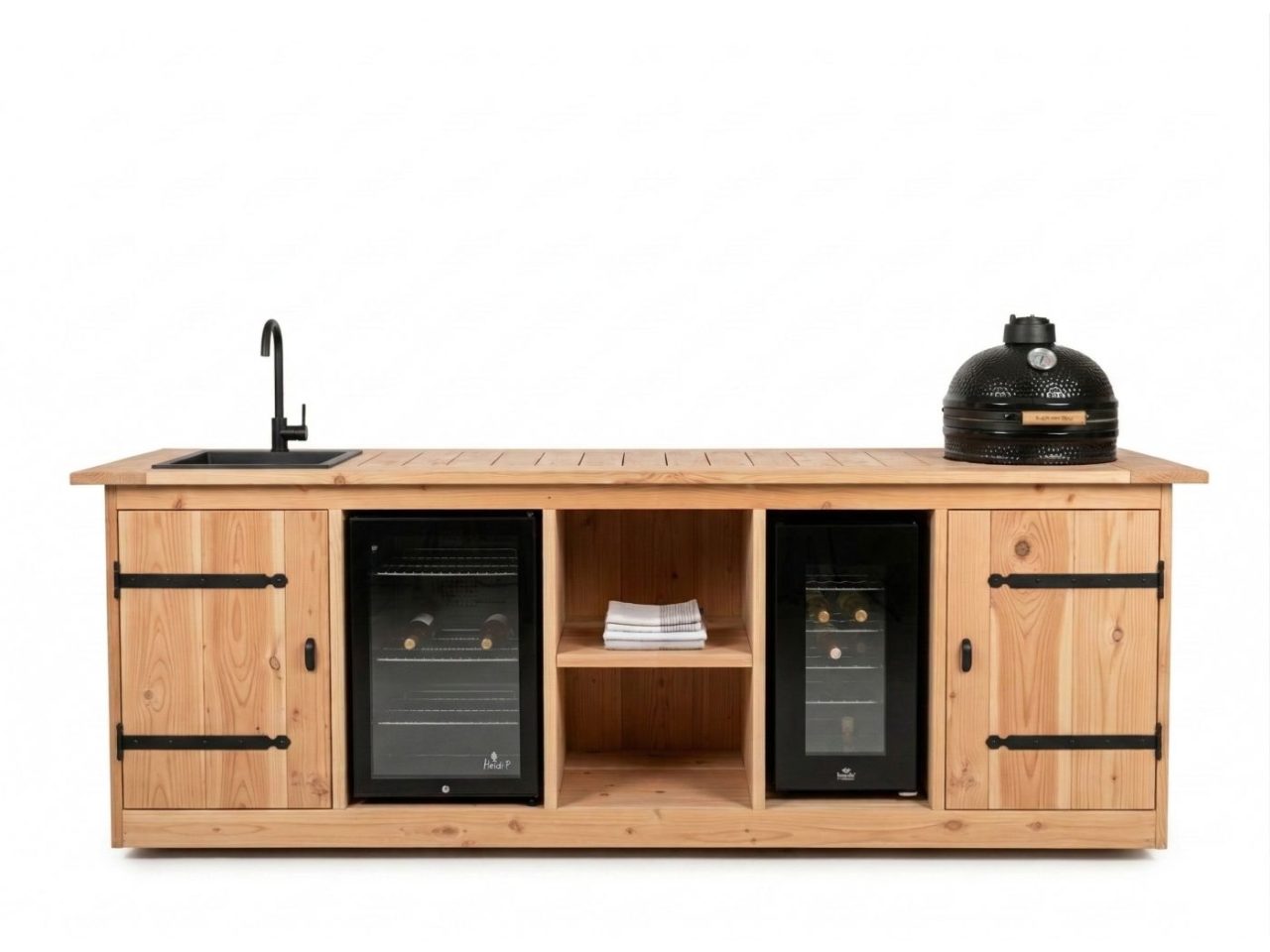
Every outdoor kitchen needs at least five things: a good heat source, a worktop that can stand up to the weather, a sink with a tap, and cooling. Plus, and this is the one most often forgotten: protection from rain and sun. Everything else is an extra, lovely to have, but optional. In this article we go through the five basic building blocks, with dimensions and figures, so you know what to look for when putting yours together. If you'd rather know what you can add later on, take a look at the extensions for your outdoor kitchen.
1. A heat source that suits the way you cook
The heat source is the heart of every outdoor kitchen, and the choice broadly comes down to kamado or gas. An outdoor kitchen with a kamado of 16 or 18 inches is the choice for anyone who loves smoking, low and slow cooking and long Sundays at the grill. The ceramic holds its temperature steadily for hours.
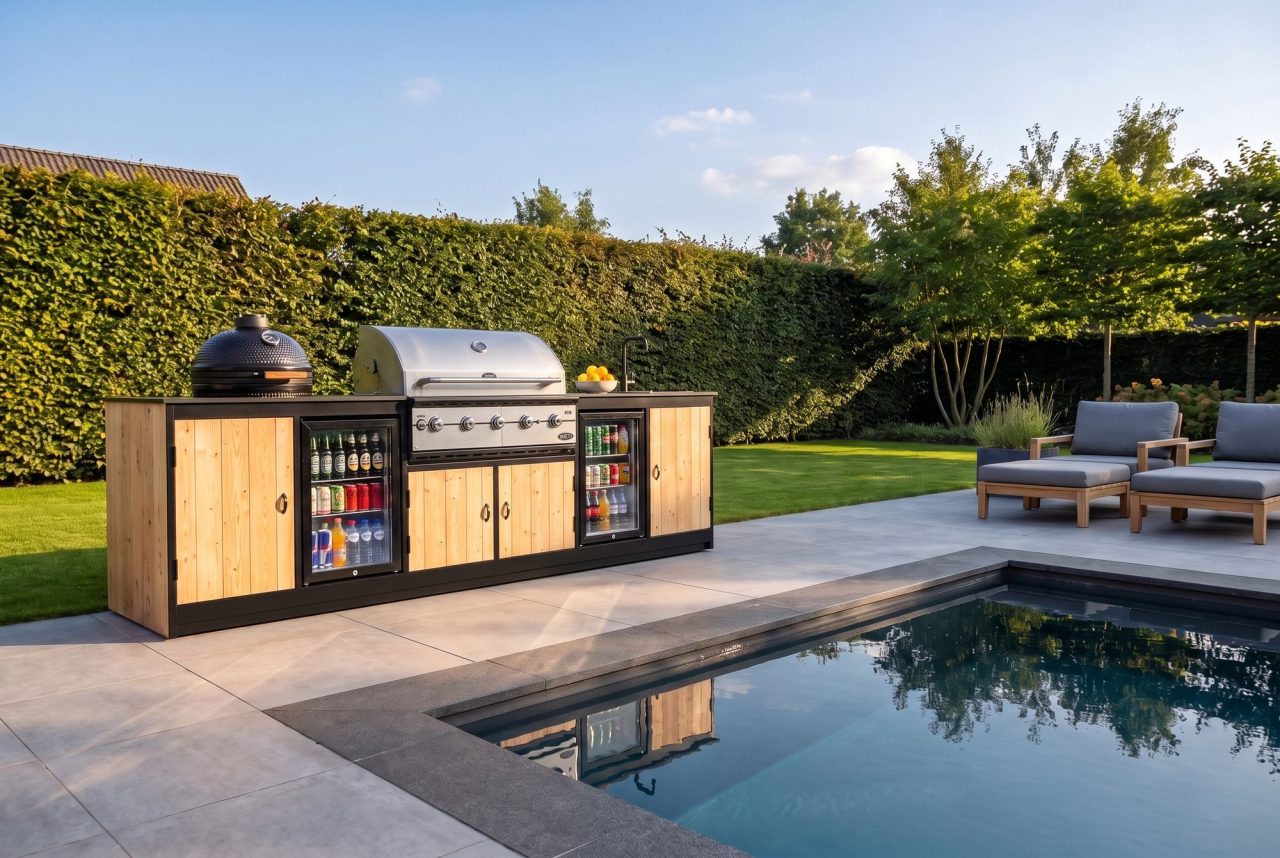
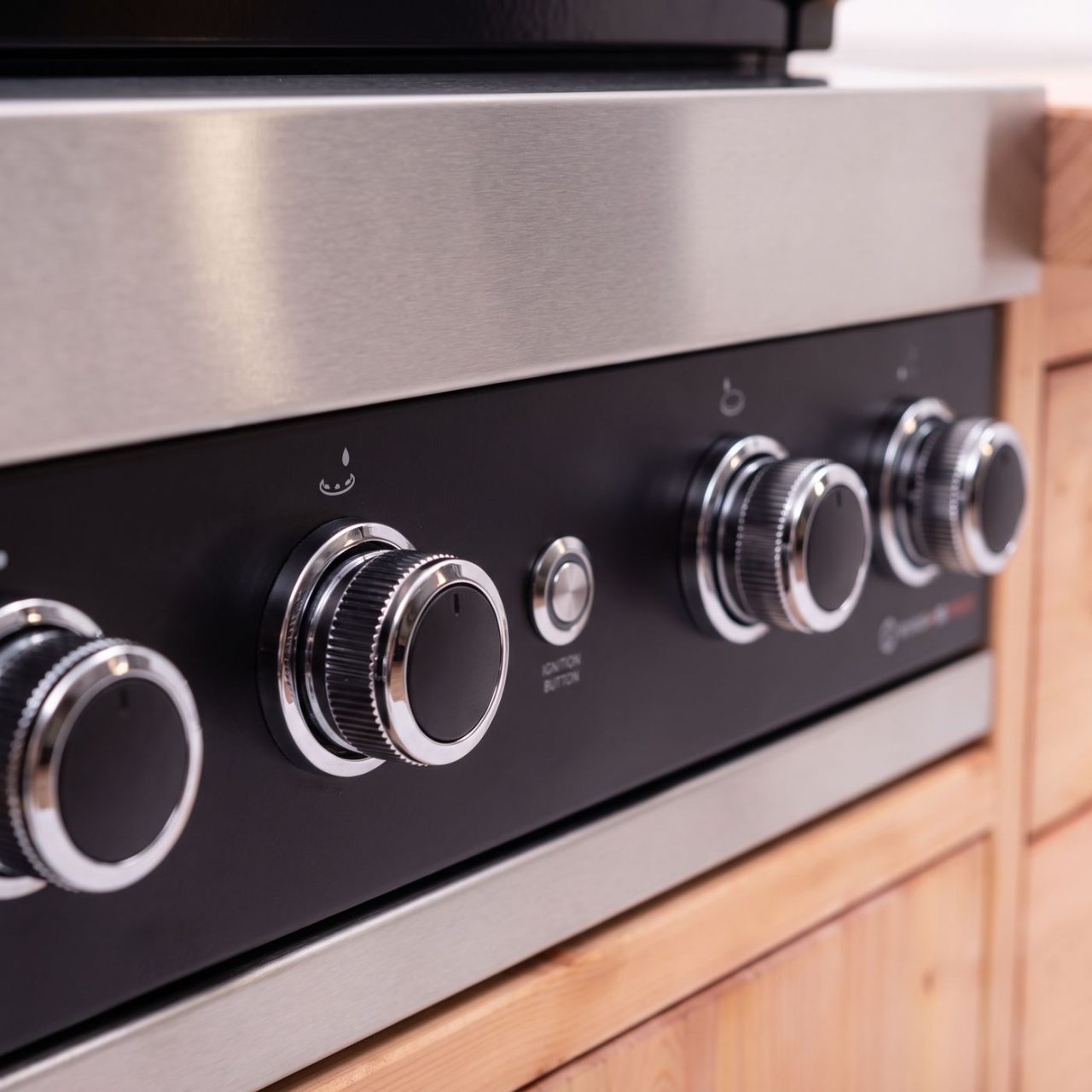
An outdoor kitchen with gas, with a built-in gas grill from Grandhall or Boretti, is for the cook who gets home at six and wants to eat by half past. Turn the knob, a quick preheat, done. Be honest with yourself about how you cook during the week, because that is exactly where the difference lies. And if you want both: in the wider models, a kamado and a gas grill fit side by side.
2. A worktop that can stand up to the weather
An outdoor kitchen worktop has to give you enough room to work and withstand wind and weather for years. At Varetti you can choose from worktop options in Douglas fir or 12-millimetre sintered stone in four colours, from Black Betty to Snowy White. Douglas fir is warm and turns silver-grey as it weathers. You'll either find that beautiful or refresh it with oil once a year. Sintered stone is heat-resistant and water-repellent; you can simply set a hot pan down on it.
Both have their own character: Douglas fir needs a little care and in return feels warm, while sintered stone looks cleaner and is the quickest to wipe down day to day. Also make sure you have clear worktop space next to the grill. Chopping, seasoning, plating up, and the tray has to go somewhere too: it all takes more space than you think.
3. A sink with a tap
A sink with a tap turns a grilling spot into a kitchen. Washing your hands, rinsing vegetables, giving a chopping board a quick spray: with water on hand, you stay outside for every task.
Connecting it is easy: a garden hose connector (Gardena standard) on your garden hose takes half an hour, and the waste fitting comes as standard with our sinks. If you want more comfort, you can add an under-sink water heater for hot water later. In practice, the sink is the part buyers say they use most afterwards. More often than the grill itself, some admit.
4. Cooling in the right place
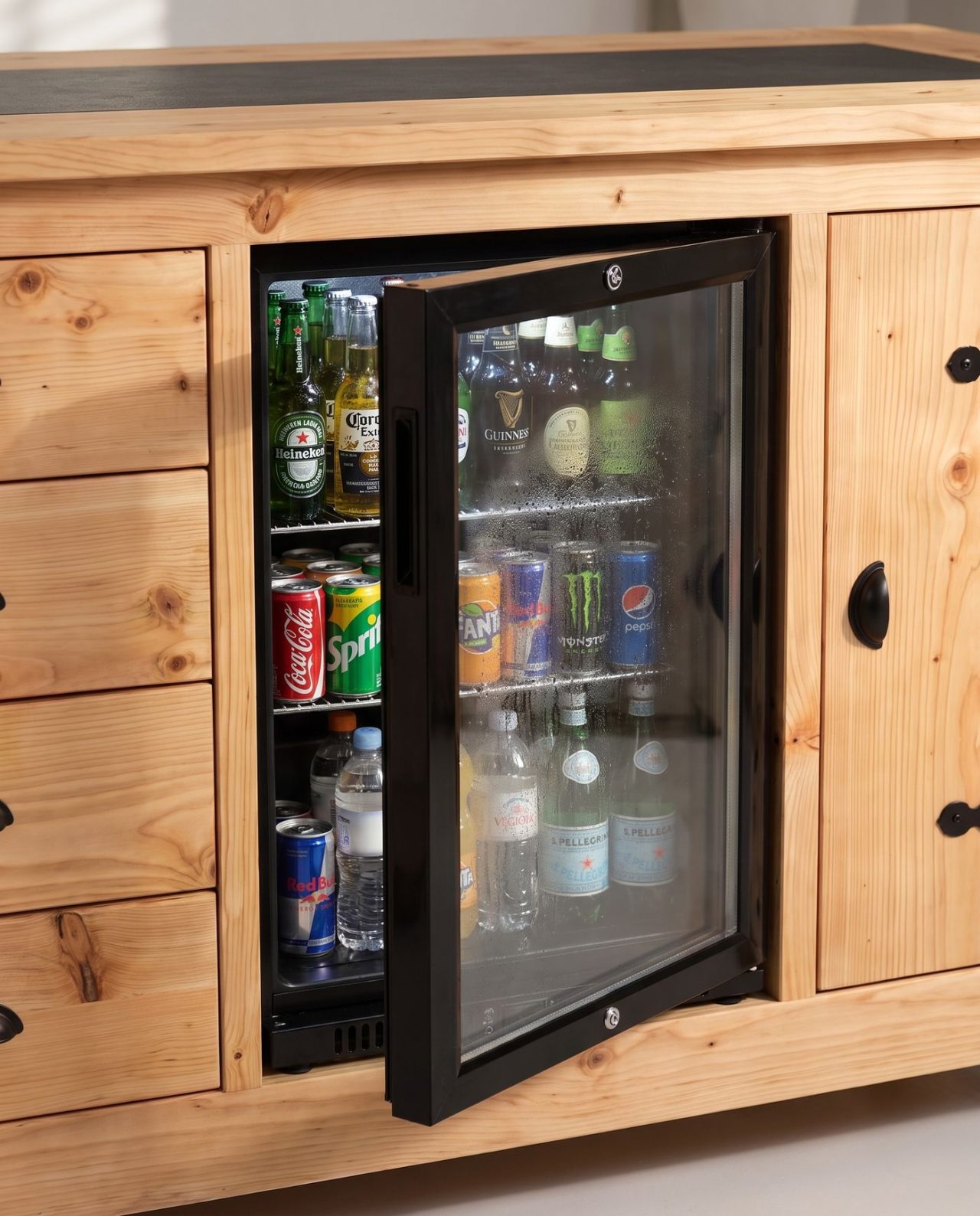
An outdoor kitchen with a fridge and sink saves dozens of trips into the house every barbecue evening. As standard we fit a 70-litre fridge: enough for meat, salads and a supply of drinks for an evening with six to eight people.
An interesting detail if you keep an eye on consumption: of our built-in fridges, the smaller 35-litre model uses 445 kWh a year, the larger 52-litre model 321 kWh. So size alone tells you little about consumption. At the current German household electricity price of 37.0 cents per kWh (BDEW electricity price analysis, as of 21 August 2026), that works out at almost 46 euros a year in favour of the larger appliance. So look at the energy label as well as the size.
5. Protection from rain and sun
Protection is the least conspicuous must-have. And that is exactly why it is the one most often forgotten. An outdoor kitchen stands outside all year round, so the material has to be made for it: our Douglas fir is planed on both sides and dried, and on request we give it a nano coating that repels moisture and dirt.
Also think about the details that determine how long it lasts. Drain the tap before the first frost. Cover the worktop or choose sintered stone. Ideally, place the kitchen under a roof or somewhere that gets shade during the day, because even black-stained wood fades in full sun.
How to put the basics together
Putting the basics together starts with size, in other words with the question of what dimensions your outdoor kitchen needs. Our 22 standard models come in five widths: 109, 157, 205, 253 and 301 centimetres. At 109 centimetres you have a compact block with a heat source and a little worktop space. The wider you go, the more room there is for a sink and fridge, plus extra worktop space.
If a different layout suits you better, you can put it together to measure in the configurator, built in our workshop in Almelo. Every kitchen arrives fully assembled, wherever you are in Europe. Start with what you need at a minimum. You can always extend later, and that is exactly what a modular design is for.
Frequently asked questions
What do you need for a complete outdoor kitchen in the garden?
For a complete outdoor kitchen in the garden you need five things: a heat source (kamado or gas grill), a weatherproof worktop in, for example, Douglas fir or sintered stone, a sink with a tap, a fridge, and protection such as a nano coating or a roof. Having electricity and water nearby is handy. To begin with, a garden hose and an outdoor cable are often enough.
Which outdoor kitchen is best for beginners?
For beginners, a compact outdoor kitchen with a gas grill is a good fit: gas takes little practice and comes up to temperature quickly on weekdays. Start with a model 109 or 157 centimetres wide with a worktop and sink, and extend later. If you want to learn smoking and low and slow cooking straight away, choose a 16-inch kamado and allow yourself a few practice runs.
Is a kamado or a gas grill better in an outdoor kitchen?
Whether a kamado or a gas grill is better in an outdoor kitchen depends on how you cook. The kamado wins on flavour and long barbecue evenings: smoking, low and slow, baking pizza, it does it all. Gas wins on speed and convenience: turn the knob and you're ready to grill in minutes, and the grate stays clean afterwards. During the week gas is more practical; at the weekend the kamado is more fun. Wider models from around 2 metres fit both.
What is the minimum size for an outdoor kitchen?
An outdoor kitchen can manage with a width of around 109 centimetres: enough for a heat source with a little worktop space around it. If you also want to fit a sink and a 70-litre fridge, you'll quickly end up at 205 centimetres or more. Above all, measure your patio or veranda and keep walkways clear. You'll use a kitchen with enough space around it far more often.
Do you need a tap in an outdoor kitchen?
A tap is precisely the part that turns a grilling spot into a real outdoor kitchen. Washing your hands and rinsing vegetables right where you cook saves a surprising amount of time every barbecue evening. Connecting it is simple: a garden hose connector on your garden hose is enough, and the waste can run into a bucket or a drain. If you want hot water, add an under-sink water heater.
How much does it cost to run an outdoor kitchen fridge?
The electricity consumption of our outdoor kitchen fridges ranges from 321 kWh (52 litres) to 445 kWh (35 litres) a year. At the German household electricity price of 37.0 cents per kWh (BDEW, as of August 2026), that comes to 119 to 165 euros a year if the fridge runs all year round. Switch it off in winter and you roughly halve that. Worth noting: the smallest model uses the most here.