When buying an outdoor kitchen, look at five points: the size in relation to your patio, the material and the care it needs, the appliances you want to build in, the type of delivery and the reliability of the supplier. We build outdoor kitchens ourselves in Almelo, near Enschede close to the German border, so our view is naturally our own. At the same time, the five points here are simply the checklist you can go through with any supplier, including the questions you should ask.
1. Measure your patio; the kitchen comes after
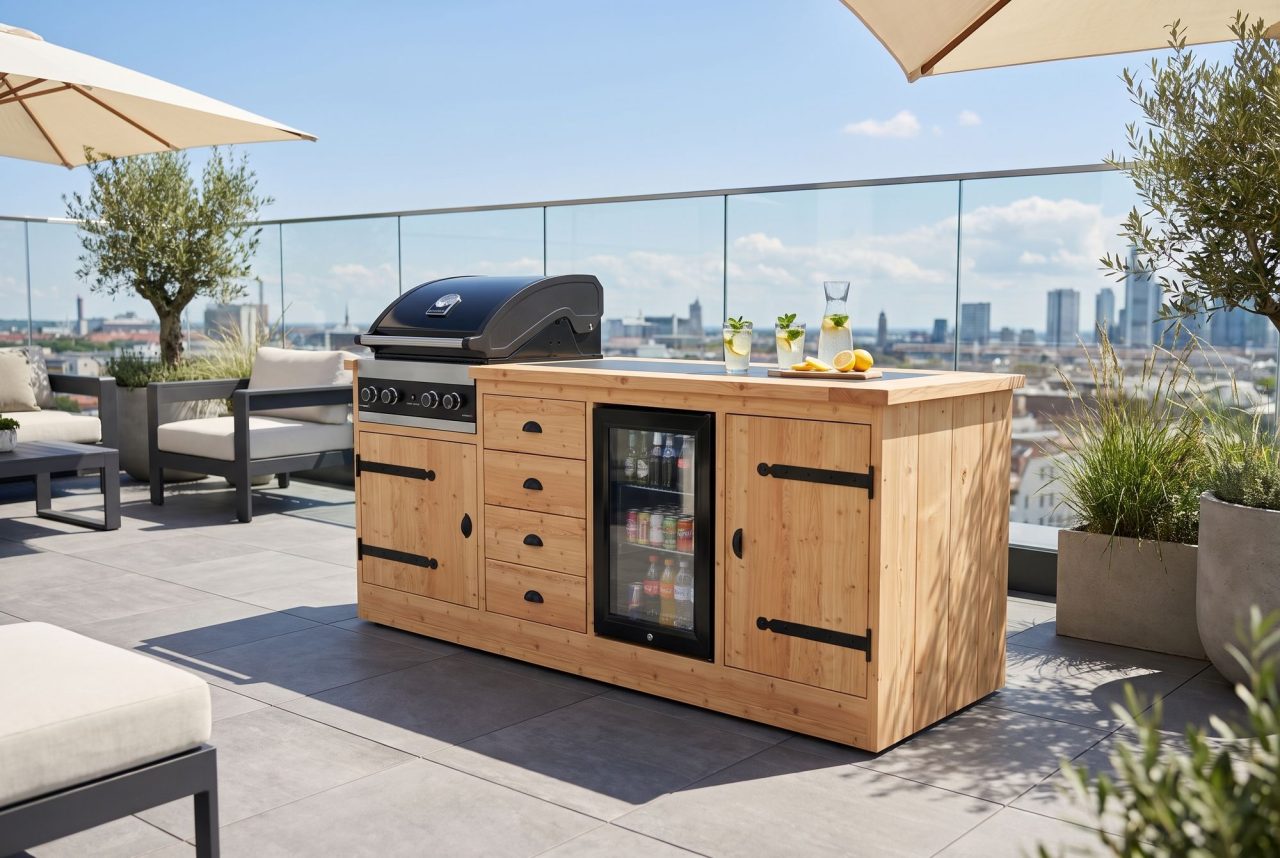
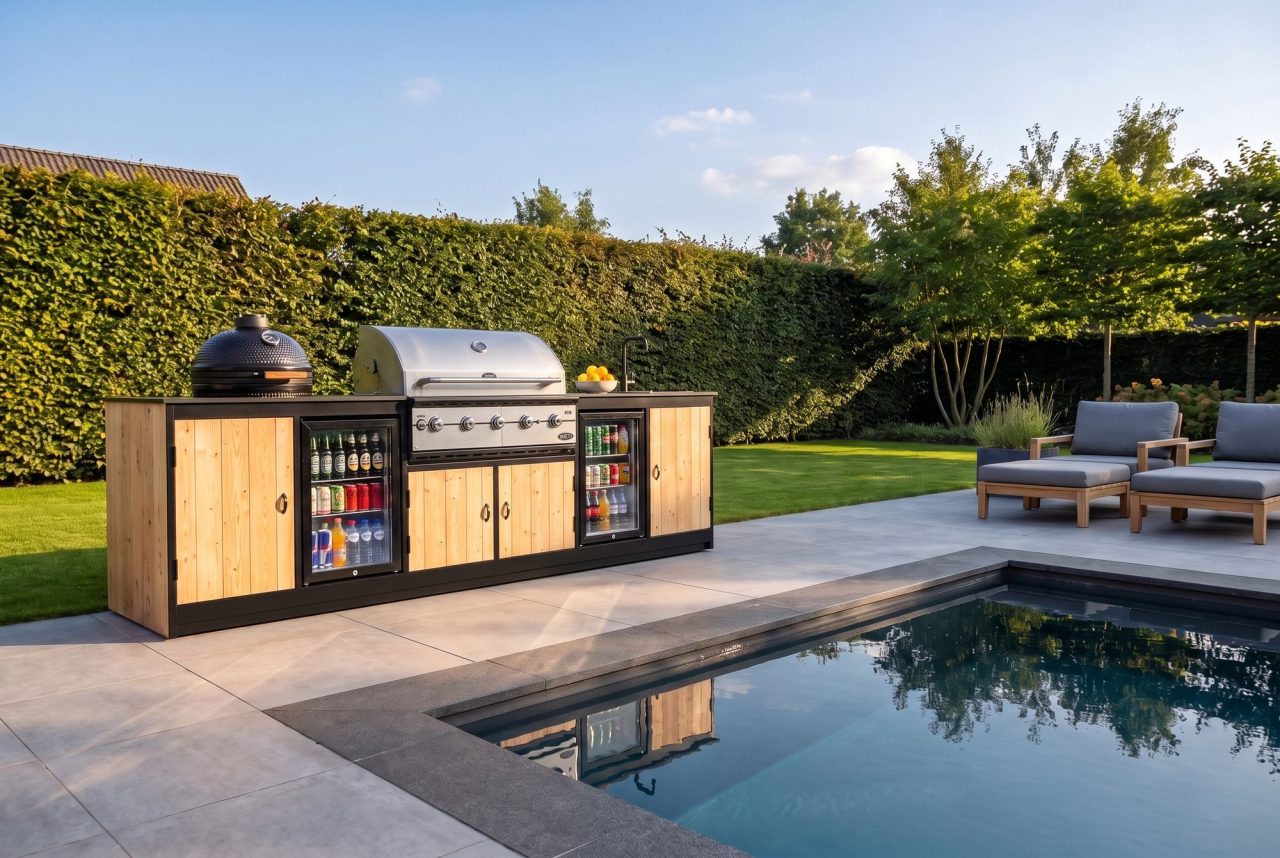
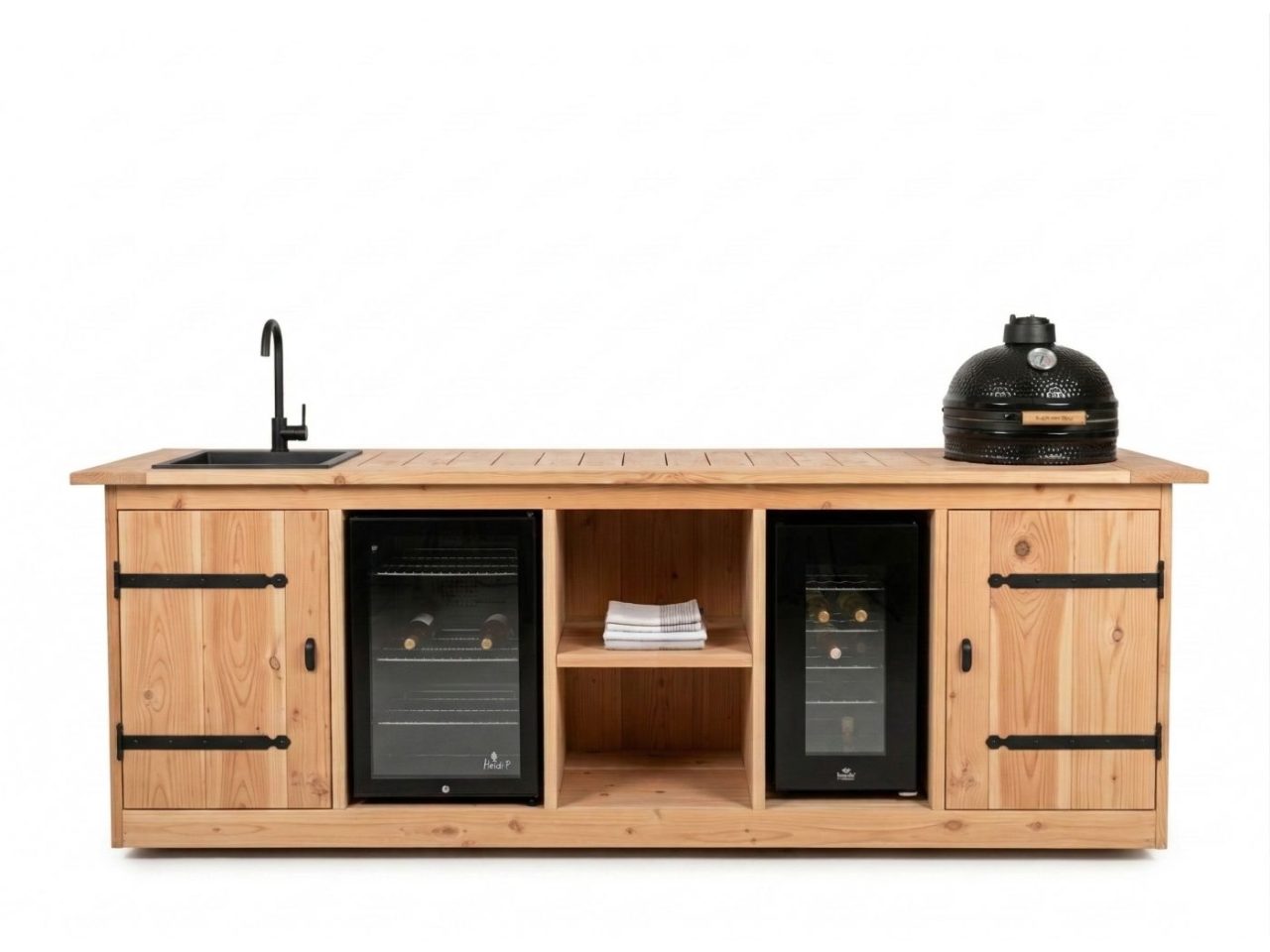
Start with a tape measure on your patio; the product page comes later. Our standard models come in five widths: 109, 157, 205, 253 and 301 centimetres, and that difference determines what you can do with them. On 109 centimetres you cook or chill, on 157 centimetres you have worktop space next to the cooking module, and from 205 centimetres you combine cooking, cooling and washing up.
Mark out the spot with masking tape and keep at least a metre of walkway clear all around. Think about the route there too: an assembled kitchen has to fit through the garden gate or round the side of the house. If you're still torn between two sizes, take the larger one. Worktop space is the first thing you miss on a busy evening.
2. Material: what you'll have in five years' time
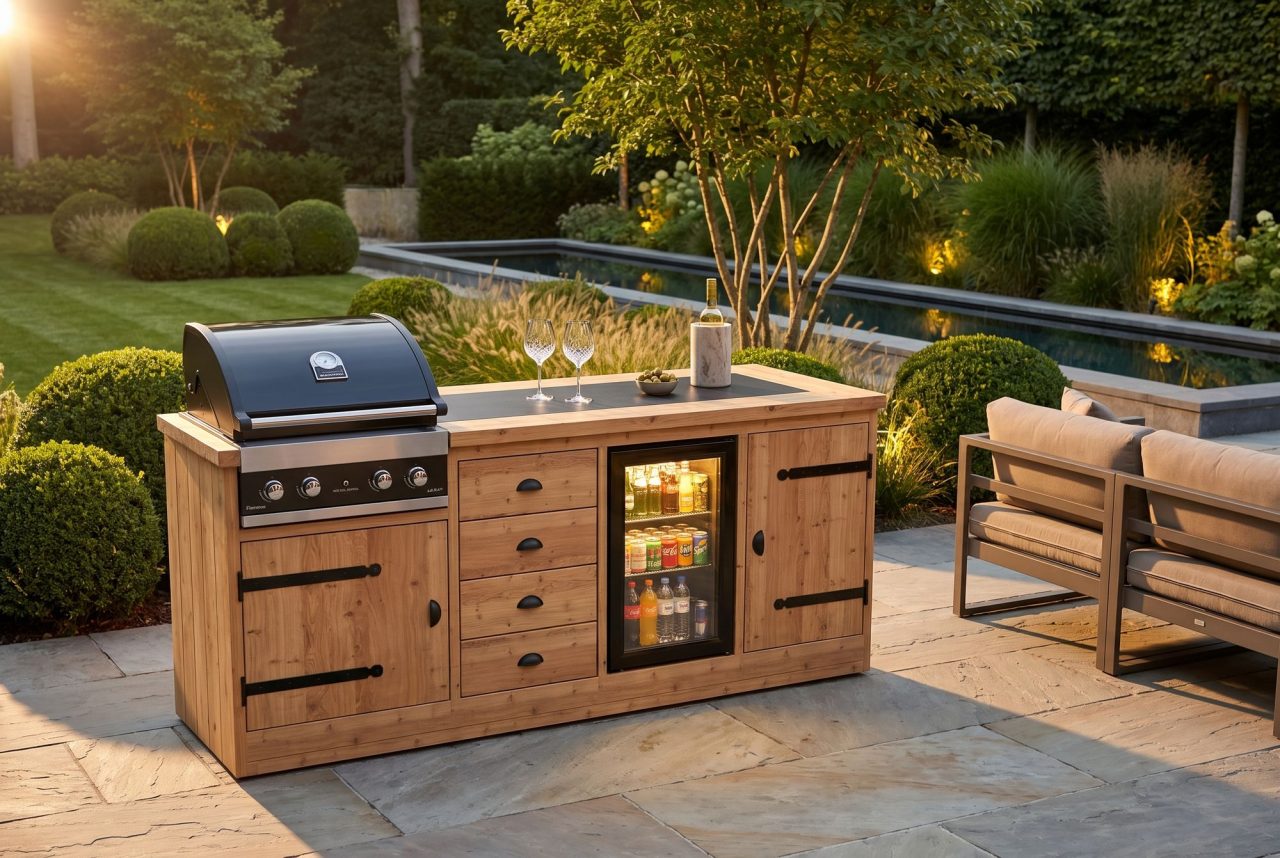
A wooden outdoor kitchen and a stainless steel or stone version age completely differently, and it's worth thinking about that honestly. We build in Douglas fir, planed on both sides and dried. Under DIN EN 350, Douglas fir heartwood is in durability class 3, European timber in class 3 to 4, and untreated it lasts 10 to 15 years as long as it stands clear of the ground. Douglas fir does, however, turn grey if you leave it untreated, and black-stained wood lightens over time in full sun. If you find that charming, you can simply leave it. If you want to keep the warm tone, re-oil it every year.
For the worktop, you can choose Douglas fir or 12-millimetre sintered stone in four colours with us, from Black Betty to Snowy White. Stone is scratch-resistant and stain-resistant, while wood feels warmer and needs a little more care. Ask every supplier what the material will look like in 5 years, and go by that more than by the photo.
3. Appliances: build around the way you cook
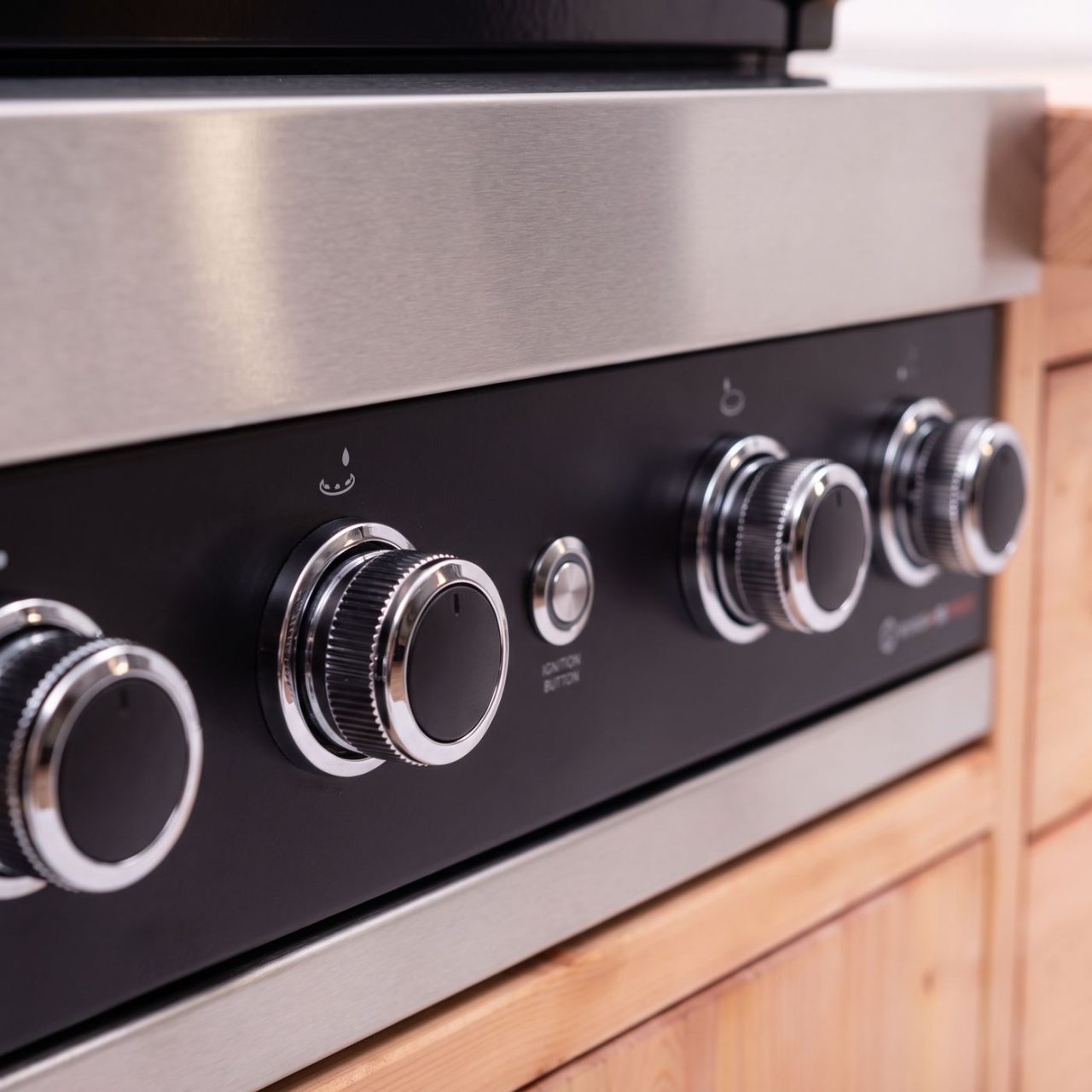
Choose the appliances according to how you cook, and in exactly that order. If you're a low and slow griller, an outdoor kitchen with a kamado suits you. We fit them in 16 or 18 inches. If you prefer cooking with gas, there are built-in gas grills from Grandhall and Boretti or a gas hob for your pans. Even induction works outdoors, handy if you'd rather stick to mains electricity.
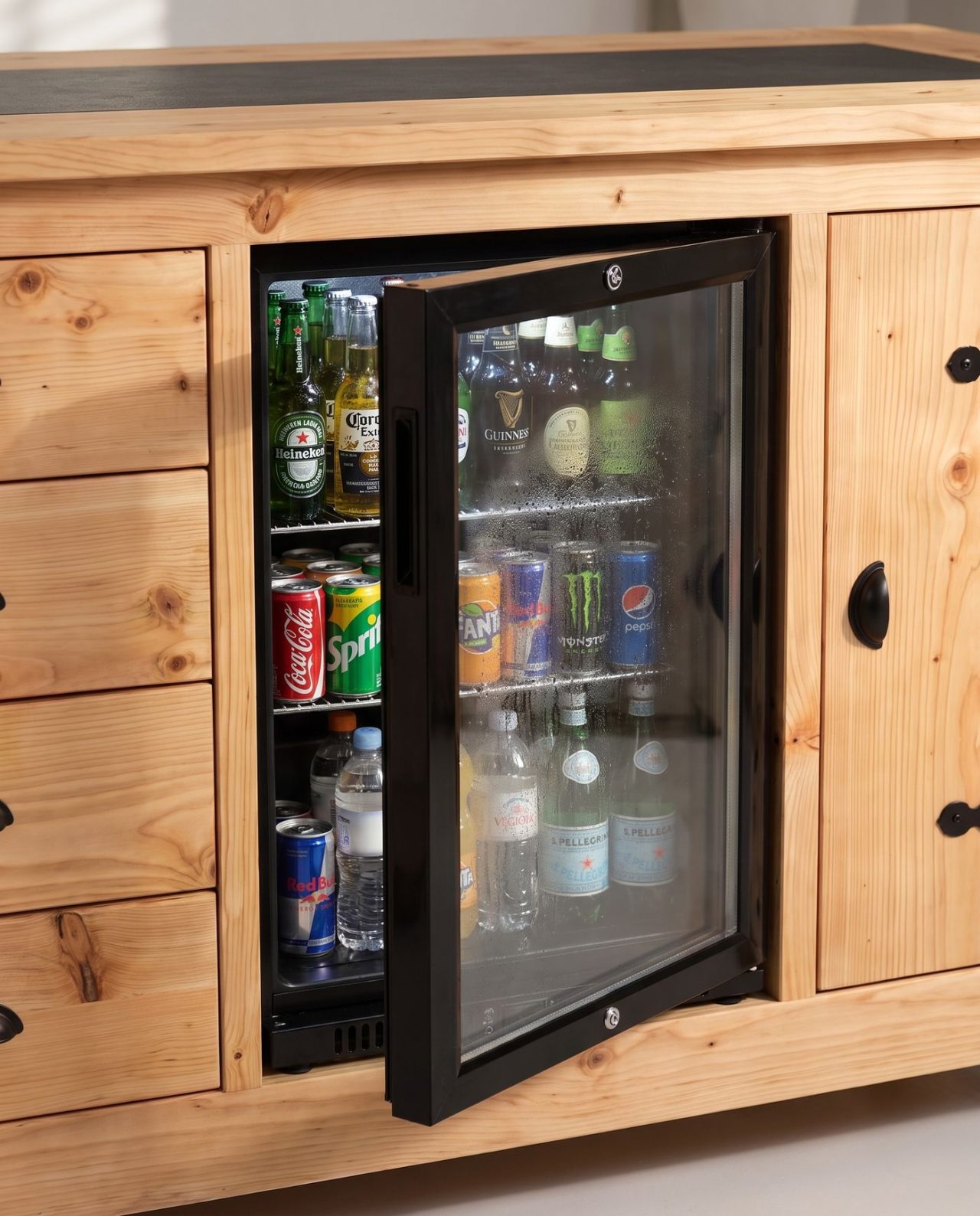
Already have a grill you're attached to? Then choose a worktop with a cut-out of up to 60 centimetres so your own appliance fits in. And think about cooling: a 70-litre fridge for drinks and meat, or a wine cooler for 18 bottles if a good bottle gets opened more often. Above all, consider what you will really use. Every module that just sits there is worktop space you're missing.
4. Delivery: assembled or flat-pack?
Always ask how the kitchen arrives, because there's a difference here you'll only feel on delivery day. Some suppliers send a package of boards and screws. Our kitchens arrive fully assembled from our workshop: put it in place, plug in the fridge, done.
Bear in mind that a kitchen like this is seriously heavy. Our 157-centimetre model weighs 177 kilos, so the delivery driver must be able to get to it with a sack truck, and the ground must be level and firm. Ask beforehand exactly how far it will be delivered: to the kerb or onto the patio. That alone tells you something about point 5.
5. The supplier: reviews, showroom and security
You can check a supplier's reliability with three questions. One: what do customers say? Read the text above all rather than the stars, because the text tells you how a company deals with problems. Two: can you see the product in person somewhere? You can visit our showroom in Almelo by appointment, right next to the workshop where we build the kitchens.
Three: how does payment work and who bears the risk during transport? A supplier who answers all three questions clearly works transparently. If in doubt: give us a call or email info@varetti.com. On the phone you'll know within two minutes whether there's real expertise behind it.
Buy a standard model or have one made to measure?
A standard model is the quickest and most affordable route; made to measure is the solution for an unusual corner or a special wish. We have 22 standard models in the five widths mentioned, which you can find under all outdoor kitchens, and they work perfectly well in most gardens.
If your patio falls between sizes, or you'd like a different layout or an L-shape, you can put together a made-to-measure outdoor kitchen in the configurator. Made to measure mainly means more decisions up front. Our advice: start with the standard models and only switch to made to measure if your patio or cooking style really calls for it. Starting the other way round makes it needlessly expensive.
Frequently asked questions
How do you choose an outdoor kitchen that suits the way you cook?
You choose an outdoor kitchen that suits the way you cook by first pinning down how you cook and then looking for the right modules. If you grill low and slow, go for a 16- or 18-inch kamado. If you cook in a classic, quick style, a built-in gas grill from Grandhall or Boretti or a hob suits you better. Add a fridge and sink if you like long meals outdoors.
What do you need for a complete outdoor kitchen in the garden?
For a complete outdoor kitchen you need a cooking module, a worktop, storage and ideally cooling and water. Think of a kamado or gas grill, at least half a metre of clear worktop, a 70-litre fridge and a sink with a tap. Add to that a level, firm base. A 157-centimetre kitchen already weighs 177 kilos.
Which outdoor kitchen is best for beginners?
For beginners, a compact standard model with one cooking module is a good fit, for example 157 centimetres wide with a kamado or gas grill and a worktop next to it. That way you learn to cook outdoors and only pay for what you use. Add cooling or a sink later, or choose a larger model of up to 301 centimetres then.
How much does an outdoor kitchen cost on average?
What an outdoor kitchen costs depends mainly on the width, the worktop material and the appliances you build in: a compact model with just a work surface sits at the lower end of the market, a 3-metre kitchen with a kamado, fridge and sintered stone worktop at the upper end. You'll find concrete prices for each version on our page about outdoor kitchen costs.
Is a Douglas fir outdoor kitchen weatherproof in winter?
A Douglas fir outdoor kitchen can stay outside in winter: under DIN EN 350 the heartwood is in durability class 3 (European timber in 3 to 4) and lasts 10 to 15 years outdoors, as long as the kitchen stands clear of the ground on its castors. An annual coat of oil preserves the warm tone, and a cover protects the worktop and appliances during the months of little use.