For a great barbecue evening you need less than the accessory shelves at the DIY store would suggest: good tongs, a core thermometer, fuel with a chimney starter, separate chopping boards for raw and cooked food, and a place where everything has its spot. In this overview we go through the accessories that really matter, with concrete guide values. That way you'll know what to buy and what can happily stay on the shelf. For the rest of the organisation, there's the garden party checklist.
The basic kit for every barbecue evening
The basis of your barbecue kit is tools that can take the heat and sit well in your hand: long stainless steel tongs, a wide spatula, a basting brush and heat-resistant gloves. Better to buy four good pieces than a case of twenty mediocre ones. To be honest, you'll use the tongs every barbecue evening and the sausage holder from the special offer rarely.
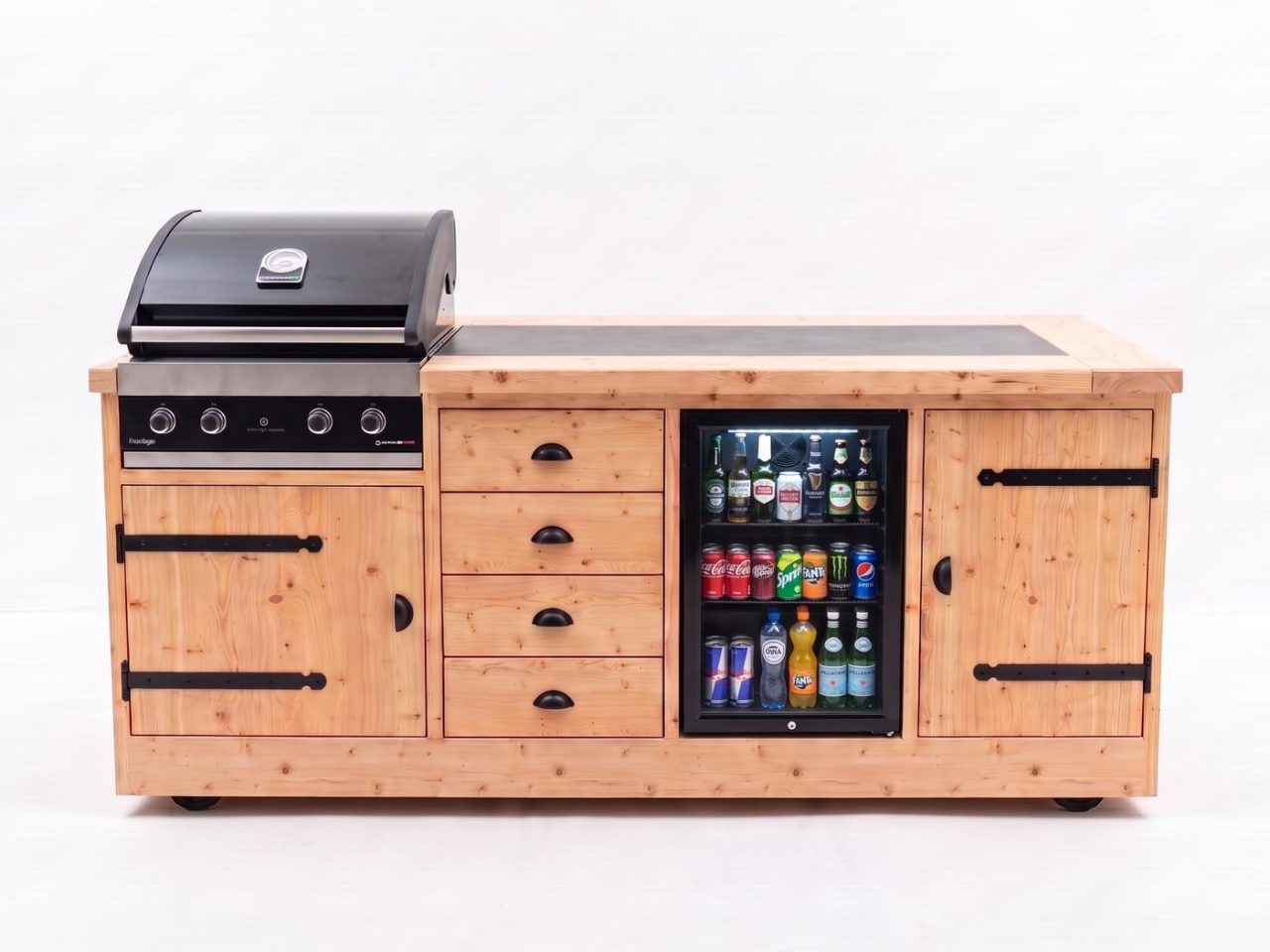
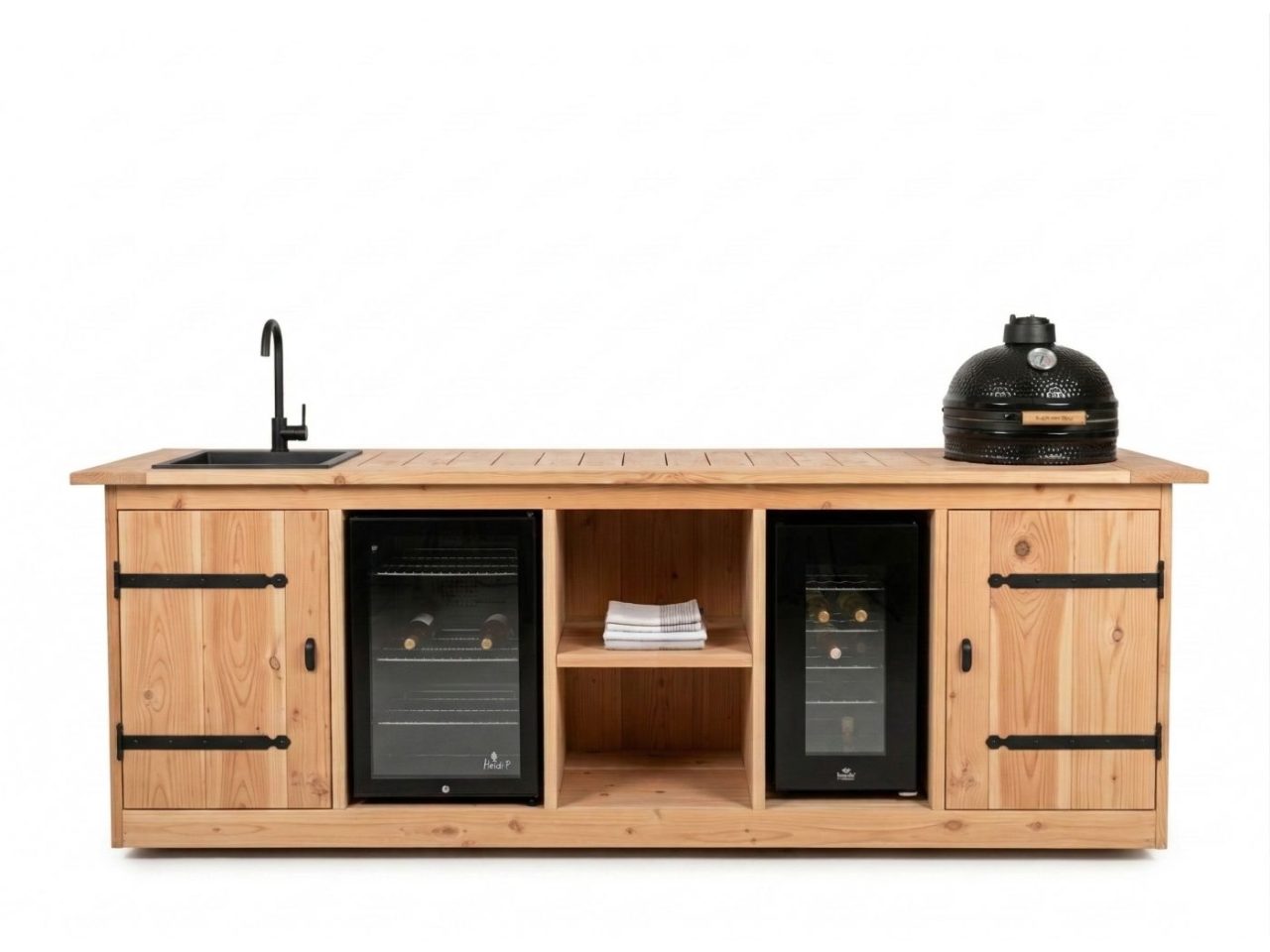
What's often forgotten is a place to put your tools down. If you grill on a free-standing barbecue, you end up balancing plates on the arm of a garden chair. In an outdoor kitchen that problem is solved: next to the grill cut-out, a maximum of 60 cm wide on our models, you have worktop on both sides. That saves carrying things back and forth and knocking over bowls.
A core thermometer is a must
A core thermometer makes the difference between guessing and knowing. Chicken has to be cooked right through, and you can't see that from the outside. The German Federal Institute for Risk Assessment (BfR) recommends a core temperature of at least 70 °C for two minutes for poultry. With a thermometer, you can check that in seconds.
What to look for when buying: a reading in 2 to 3 seconds, a deviation of no more than one degree, and a display you can read in the sun. As a guide to common core temperatures: poultry, mince and pork should be served cooked through, so at least 70 °C at the core for two minutes, while a beef steak can stay pink inside.
Wireless models with a range of around 30 metres are handy on long barbecue evenings, so you can sit down with your guests in between. Incidentally, the price says little about measuring accuracy here. We find a simple instant-read thermometer perfectly adequate for most grillers, even if a probe model with a cable is more convenient to read during low and slow cooks.
Charcoal, briquettes and the time they need
The choice between lumpwood charcoal and briquettes determines your planning. Charcoal lights faster and burns hotter, ideal for steaks and other quick-cooking food. Briquettes take a little longer to light and then hold their temperature for a long time, great for pulled pork or a whole joint of meat. That's also how the German consumer testing organisation Stiftung Warentest summed it up in its charcoal test of March 2024.
Allow for these times and quantities:
| Fuel or grill type | Guide value |
|---|---|
| Gas grill up to temperature | About 10 minutes |
| Electric grill up to temperature | About 10 minutes |
| Charcoal with wood wool firelighters ready to grill | 30 to 45 minutes |
| Briquettes in a chimney starter ready to grill | 15 to 20 minutes |
| Briquettes for 4 people | About 1.5 kg |
The last three rows come from grill expert Oliver Hess, quoted by the German news site t-online: 1.5 kg of briquettes fills a medium-sized chimney starter about two-thirds full. When buying, look for the DIN EN 1860-2 test mark. According to the German Environment Agency (Umweltbundesamt), it confirms that the charcoal is free of pitch, petroleum, coke and plastics. Also always use a chimney starter. It's quicker, safer, and the coals glow evenly.
Chopping boards, knives and the 7-degree rule
Preparation is all about keeping raw and cooked apart. Use separate chopping boards and separate bowls for raw meat or fish. Otherwise germs such as salmonella end up on your baguette. Wash your hands with soap after touching raw meat. That may sound strict at first. Food poisoning after your own garden party is stricter.
The rule hardly anyone knows: according to the BfR, salmonella multiply in food at temperatures above 7 °C. On a warm evening that happens quickly, especially with sausages, meat salads and dips. So take small amounts out of the fridge at a time, and whatever you can't keep chilled during the evening, use up the same day.
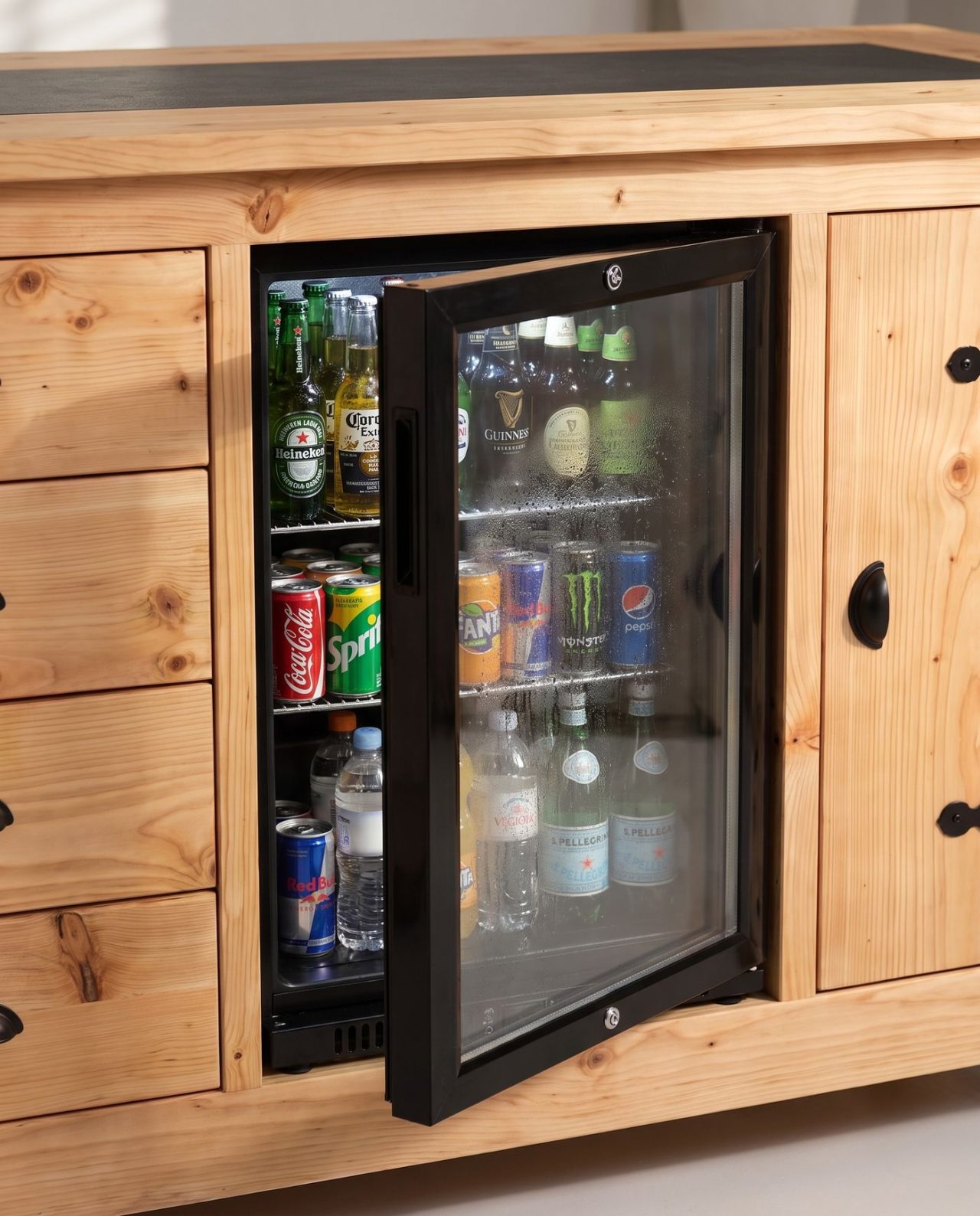
An outdoor kitchen with a fridge and sink, with 70 litres of cooling space, makes this easy: marinades, salads and the next round of meat stay cold two steps from your grate. For context on consumption: our 35-litre model uses 445 kWh a year and the 52-litre model 321 kWh.
Grilling free-standing or building into an outdoor kitchen
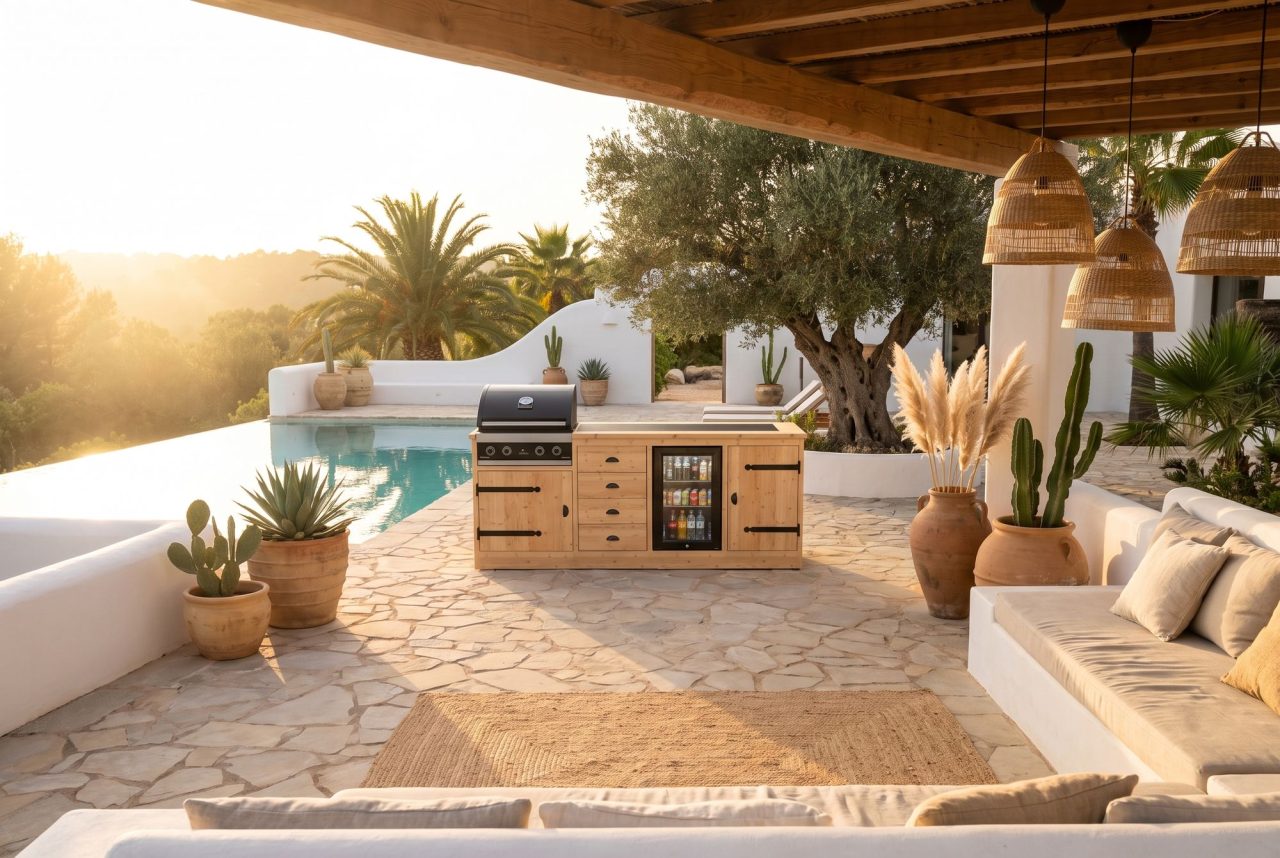
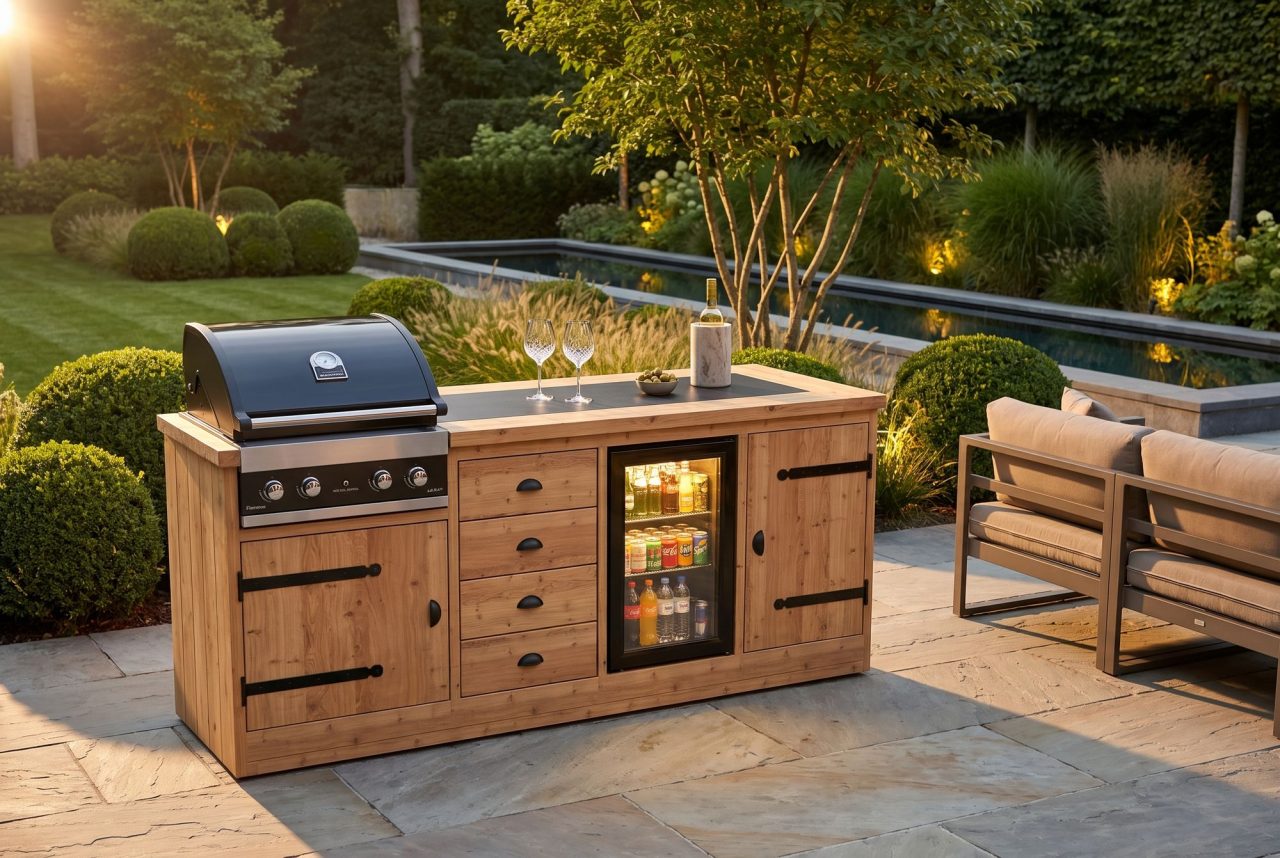
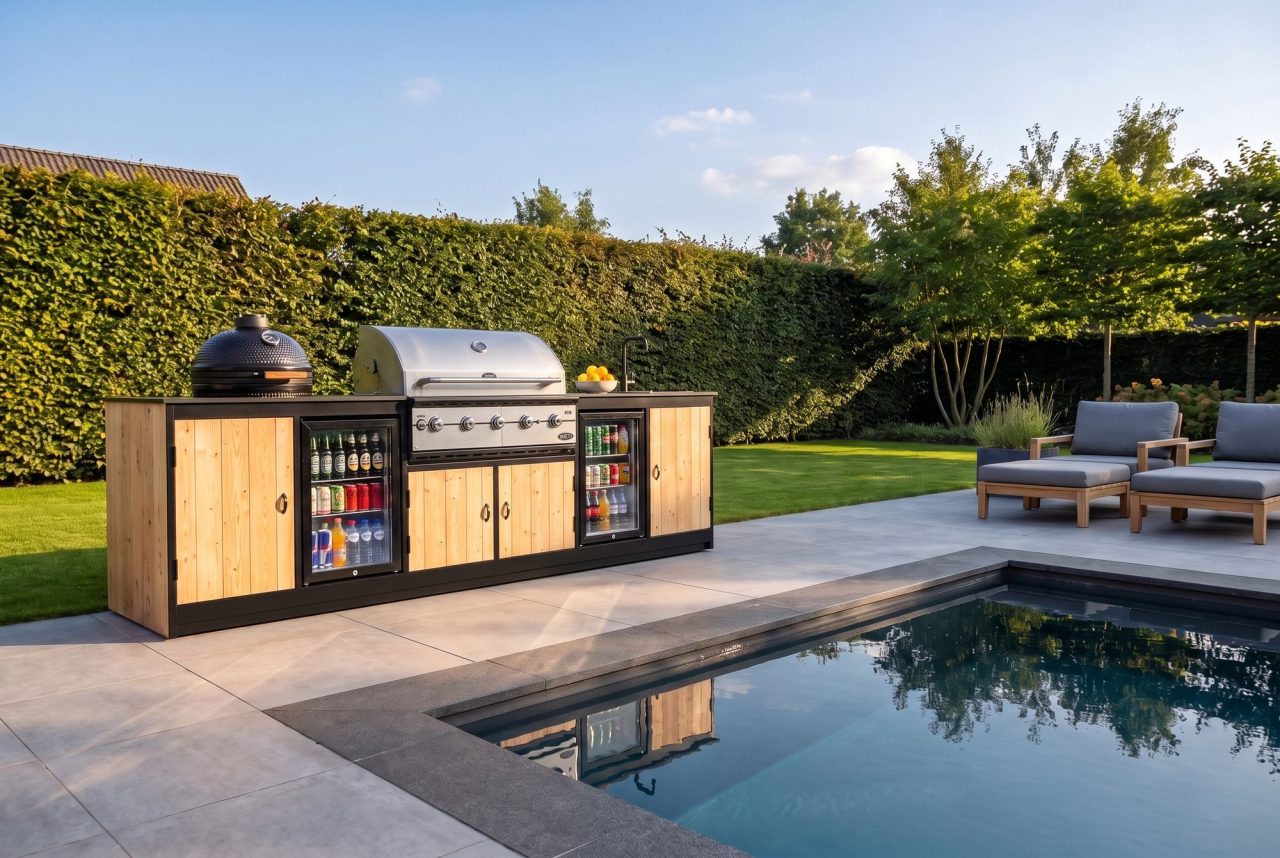
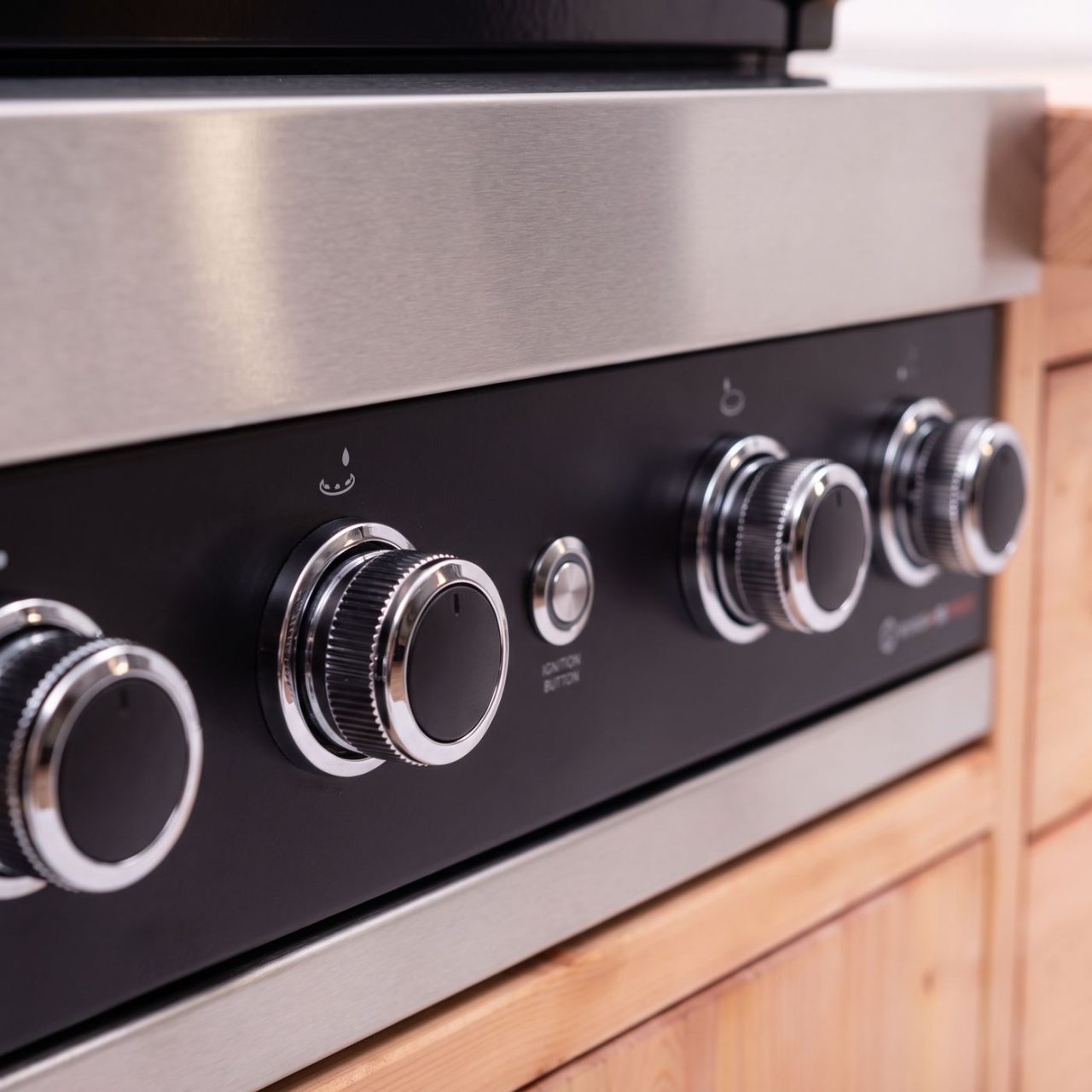
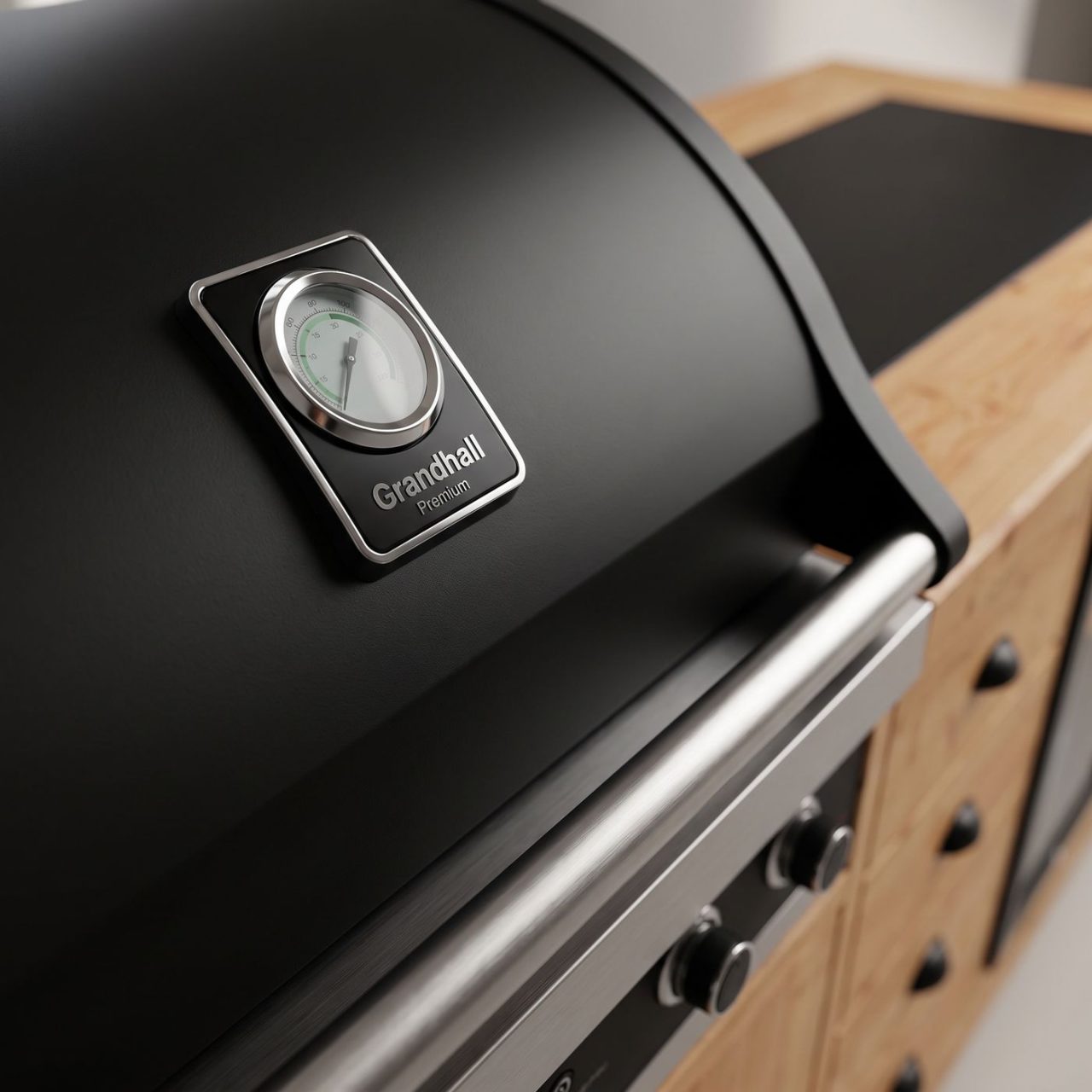
A free-standing grill works well, and if you grill often, you'll eventually start thinking about a permanent setup of your own accord. If you opt for a built-in gas grill or an outdoor kitchen with a kamado of 16 or 18 inches, all your kit has a permanent home. We see with customers that the grill gets lit more often as a result. The hurdle of carrying and setting up disappears. Admittedly, a permanent setup like this is an investment, made for anyone who cooks outdoors on more than a few evenings each summer.
When choosing, think above all about how you cook. Charcoal and kamado give smoky flavour and demand attention; gas is ready in 10 minutes and can be finely controlled. If you're still unsure, take a look at our comparison of charcoal and briquettes.
Where your budget goes furthest
Some purchases are worth more than others. Here's our honest assessment of barbecue accessories:
-
A chimney starter and simple firelighters do the same job as barbecue sprays and perfumed premium lighters.
-
Four good tools replace the 25-piece case from which you only use four pieces anyway.
-
Your tongs take over the jobs of the burger press, sausage tongs and corn-on-the-cob holder too.
Better to put the budget into a good thermometer and decent knives. Those are the things you can taste.
Frequently asked questions
What do you need for a barbecue?
For a barbecue you need tongs, a spatula and heat-resistant gloves, a core thermometer, fuel with a chimney starter, separate chopping boards and bowls for raw and cooked meat, and cooling for salads and drinks. A basting brush, foil trays for indirect grilling and a brush for cleaning the grill afterwards are also handy.
How long does a grill need to preheat?
A gas or electric grill needs to preheat for about 10 minutes. According to grill expert Oliver Hess, charcoal with wood wool firelighters needs 30 to 45 minutes, while briquettes in a chimney starter are ready to grill after 15 to 20 minutes. So start lighting in good time before your guests arrive, especially with a kamado that needs to come up to temperature.
How much charcoal do you need for 4 people?
For 4 people you need about 1.5 kg of briquettes; that fills a medium-sized 4- to 8-litre chimney starter about two-thirds full. For quick-cooking food such as steaks, lumpwood charcoal is nicer because it lights faster and burns hotter. For long barbecue evenings, briquettes hold their temperature better, as Stiftung Warentest also notes.
How do you keep food safe when barbecuing?
You keep food safe when barbecuing by strictly separating raw and cooked food and making use of cooling. Use separate chopping boards and bowls for raw meat, wash your hands with soap and, according to the BfR, bring poultry and mince to a core temperature of at least 70 °C for two minutes. Take small portions out of the fridge so the rest stays cold.
Which grill fits in a Varetti outdoor kitchen?
A Varetti outdoor kitchen takes a 16- or 18-inch kamado, built-in gas grills from Grandhall and Boretti, and gas or induction hobs. The cut-out in the worktop is a maximum of 60 cm wide. That way you choose the setup that suits how you cook, from low and slow over charcoal to quick weekday grilling on gas.