First, let's set something straight: the Big Green Egg is itself a kamado. So the question “kamado or Big Green Egg” is really a question of whether you buy the best-known brand or one of the other kamado brands, such as Kamado Joe from the USA or Monolith from Osnabrück in Germany.
When it comes to cooking results, there is little between them. The real difference lies in price and warranty, plus build quality. We put the numbers side by side and look at what you need to watch out for when the kamado will eventually sit recessed in a wooden worktop at a fixed height.
Kamado is the type, Big Green Egg the brand
What exactly a kamado is can be summed up quickly: an egg-shaped grill with thick ceramic walls that traces its roots back to centuries-old Japanese charcoal ovens. The ceramic stores heat and moisture, which is why you can grill, smoke, cook low and slow and even bake pizza on a single appliance.
Big Green Egg has been building kamados since 1974, when founder Ed Fisher opened his shop in Atlanta, making it the oldest and best-known brand. Kamado Joe and Monolith came later but work on exactly the same principle. So when people say “Green Egg”, they mean a brand, much as Hoover is really the brand name of a vacuum cleaner. Worth knowing before you compare, because you are putting brands within the same type side by side.
What does that mean for the price?
A Big Green Egg Large costs from 1,849 euros at German retailers (Geizhals price comparison, 14 September 2026). The Kamado Joe Classic II has exactly the same 46-centimetre grid diameter and is listed at Grillgoods for 1,339 euros, against a recommended retail price of 1,599 euros (as of 14 September 2026).
Do the maths. That is a difference of 510 euros for the same grid size, and frankly we find it hard to justify to someone buying purely on cooking results. With that money you could add a sink with a tap or a second fridge to your outdoor kitchen. Prices vary by retailer and season, so check them on the day you buy.
And then there is the warranty, because that is where the real surprise lies.
What are you paying for with a Big Green Egg?
With a Big Green Egg you are paying for the ceramic, the warranty and the service around it, more than for the name alone. Big Green Egg gives the original purchaser a limited lifetime warranty on all ceramic parts and 5 years on metal parts. The warranty applies once you register on biggreenegg.eu, and warranty claims go through the authorised dealer you bought from.
On paper Kamado Joe offers comparable terms: ceramic covered for as long as the original purchaser owns the grill, 5 years on metal, likewise after registration. Claims are handled directly with the manufacturer, which covers the shipping costs for warranty parts. Monolith from Osnabrück gives a limited lifetime warranty on its grills.
The rest is in the details: Big Green Egg relies on cast-iron accessories and finely finished ceramic, while Kamado Joe scores with its split Divide and Conquer grid system and the Air Lift hinge that lets you open the heavy lid with one finger. In practice we mostly see happy owners in both camps (and heated debates at birthday parties, but that is all part of it). Once people grill on ceramic, they almost always stick with it.
How a kamado fits into your outdoor kitchen
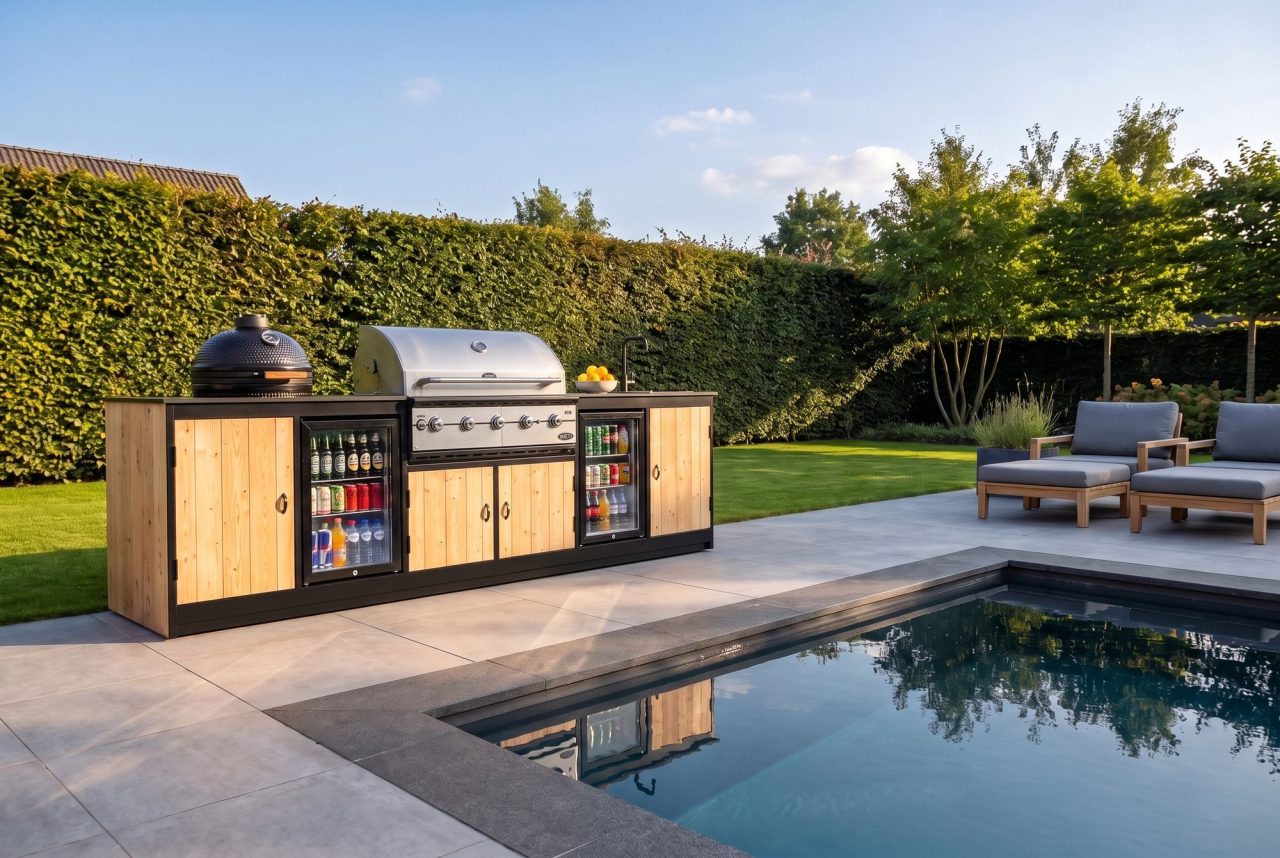
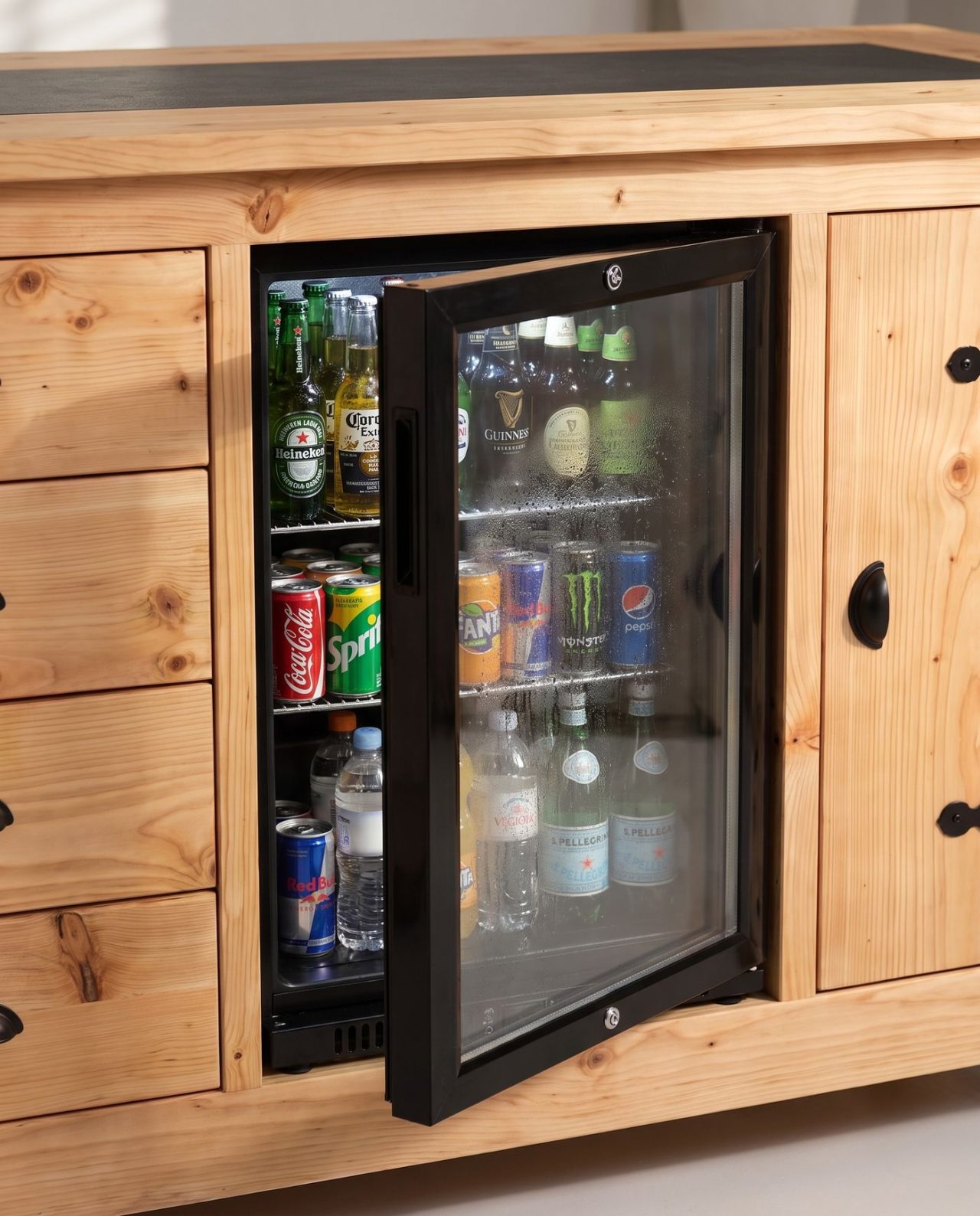
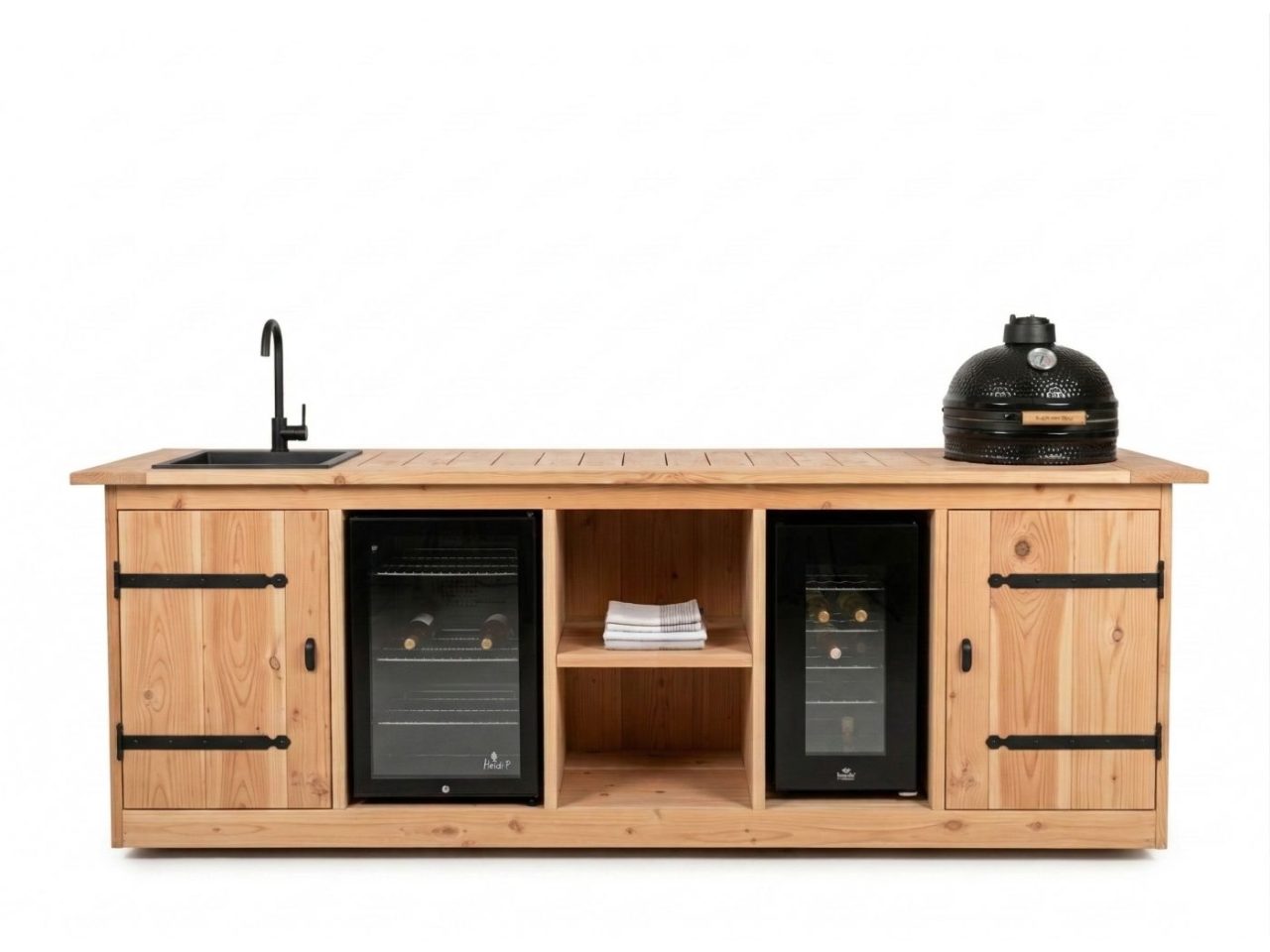
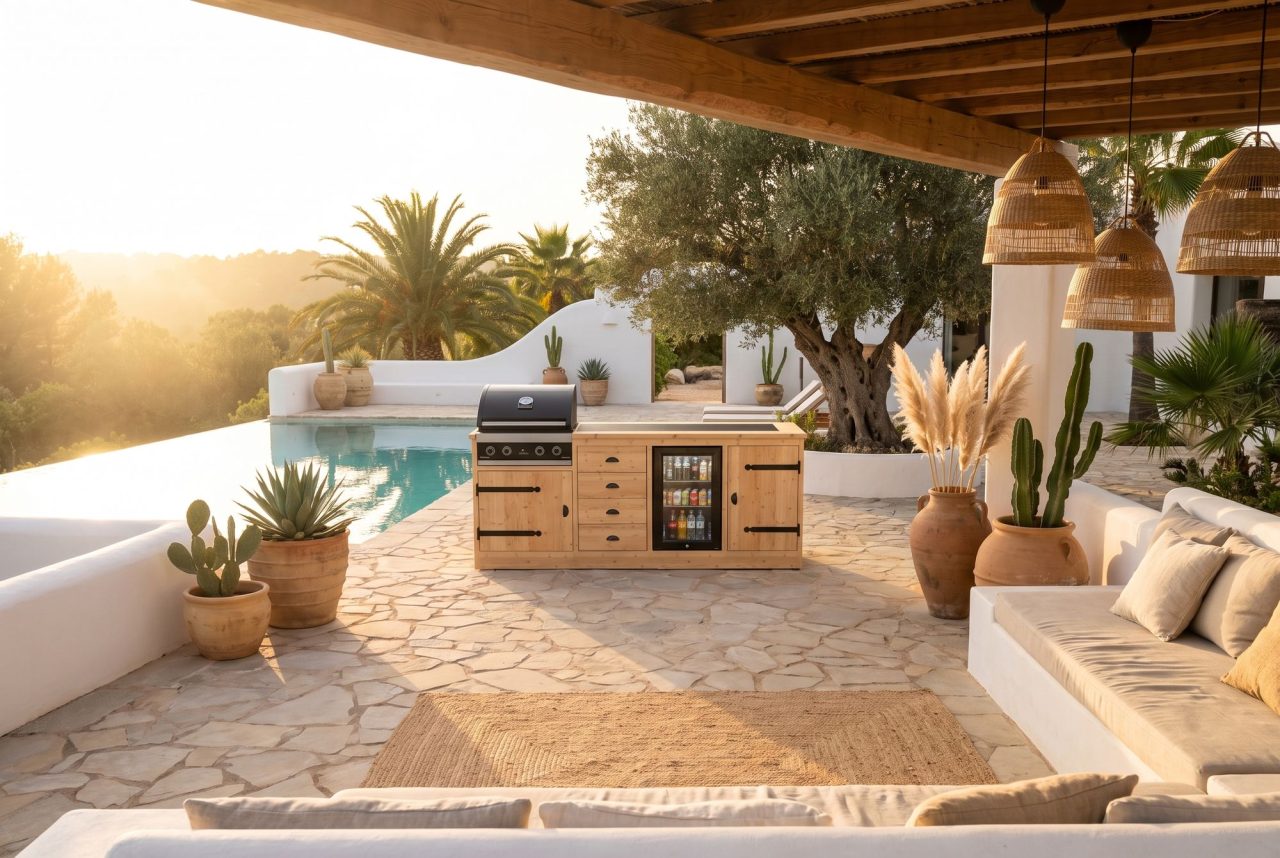
In an outdoor kitchen with a kamado from our workshop in Almelo, in the east of the Netherlands near Enschede, we fit a 16- or 18-inch model. Converted, that is a grid of around 41 to 46 centimetres, plenty for a family plus extras. If you want to build in your own kamado, for example in an outdoor kitchen for the Big Green Egg, check the cut-out in the worktop: we make it up to a maximum width of 60 centimetres. Measure the outside of the ceramic bowl, because the outer dimension and the grid size are quite far apart. The 22 standard models come in five widths: 109, 157, 205, 253 and 301 centimetres, and any size in between via the configurator.
One more practical point: ceramic is heavy and sensitive to knocks. A kamado set into a solid block of Douglas fir stands rock solid and at working height. That makes for far more relaxed cooking than on a wobbly stand with little wheels. It is kinder to your back, too.
When should you choose which?
Choose the Big Green Egg if you value brand security and dealer service. For many people, having warranty claims handled by a local dealer is the real reason to buy. Choose another kamado if you want the same cooking results for a few hundred euros less. Put the money you save into a sink or a fridge.
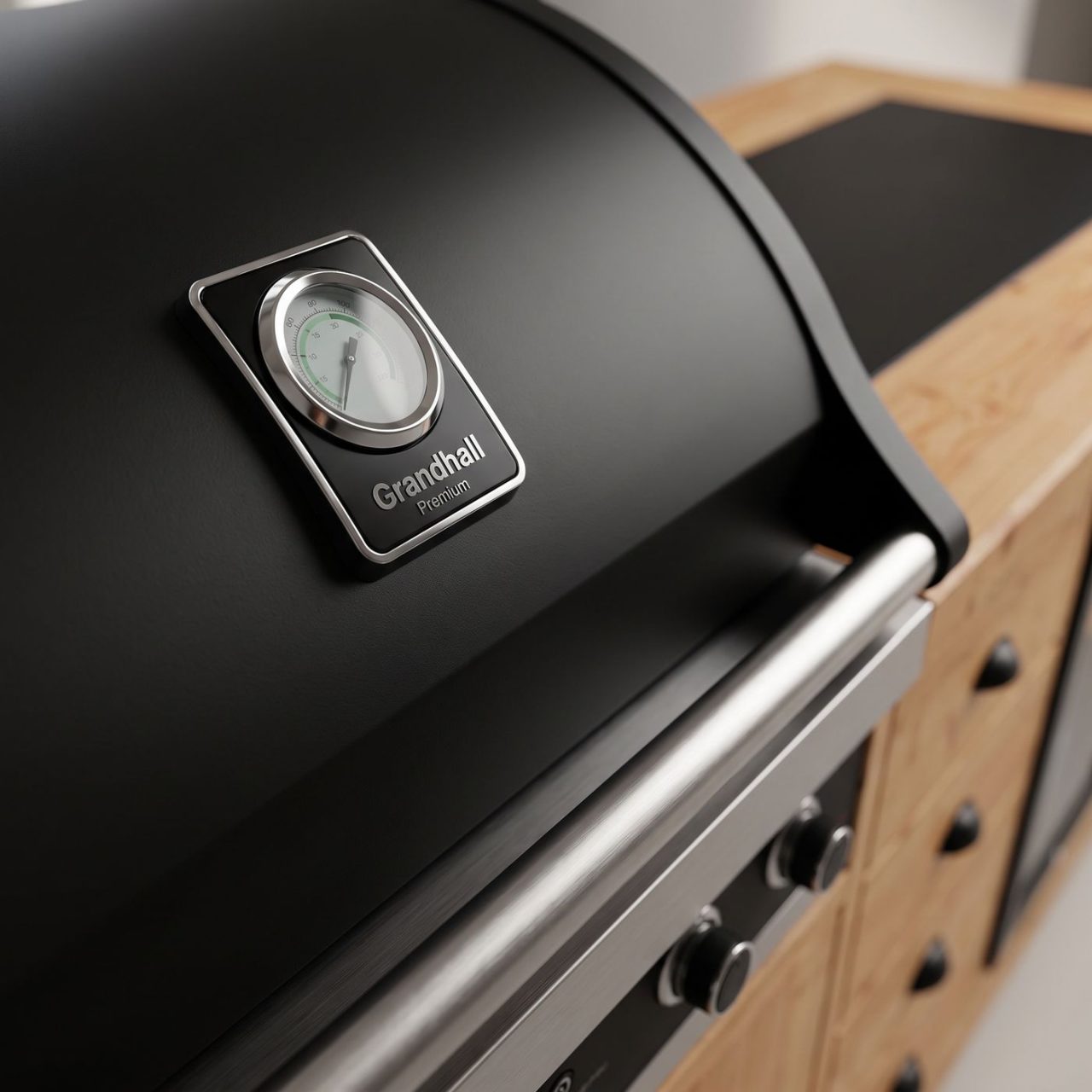
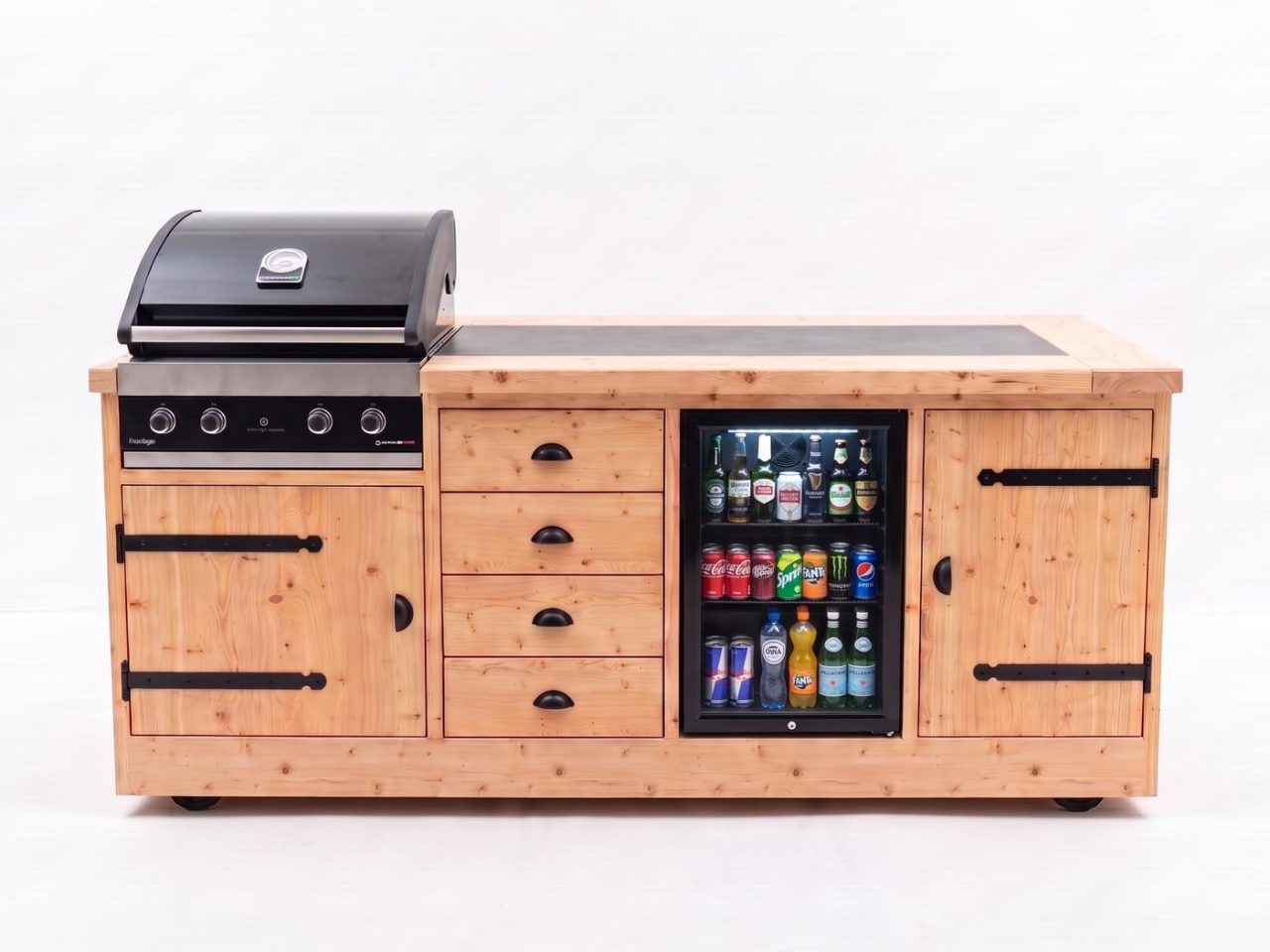
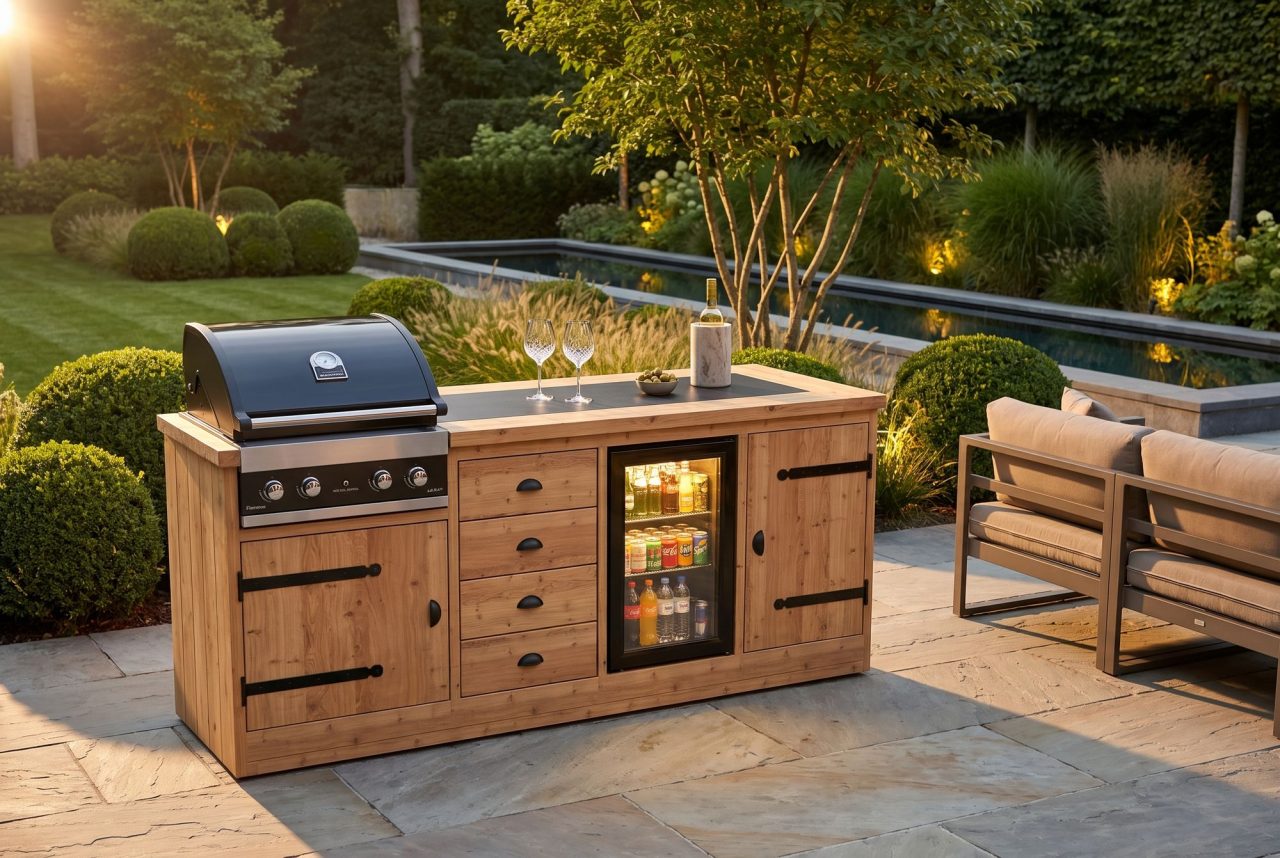
And be honest with yourself about how you cook. You control a kamado with air vents, and the first few times you will simply get it wrong. If you mostly grill a quick sausage on a Tuesday evening, an outdoor kitchen with gas and a built-in gas grill from Grandhall or Boretti is more practical. The kamado is for the cook who turns it into a hobby, with kamado recipes for every technique.
Frequently asked questions
Is kamado a brand or a type of grill?
Kamado is a type of grill, the umbrella term for a whole category. The word stands for egg-shaped ceramic grills based on a Japanese model. Big Green Egg, Kamado Joe and Monolith are brands that all build kamados. So the Big Green Egg is a kamado, and every kamado works on the same principle with thick ceramic walls. When comparing brands, look above all at the warranty terms and the price per grid size.
Which grill is better: a kamado or a Big Green Egg?
There is no real “better” here, because the Big Green Egg is itself a kamado. The cooking performance of ceramic grills is very similar: they all hold a stable temperature for hours. The difference lies in how warranty claims are handled and in the price. A Big Green Egg Large costs from 1,849 euros, a Kamado Joe Classic II with the same 46-centimetre grid 1,339 euros (both as of 14 September 2026).
Why is a Big Green Egg so expensive?
A Big Green Egg is expensive because of its high-quality ceramic, the limited lifetime warranty on ceramic parts, the cast-iron accessories and the brand name it has been building since 1974. You also pay for dealer service: warranty claims go through the authorised dealer, and spare parts are quickly available. Whether the extra cost is worth it depends on how long and how intensively you use it.
What is a good alternative to the Big Green Egg?
Good alternatives to the Big Green Egg are Kamado Joe and Monolith. They are built on the same ceramic principle and perform comparably in practice. Kamado Joe includes plenty of accessories such as the split grid system as standard and gives original purchasers a lifetime warranty on the ceramic, while Monolith from Osnabrück is the German brand among kamados, with a limited lifetime warranty. Whatever the brand, check the outer dimensions if you want to build it in.
What should you know before buying a kamado?
Before buying a kamado you should know three things: weight, price and learning curve. Ceramic is heavy, a Kamado Joe Classic II weighs around 85 kilos, and it needs careful handling. You control the temperature with air vents, which takes practice. In your first few barbecues it is easy to overshoot. A kamado also needs time to heat up, so for quick grilling during the week, gas is more practical.
Which kamado size fits in an outdoor kitchen?
An outdoor kitchen will usually take a 16- or 18-inch kamado, meaning a grid of around 41 to 46 centimetres. What matters is the cut-out in the worktop: at Varetti it is up to 60 centimetres wide. Always measure the outer diameter of the ceramic bowl including the hinge, as the grid size is considerably smaller. If you are unsure, we will build the kamado in to fit in our workshop in Almelo.