
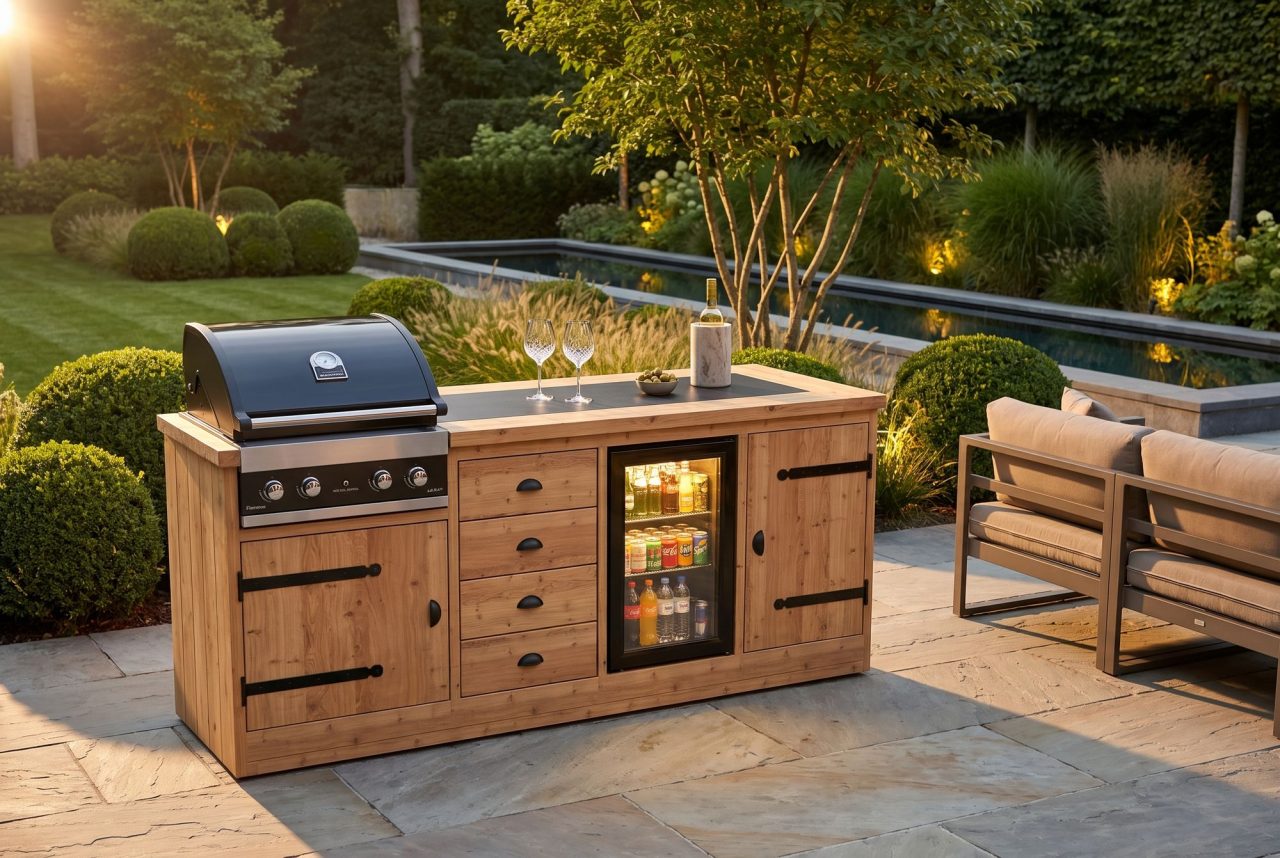
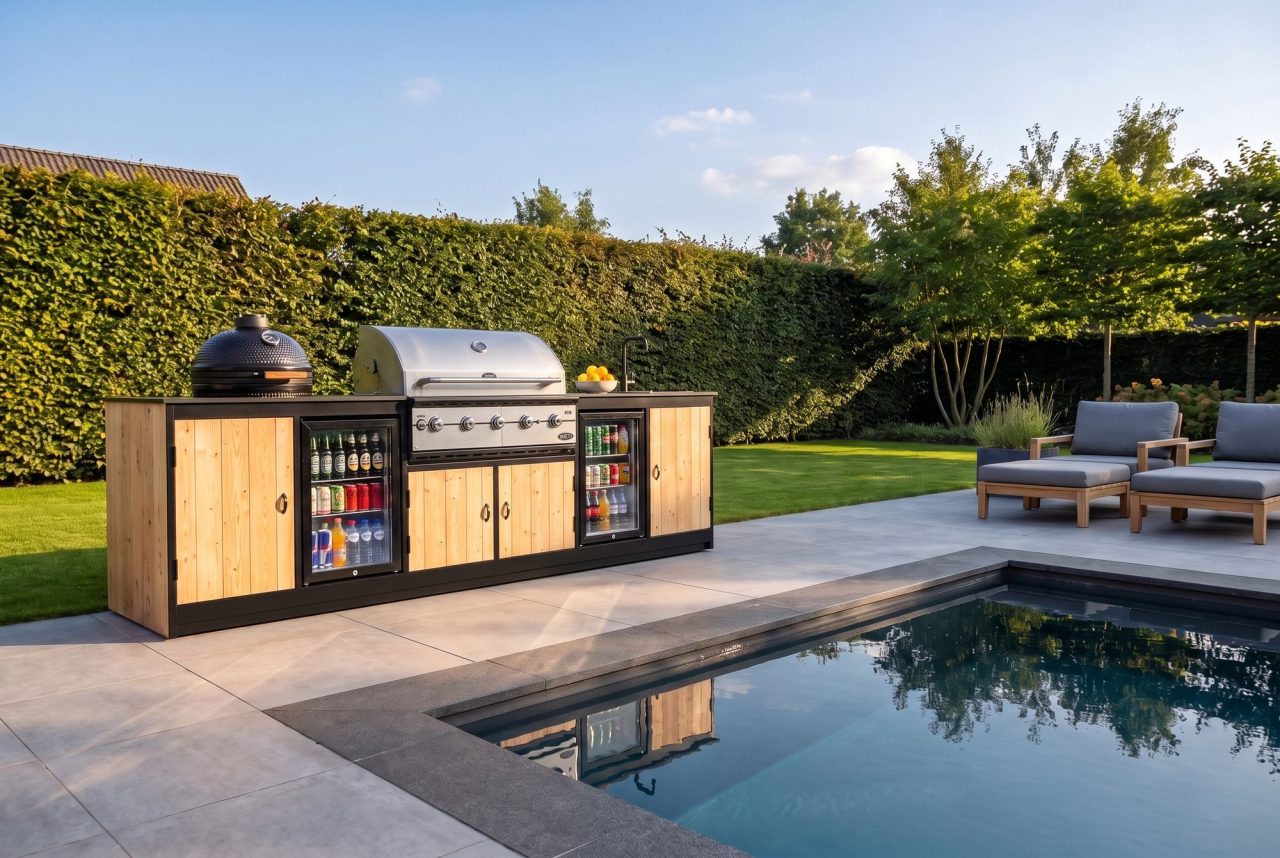
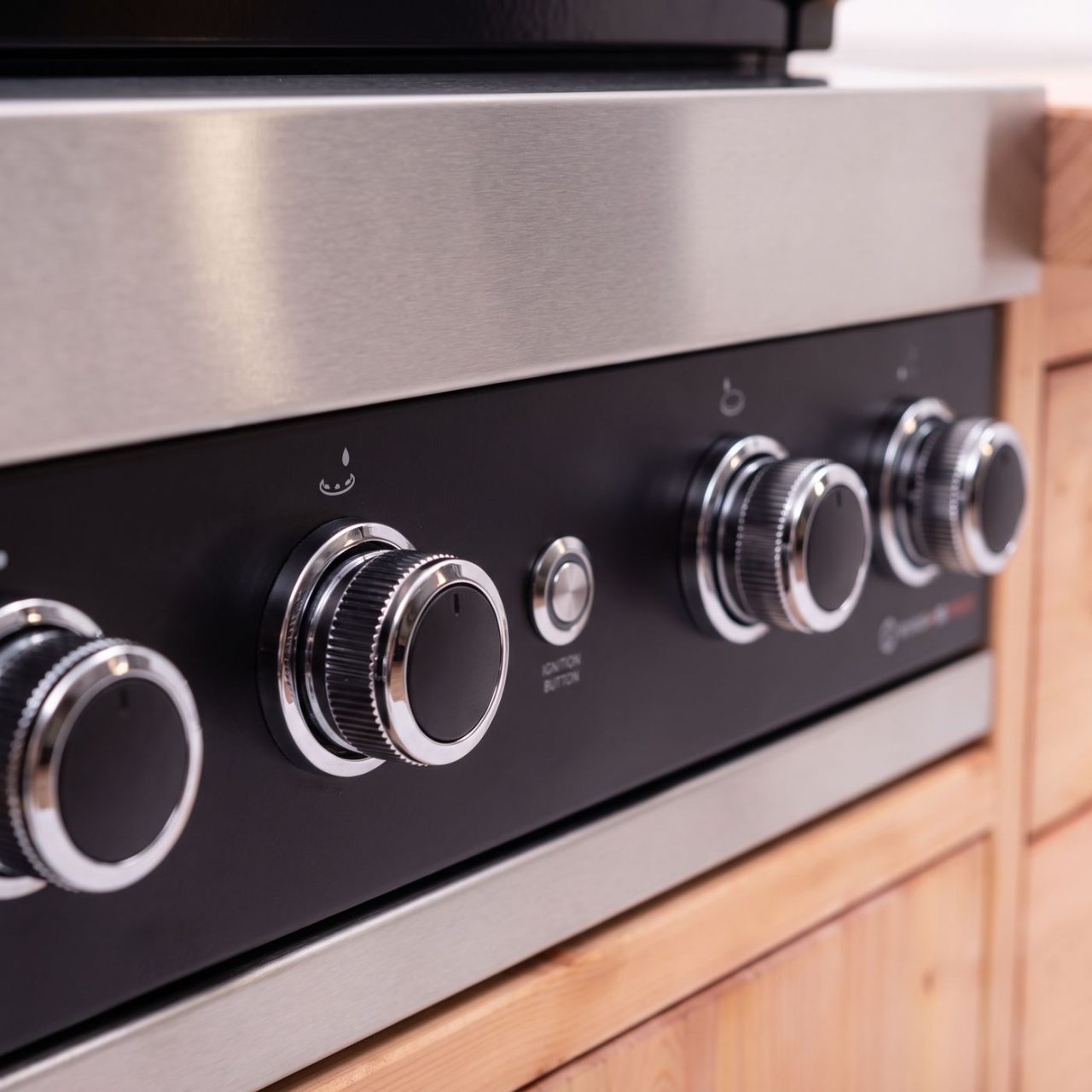
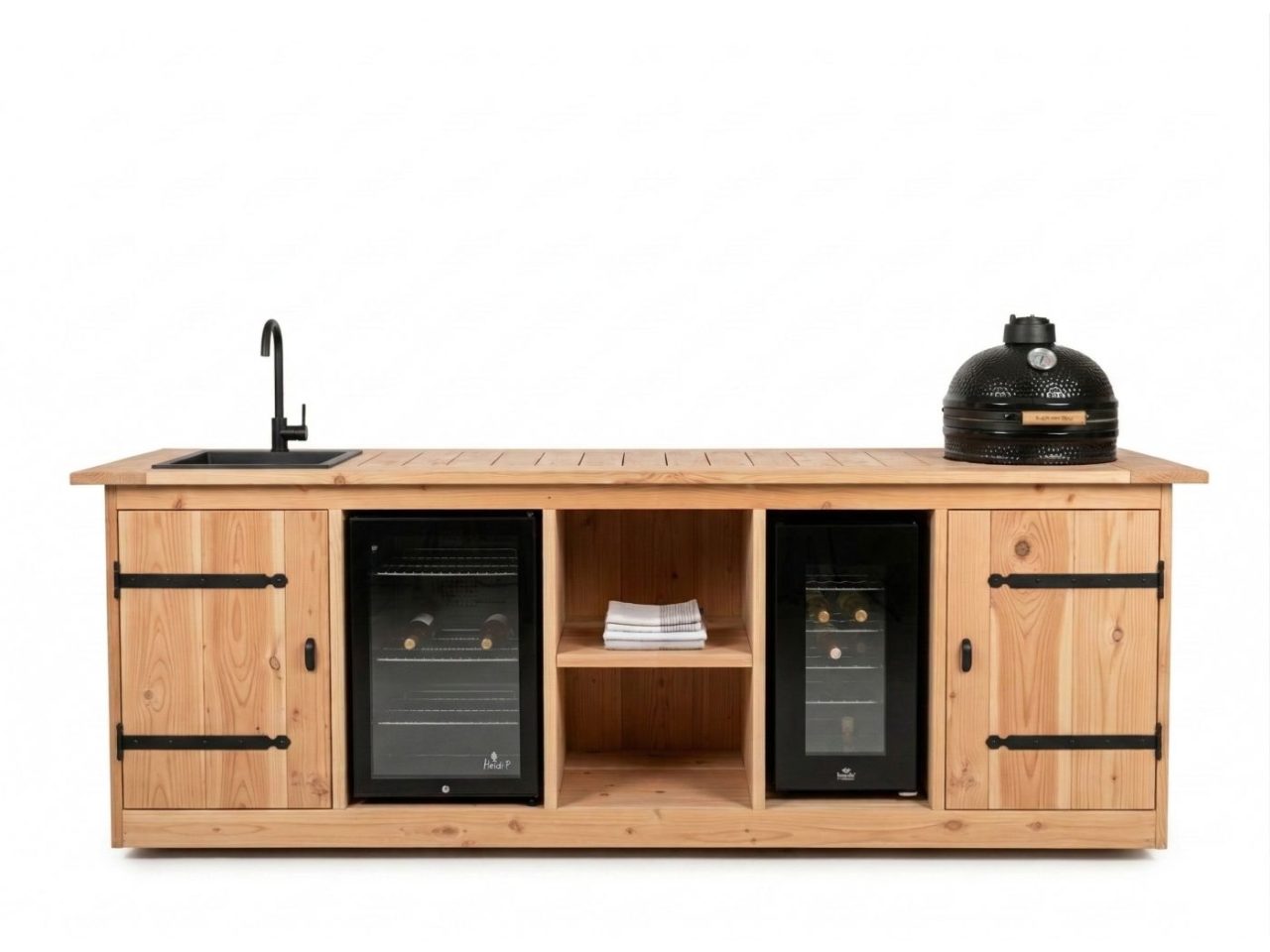
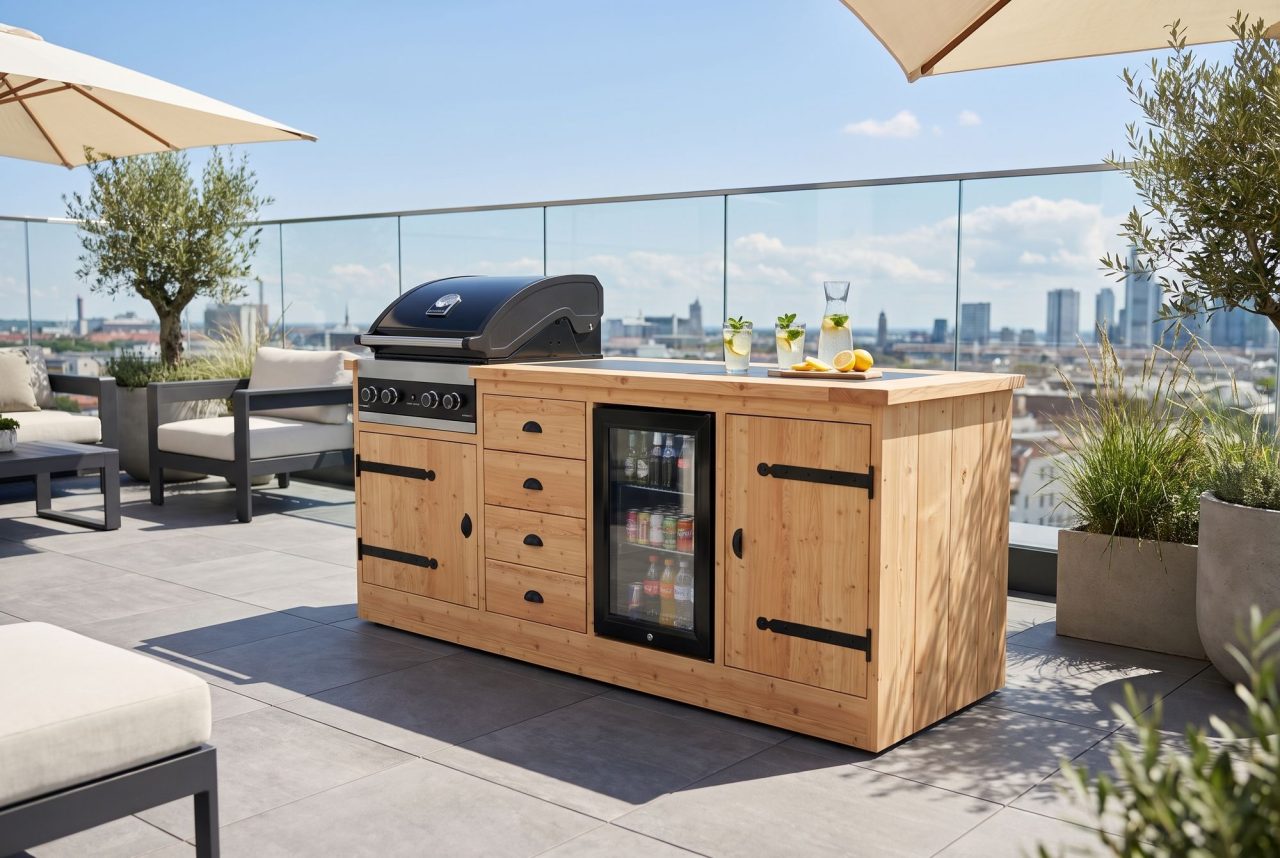
You can extend your outdoor kitchen in four directions: more cooling, more comfort, more atmosphere and more worktop space. Think of a wine cooler, an under-sink water heater for hot water, a pop-up socket, lighting or a grill trolley on castors. Once the basics are in place, a good outdoor kitchen simply grows with you. Here you'll find the extensions that really make a difference, with the relevant figures. We cover the basics themselves, from the heat source to the sink, separately in the five must-haves for every outdoor kitchen.
More cooling than that one fridge
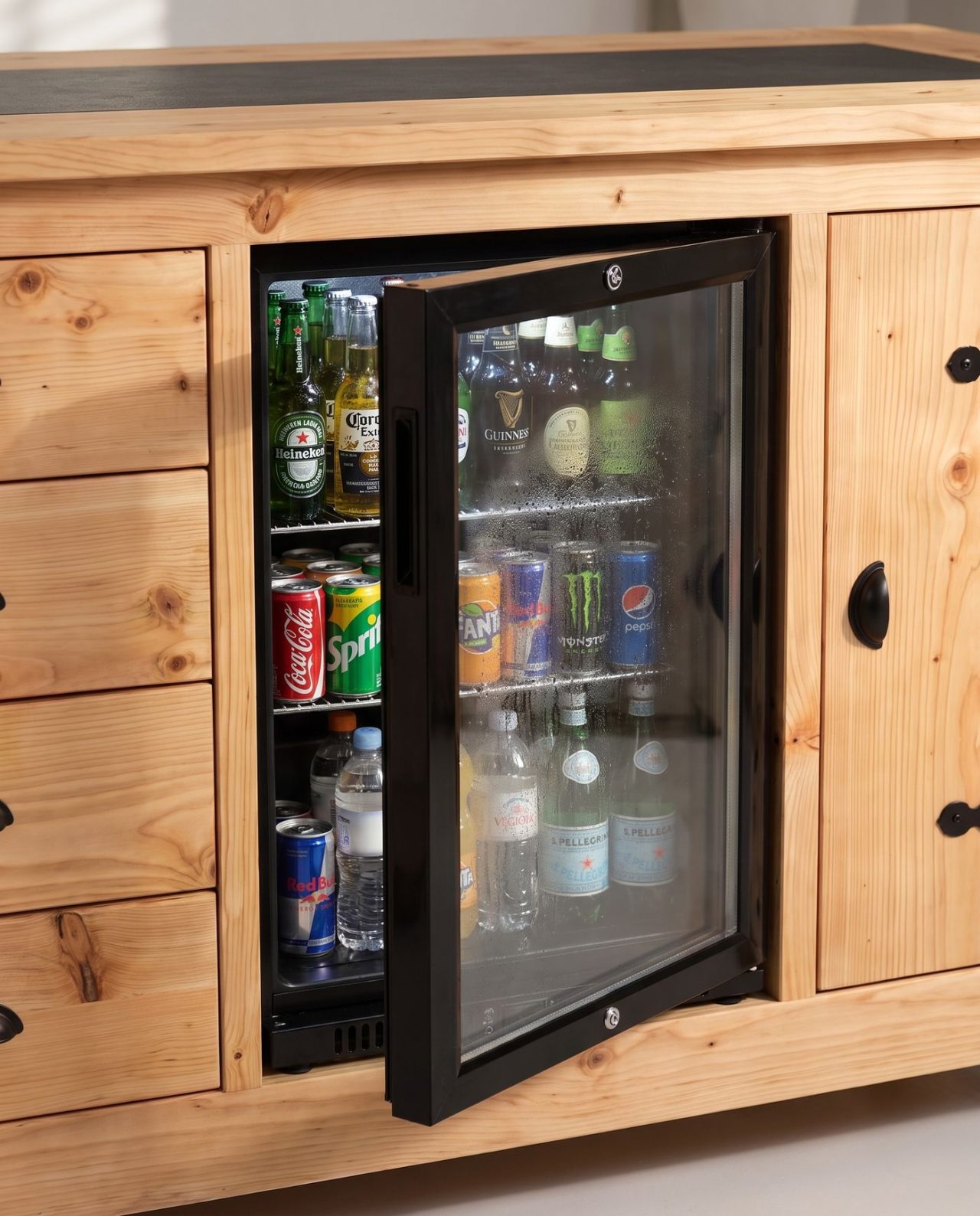
Extra cooling is the most popular extension for an outdoor kitchen. A wine cooler with room for 18 bottles keeps wine at drinking temperature; a normal fridge is set too cold for that. If you often cook for a crowd, you can add a second cooling unit alongside. Take a look at consumption while you're at it. Of our built-in fridges, the 35-litre model uses 445 kWh a year, while the larger 52-litre model manages with 321 kWh. At the current German household electricity price of 37.0 cents per kWh (BDEW electricity price analysis, as of August 2026), you'll pay around 46 euros a year more for the small model. Strange as it sounds, choosing bigger is the economical decision here.
Electricity and hot water at your worktop
The neatest way to get electricity in your outdoor kitchen is a pop-up socket: recessed into the worktop, you only push it up when the hand blender or meat thermometer needs charging. The herbs keep their spot, and the lawn stays free of extension leads.
The same socket makes the second comfort upgrade possible straight away. With an under-sink water heater beneath the sink, you get hot water from the tap, connected to the 3/8-inch hot water connection. Rinsing grease off the grill grate with cold water is a Sisyphean task. With hot water, washing up outdoors suddenly becomes an afterthought.
Light for those long evenings
Lighting determines how long your outdoor kitchen stays usable after sunset. Work with two layers. Task lighting above the worktop, so you can see whether the meat is done and where the knife is. And mood lighting around it, from festoon lights to spotlights in the borders, so your guests stay put.
LED strips under a roof or a wall cabinet are an easy first step. All they need is that pop-up socket or an outdoor socket nearby. Start with the light above the worktop and then have a look at the other lighting tips for long evenings. You can always add atmosphere later, whereas chopping in your own shadow will bother you from the very first evening.
Protection that extends its lifespan
Protection is the extension that pays for itself most quietly. A nano coating repels moisture and dirt and keeps Douglas fir looking good for longer. On request we can give your outdoor kitchen a nano coating, right here in our workshop in Almelo. A roof over it spares the worktop the rain, the wood the full sun and you the evenings cut short.
And the simplest thing of all: drain the tap before winter and switch off the cooling when you're cooking indoors for months. Incidentally, black-stained wood fades in full sun; even with a coating, a sheltered spot remains the better choice. There's little that's spectacular about any of this. But it is decisive if you want your kitchen still looking good in ten years' time.
More worktop space as you cook more often
You can extend your worktop space as you go. Place individual worktops in 12-millimetre sintered stone wherever you need them, available in four colours from Black Betty to Gold Flames. They are heat-resistant, so a pan straight off the heat can go directly onto them.
Even more flexible is a grill trolley on castors: extra worktop space that you wheel over to your guests and park by the fence after the evening. Handy if you cook on a small patio and divide up the space differently every evening. Good to know: once you've worked with plenty of space next to the grill, you won't want to give that freedom up.
Order straight away or add later?
There are two moments to extend an outdoor kitchen: when you order or years later. Our 22 standard models come in five widths from 109 to 301 centimetres, and via the configurator the workshop in Almelo builds any size in between to measure. Free-standing extensions such as lighting, a grill trolley or a nano coating can be added at any time.
Built-in parts are a different story. A cut-out for a 16- or 18-inch kamado or a recess for a fridge is hard to saw neatly into an existing worktop after the fact. If you're still unsure about cooling or a water heater, it's best to have the cut-out and connection prepared straight away. An empty recess needs no care at all and saves you a great deal of effort later on.
Frequently asked questions
Which extensions are practical for an outdoor kitchen?
Practical extensions for an outdoor kitchen are an 18-bottle wine cooler, an under-sink water heater for hot water, a pop-up socket in the worktop, lighting above the work area and a nano coating on the Douglas fir. What is most practical depends on how you cook: if you do a lot of washing up, you'll want hot water; if you stay outside late, you'll want light.
Do you need permission for an outdoor kitchen?
An outdoor kitchen usually needs no permission if it stands open and free-standing in the garden, but the rules depend on where you live. In Germany, for example, the building code of the federal state is what counts. As soon as a fixed roof, a foundation, a position right on the property boundary or fixed connections for water, electricity or gas are involved, permission may be required. A quick call to your local building authority will clarify this in advance.
Can I add a fridge to an existing outdoor kitchen later?
You can add a fridge to an existing outdoor kitchen if it has a suitable recess or cut-out and there is a socket nearby. Sawing a neat cut-out into a Douglas fir or sintered stone worktop after the fact is a lot of work, so if in doubt, have it made when you order. An empty recess with a connection behind it is the cheapest insurance.
What is the difference between a wine cooler and a normal outdoor fridge?
The difference between a wine cooler and a normal fridge lies in temperature and stability: a wine cooler keeps wine at drinking temperature and evens out fluctuations, while a fridge runs colder, for meat, salads and beer. In an outdoor kitchen they complement each other. Our wine cooler holds 18 bottles, and the fridge next to the sink takes care of the rest of the evening.
What kind of lighting suits an outdoor kitchen?
Suitable lighting for an outdoor kitchen has two layers: task lighting on the worktop, such as LED strips under a roof or wall cabinet, and mood lighting all around for your guests. Choose lights that can cope with moisture and connect them to an outdoor socket or a pop-up socket in the worktop. Start at the work area; that's where you gain most.
What ideas are there for styling an outdoor kitchen?
Lovely ideas for styling an outdoor kitchen include a herb rack with fresh pots, festoon lights along the roof, a grill trolley on castors as a buffet and a wine cooler your guests can discover for themselves. Choose accessories that can cope with the weather and store textiles indoors. The kitchen itself is already the centrepiece. The styling simply rounds it off.