There are three ways to connect a tap in your outdoor kitchen: with a click connector on the garden hose, with a fixed branch off the water main, or with a water tank if the nearest outside tap is too far away. For most gardens the garden hose option is the logical choice. You're spared the digging and the plumber, and you're done in 20 to 30 minutes. Here you'll find the step-by-step guide, the materials and two things DIY enthusiasts tend to forget: frost and legionella.
Three ways to bring water to your outdoor kitchen
You can bring water to your outdoor kitchen via the garden hose, a fixed pipe or a tank. The garden hose with a click connector is the quickest route: you click a standard half-inch (13-millimetre) hose straight onto the tap connection with a Gardena connector. If you move the kitchen, the connection simply moves with it.
A fixed branch off the water main is the more convenient solution. It delivers constant pressure and makes hot water possible, but it involves digging and usually a plumber.
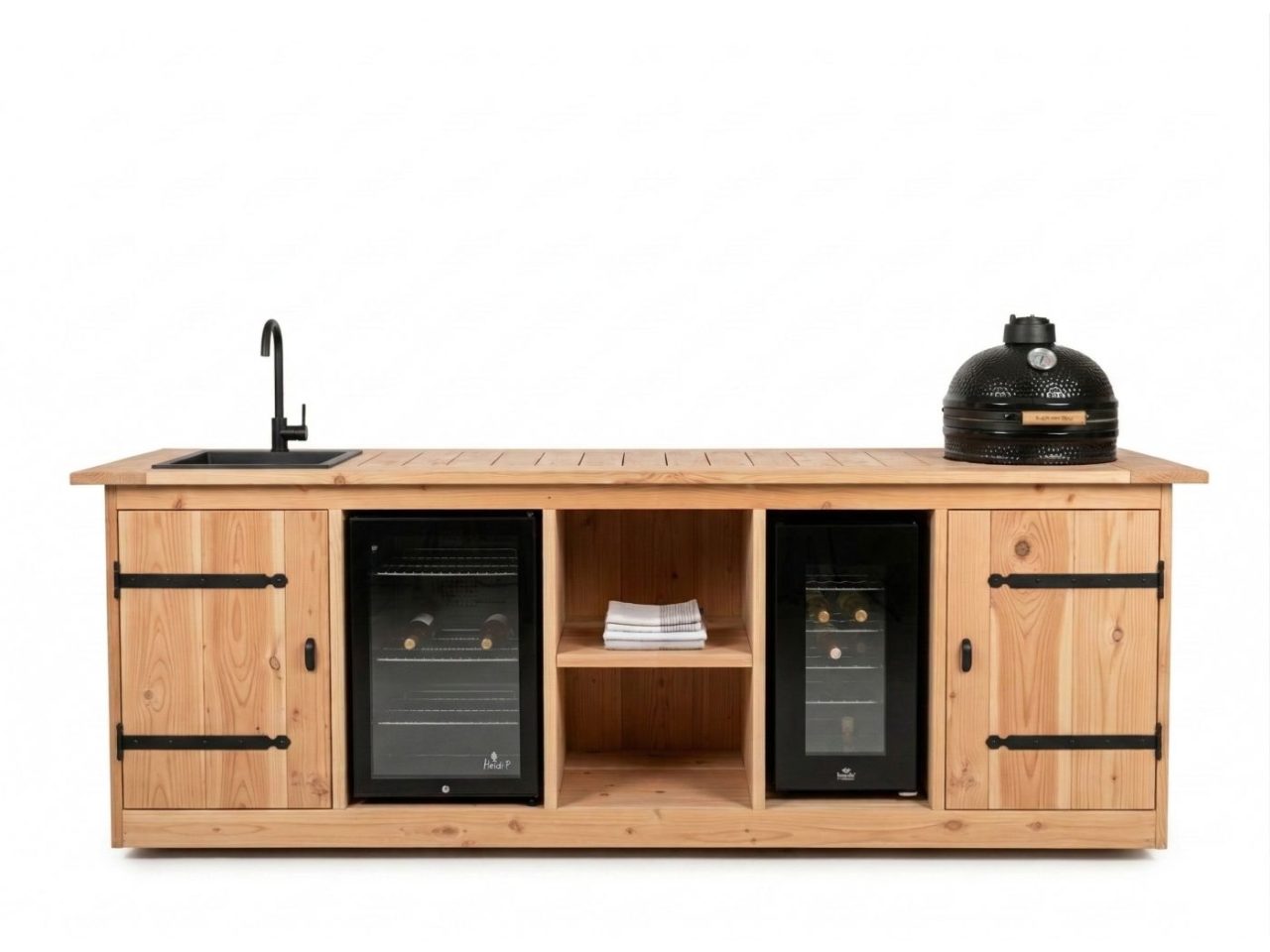
The third option is a water tank: a jerrycan or water butt with a dispensing tap for spots far from any supply. That's enough for washing hands and rinsing vegetables, but you have to refill it yourself, and in the long run it remains a stopgap. We supply our kitchens as standard with a sink and black tap, prepared for the first two options.
What you need
To connect an outdoor kitchen tap to the garden hose you need surprisingly little: a sink with a tap (with our kitchens the waste comes as standard), a garden hose, a Gardena click connector for the tap connection and perhaps a little PTFE tape for the thread. If you connect to the fixed water main, you'll also need 3/8-inch compression fittings for the hot and cold connections, plus a backflow prevention device in line with DIN EN 1717, such as a non-return valve. This ensures that standing water from your outdoor kitchen stays in the garden and the drinking water supply stays clean. Small part, big difference.
Incidentally, the same applies to the outside tap your garden hose is connected to: under DIN EN 1717, a backflow prevention device belongs there too. For the waste, a bucket under the trap is enough in many gardens. A cleaner option is a drain hose leading to a gully or a gravel bed.
How to connect the tap in five steps
Connecting an outdoor kitchen tap to the garden hose takes five steps. You decide on the location, fit the tap and sink, attach the hose, check for leaks and connect hot water if needed. Step by step, it looks like this:
-
Decide on the location. Check whether there is an outside tap within reach of the hose and where the waste water can go. Water has to come from somewhere and flow somewhere.
-
Fit the tap and sink. With a complete outdoor kitchen this is already done. With separate parts, screw the tap in tightly with PTFE tape on the thread.
-
Attach the hose. Click the Gardena connector onto the tap connection and connect the garden hose. Hand-tight is usually enough.
-
Check pressure and seals. Turn on the tap, let the water run for a minute and feel all the connections. A drip now is a puddle later.
-
Adding hot water? Connect an under-sink water heater to the 3/8-inch hot water connection. Because you never really get used to washing up in cold water.
Allow 20 to 30 minutes for the garden hose option. The fixed connection takes half a day, including digging.
Legionella in the garden hose: the underestimated issue
Legionella is the underestimated risk of an outdoor kitchen tap on a garden hose. The German gas and water association DVGW cites 25 to 45 °C as the temperature range in which legionella multiply most rapidly, and a dark green hose lying in the summer sun sits right in that zone.
The German Environment Agency (Umweltbundesamt) recommends running off drinking water that has stood in the pipe for four hours or longer until it comes out of the tap noticeably cooler. Hamburg Wasser puts it this way: let it run until it comes out consistently cold. The DVGW explicitly counts garden water connections among the outlets you should use regularly so that the water never stands there for long.
So do the same with your outdoor kitchen tap after a holiday or a few quiet weeks: open the outside tap, let the water run until it comes out cold, and only then rinse anything. According to VDI guidance, water that has stood in the hose for a while should be completely replaced every 72 hours at the latest. And use the water from the hose for rinsing and washing. Get your drinking water from the kitchen indoors.
How to get your tap through the winter
You winterise your outdoor kitchen tap by disconnecting the hose, draining the tap and then leaving it open. Water left in the tap or pipe expands as it freezes and cracks connectors and tap bodies. If you have an under-sink water heater, drain that too. The same goes for the outside tap on the house: close the stopcock indoors, open the tap outside, let the remaining water out.
If you forget every year, fit a frost-proof outside tap. According to the manufacturer Kemper, it drains itself every time you close it and stays in use all year round. Disconnecting takes you under five minutes, is simply part of caring for your outdoor kitchen and saves you buying a new tap in March. Our kitchens overwinter outdoors perfectly well; only the water has to come out.
Would you rather have it delivered fully connected?
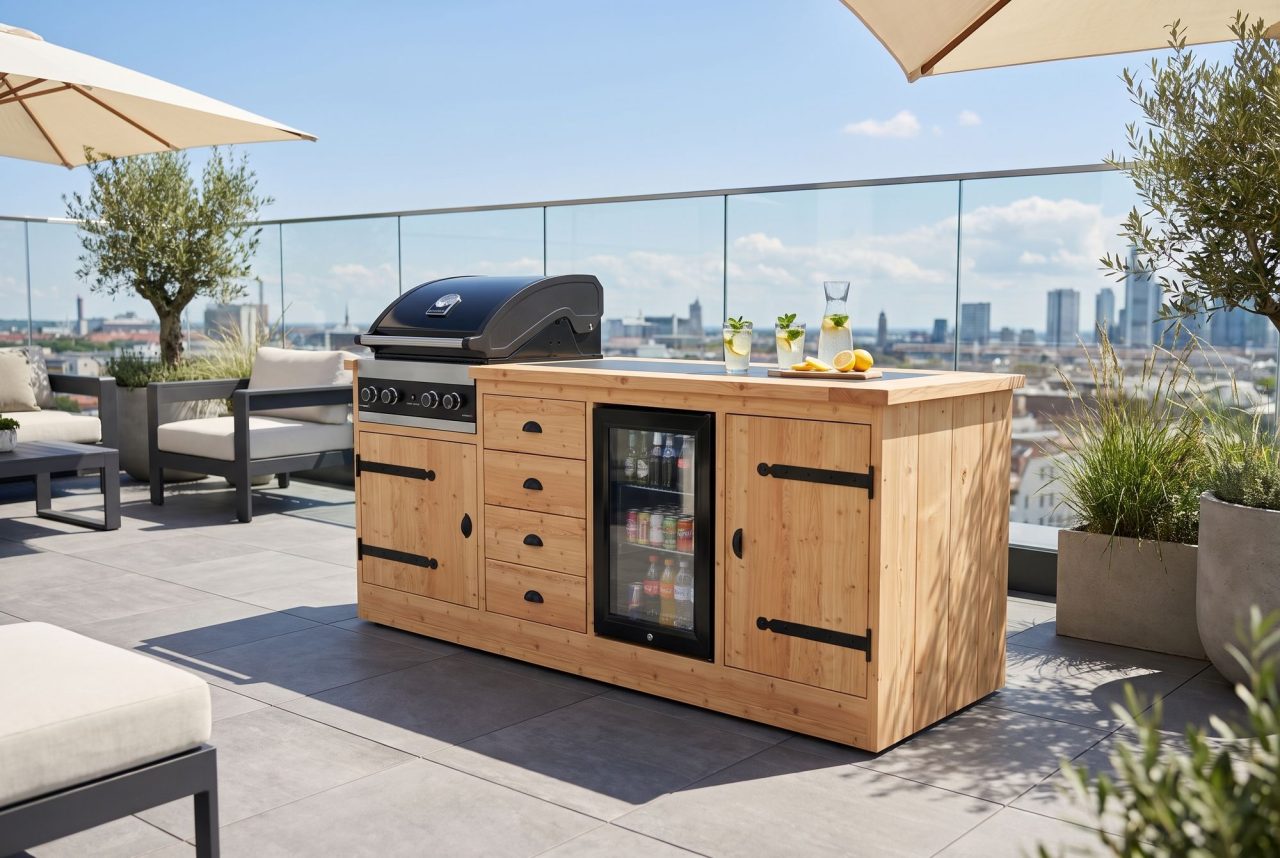
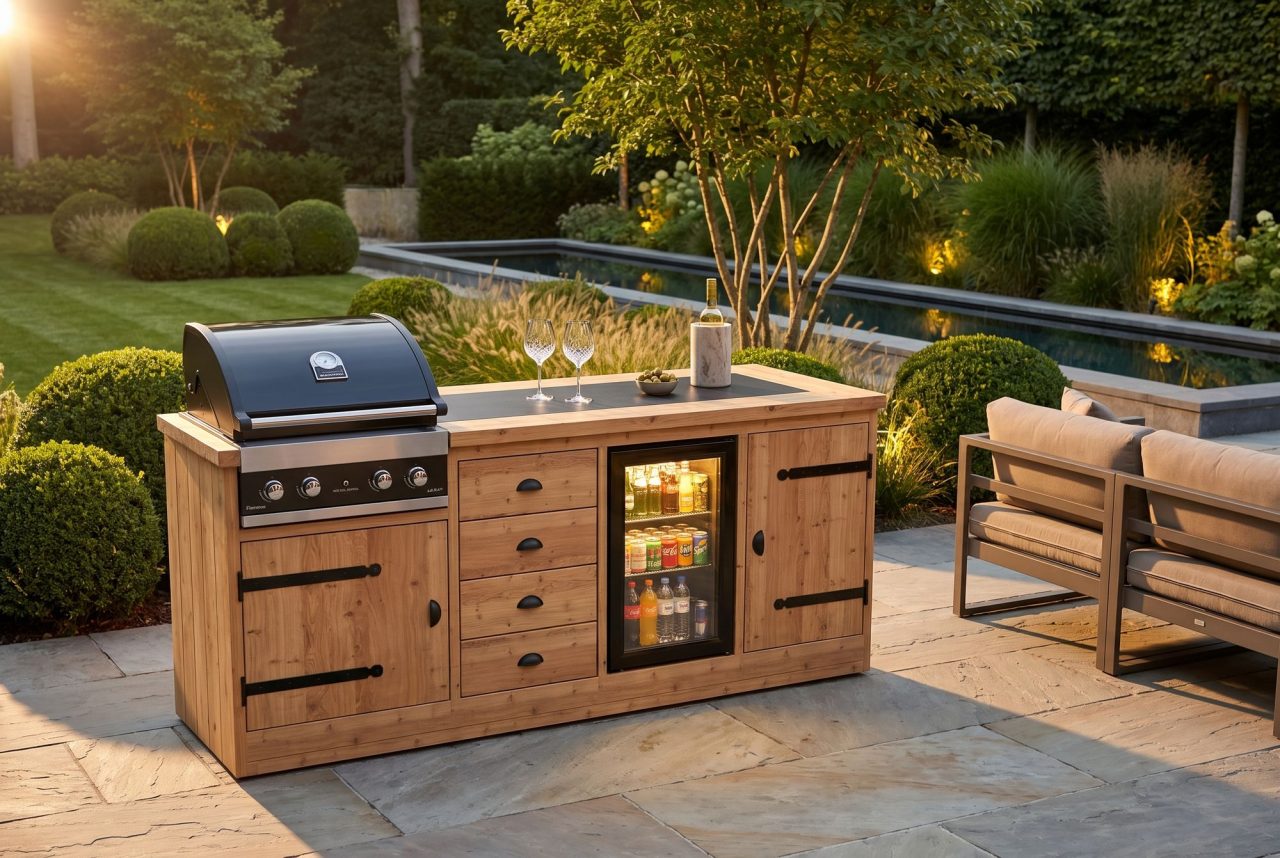
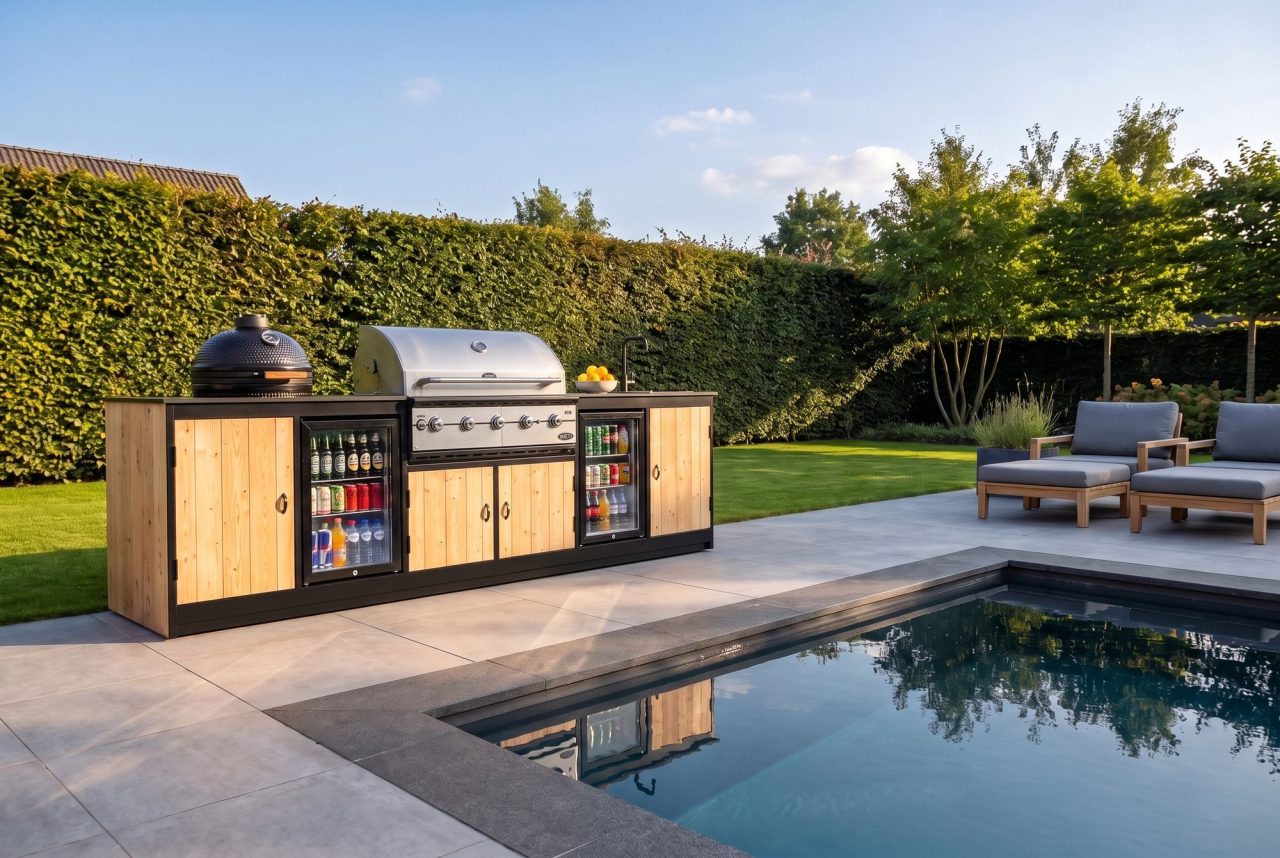
If you'd rather get started straight away, choose a made-to-measure outdoor kitchen with the sink, tap and waste already fitted. At Varetti we build them in our own workshop in Almelo, near Enschede and just across the border from Germany, and deliver them fully assembled. At home, all you have to do is click on the garden hose.
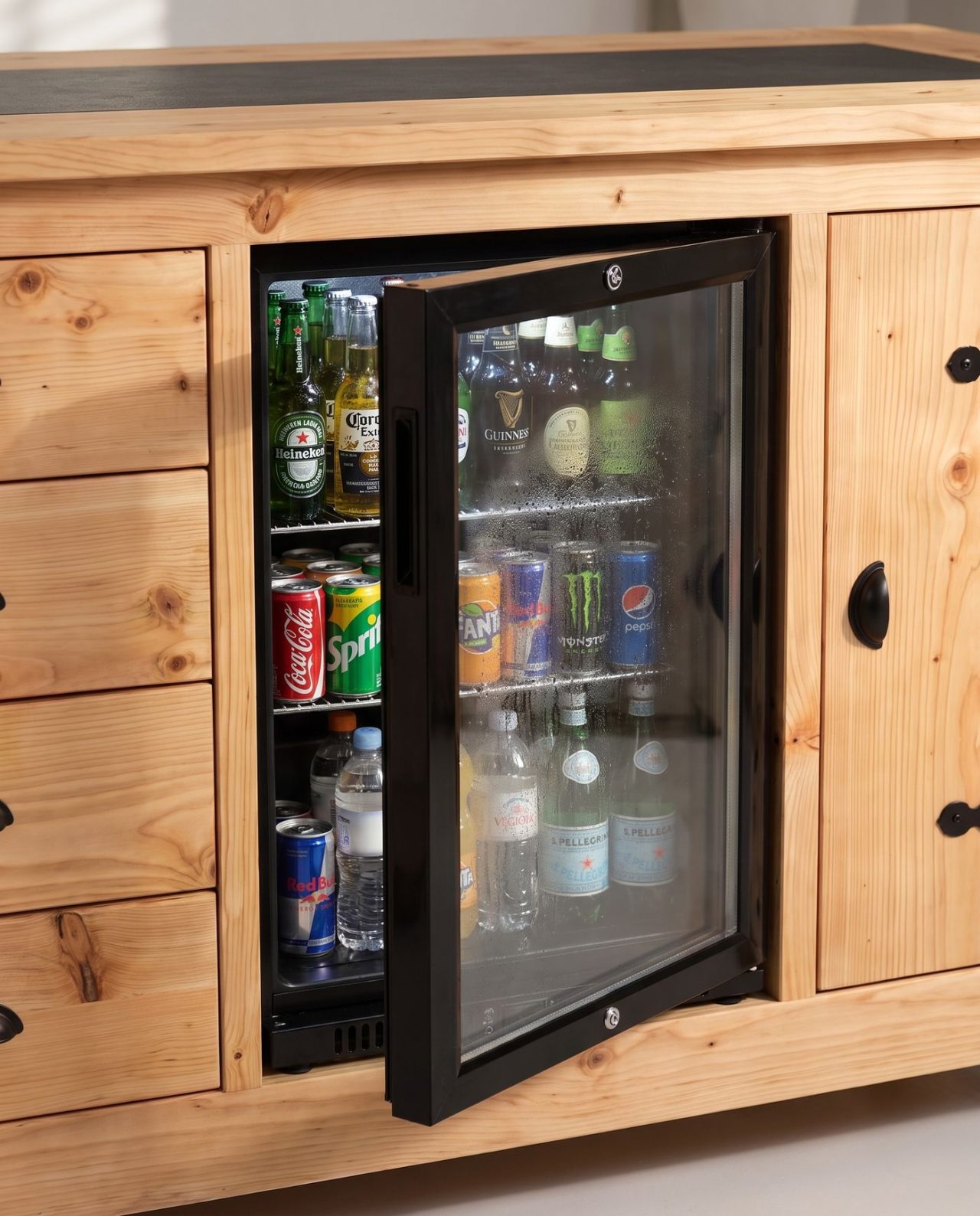
Work out in advance what an outdoor kitchen costs. If you choose an outdoor kitchen with a fridge and sink, with a 70-litre fridge, you'll have water and cold drinks in one place. The tap quietly makes all the difference: between a grill with a worktop and a real kitchen.
Frequently asked questions
How do you connect an outdoor kitchen tap to the garden hose?
You connect an outdoor kitchen tap to the garden hose with a Gardena click connector. Screw the connector onto the tap connection, click the hose on and turn on the outside tap. Use a standard half-inch (13-millimetre) garden hose and check the connections for leaks by letting the water run for a minute. It rarely takes more than 20 to 30 minutes.
Can you get hot water in an outdoor kitchen?
You can get hot water in an outdoor kitchen with an under-sink water heater on the tap's hot water connection. The taps in our outdoor kitchens have 3/8-inch hot and cold connections, so the heater connects directly to them. You'll need a socket at the kitchen. For washing up after a barbecue it's a surprisingly pleasant upgrade.
Does a water tank with a dispensing tap work for an outdoor kitchen?
A water tank with a dispensing tap works well for an outdoor kitchen away from the water supply, such as a mobile outdoor kitchen. You fill a jerrycan or water butt, place it higher than the tap or use a small pump, and you have water for hands and vegetables. Change the water daily: standing water in the sun is a breeding ground for bacteria such as legionella.
How do you protect an outdoor kitchen tap from frost?
You protect your outdoor kitchen tap from frost by disconnecting the garden hose before the first night frost, draining the tap and any water heater, and leaving the tap open. Water left behind expands as it freezes and bursts tap bodies or connectors. The job takes under five minutes, and your tap will last years longer.
How do you deal with the waste water from an outdoor kitchen?
In the simplest case, you deal with an outdoor kitchen's waste water with a bucket under the trap. A cleaner option is a drain hose that carries the water to a gully or a gravel bed. Varetti sinks come with the waste fitting as standard, so you only need to decide where the water goes. Collect grease separately and put it in the general waste.
How do you lay a fixed water pipe to an outdoor kitchen?
You lay a fixed water pipe to an outdoor kitchen as a branch off the household plumbing, with a backflow prevention device in line with DIN EN 1717 and a drain valve so you can empty the pipe before winter. Lay the pipe below the frost line or drain it every autumn. A plumber is worth it here: otherwise you'll only find a leak in a buried pipe when the water bill arrives.