A kamado is an egg-shaped grill made of thick ceramic with two air vents, one at the bottom and one at the top, which let you control the temperature as precisely as an oven with a thermostat. The word is Japanese. It means stove or hearth. Thanks to the insulating ceramic wall and the adjustable airflow, you can hold the temperature steady for hours, anywhere between 70 and 400 degrees. That is why you can smoke and grill on a kamado, but also cook low and slow for hours or bake a pizza. All with charcoal.
Where does the kamado come from?
The kamado descends from centuries-old Asian clay ovens used for cooking rice, and if you put a modern ceramic dome next to one of those old clay ovens, you see the family resemblance straight away. In Japan, the closed cooking stove made of earth and clay was given the name kamado, a word that means both stove and oven.
Americans brought the idea home after the Second World War and developed it into the modern ceramic grill. The best-known brand in this line is Big Green Egg, but kamado is the generic name: dozens of brands work on the same principle.
Why ceramic makes the difference
The wall of a kamado is solid ceramic, around 20 to 35 mm thick on common models. That changes everything. Ceramic stores heat. It releases it slowly and evenly, so the temperature stays almost the same throughout the dome.
Because the heat stays inside, you use less charcoal than on an open grill or a steel grill. And because the lid is closed while cooking, the moisture stays in the chamber too: meat stays juicy. The price for this: all that ceramic makes the kamado heavy, and it takes longer to heat up than a thin-walled kettle barbecue.
How to control the temperature with the airflow
You control a kamado's temperature through the air supply, in other words through oxygen. The bottom vent determines how much air reaches the charcoal. Wider open means hotter. The top vent handles the fine-tuning and lets the smoke out. In practice it goes like this:
-
Light the charcoal with both vents fully open.
-
Close the bottom vent a little as soon as you are about 25 degrees below your target temperature.
-
Adjust the last few degrees with the top vent, in small steps.
Because of its insulation, a kamado only cools down slowly. So too hot means a long wait. That is why you should always build up the temperature calmly from low to high.
Temperature range by cooking method
On a kamado, the following typical temperatures apply to each cooking method, with an example and a guide time:
| Method | Temperature | Example | Guide time |
|---|---|---|---|
| Smoking | 70 to 110 degrees | salmon, mackerel | 1 to 3 hours |
| Low and slow | 107 to 135 degrees | pulled pork, core temperature 90 to 96 degrees | 8 to 14 hours |
| Indirect cooking | 140 to 180 degrees | whole chicken, core temperature 75 degrees | 1 to 2 hours |
| Direct grilling | 180 to 250 degrees | steak, vegetables | a few minutes |
| Baking and pizza | 300 to 400 degrees | pizza on the pizza stone | 2 to 4 minutes per pizza |
It is precisely this range of 70 to 400 degrees on a single appliance that explains why kamado fans love talking about their grill so much.
How does it differ from a normal grill?
A kamado differs from a normal grill mainly in its wall. A steel kettle barbecue constantly loses heat through its thin metal, so the temperature fluctuates and you top up the charcoal more often. The kamado's ceramic wall insulates, so a low temperature of around 110 degrees stays stable all night.
On the other hand, a steel grill is lighter, cheaper and quicker to get up to temperature. For a quick bratwurst on a Wednesday evening, a kettle barbecue is ideal. For pulled pork over 12 hours, you need ceramic.
A kamado in your outdoor kitchen
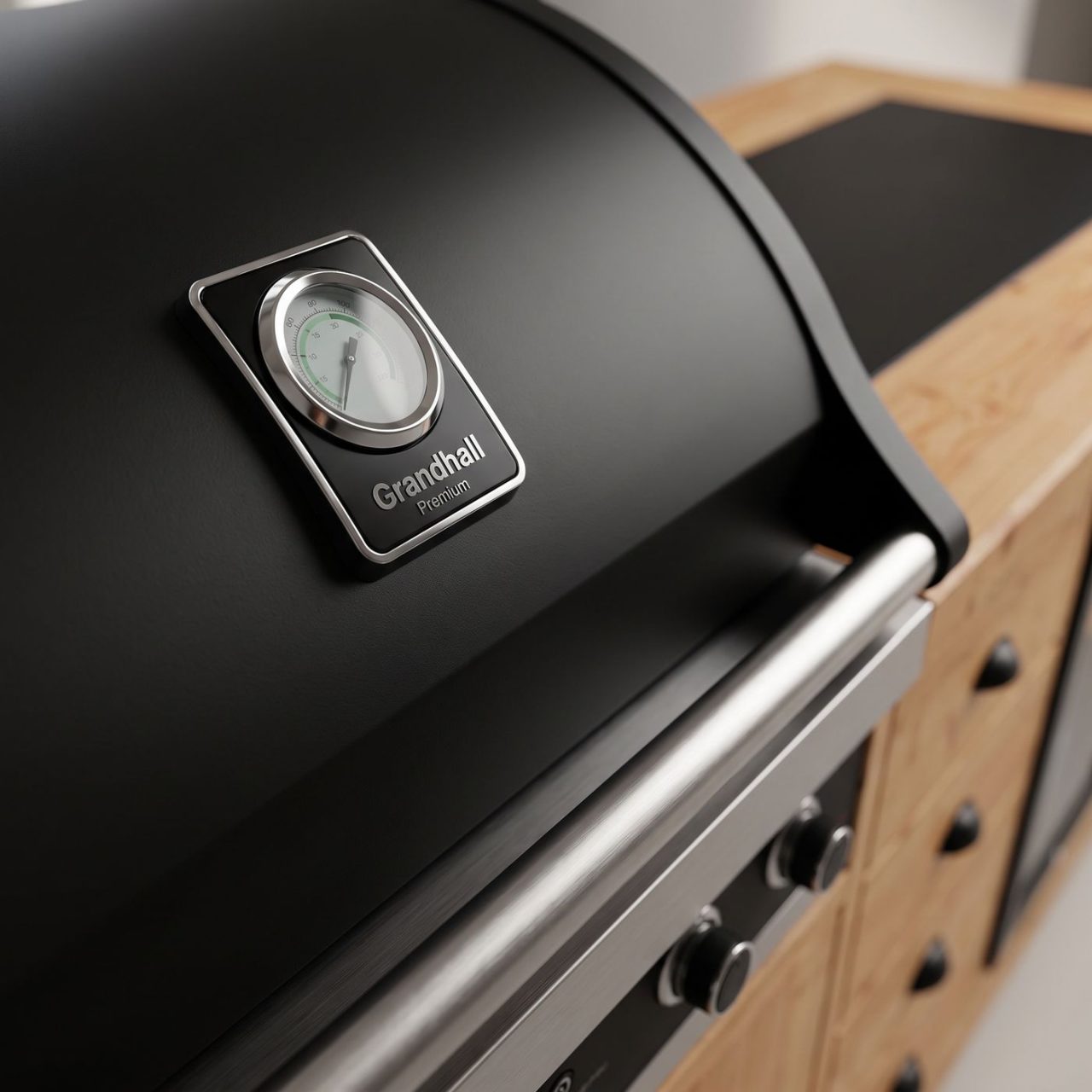
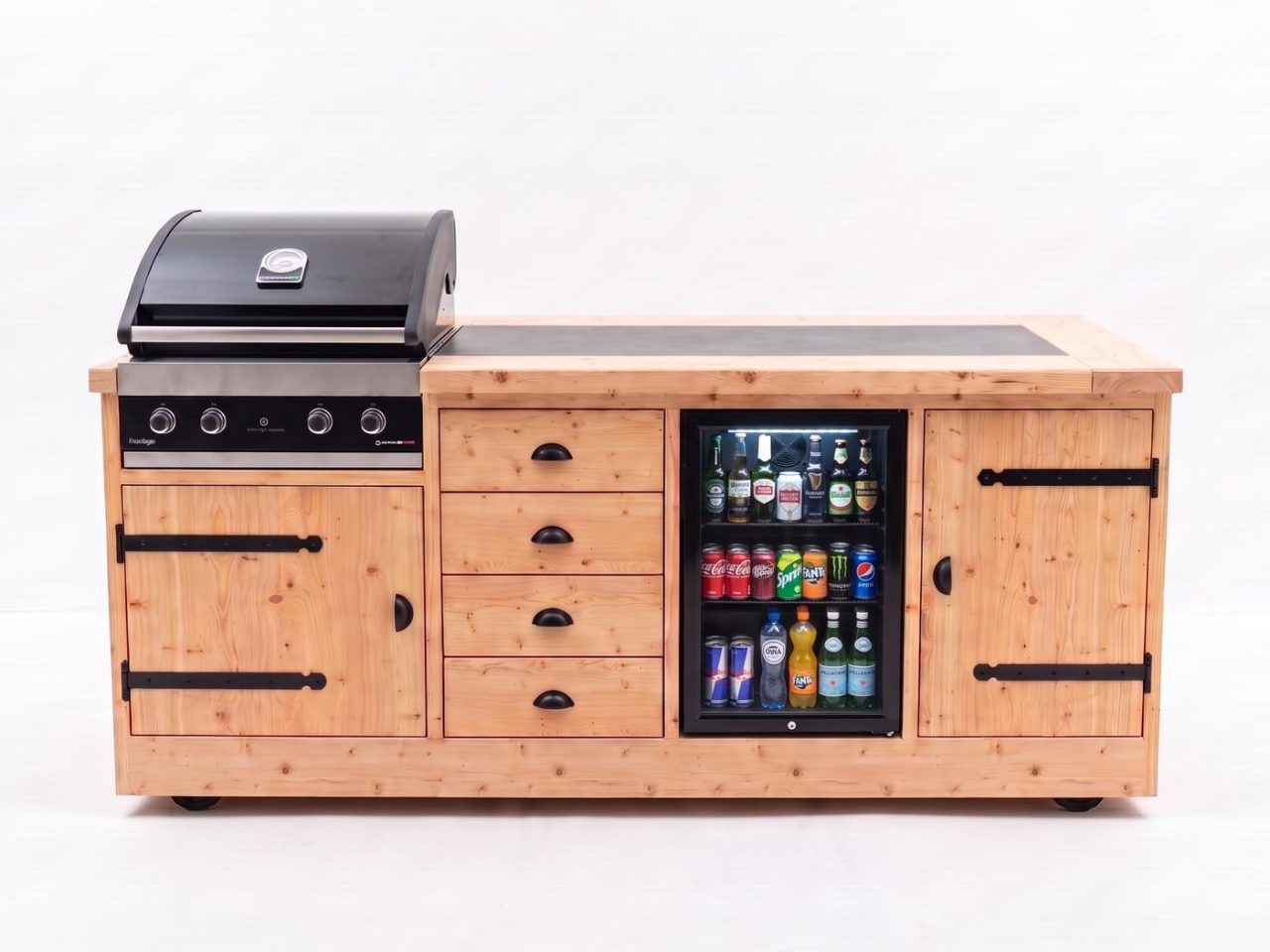
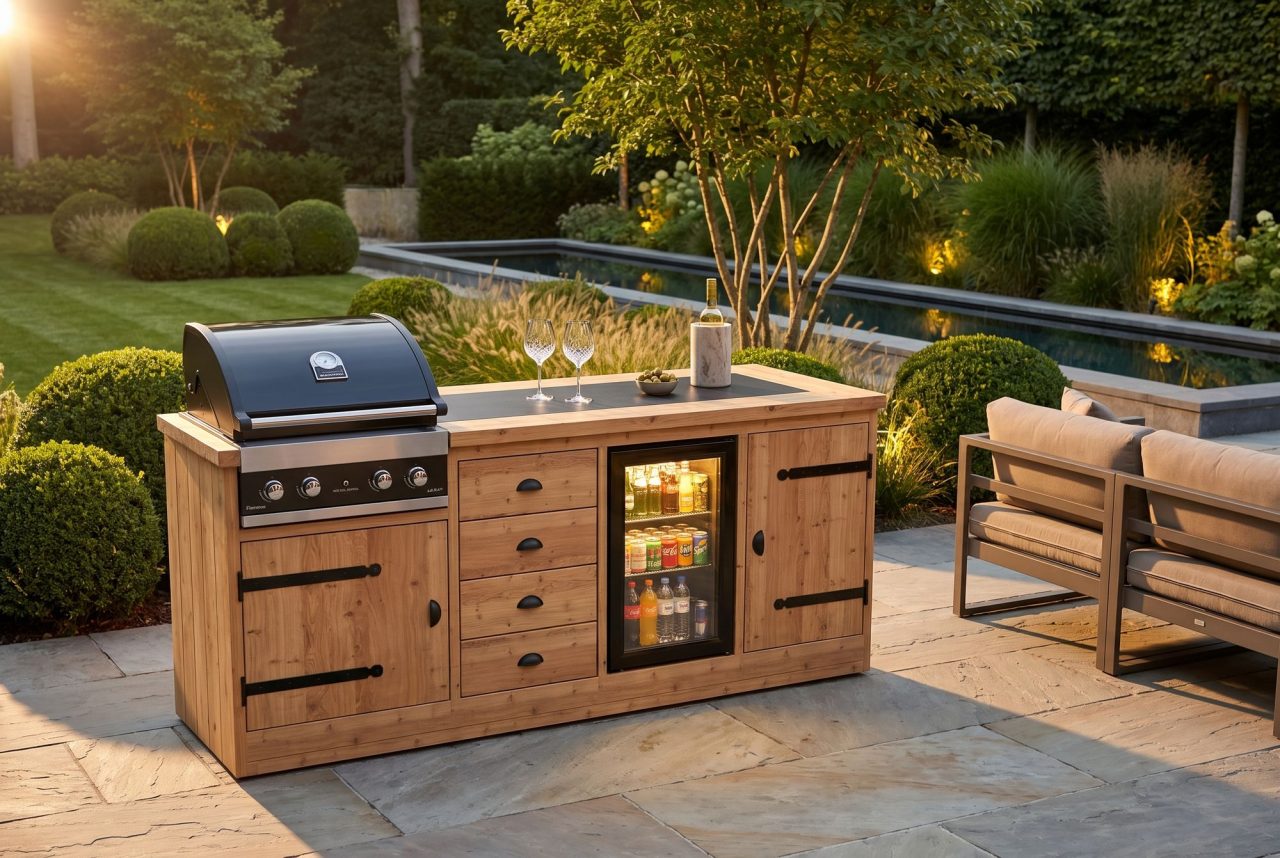
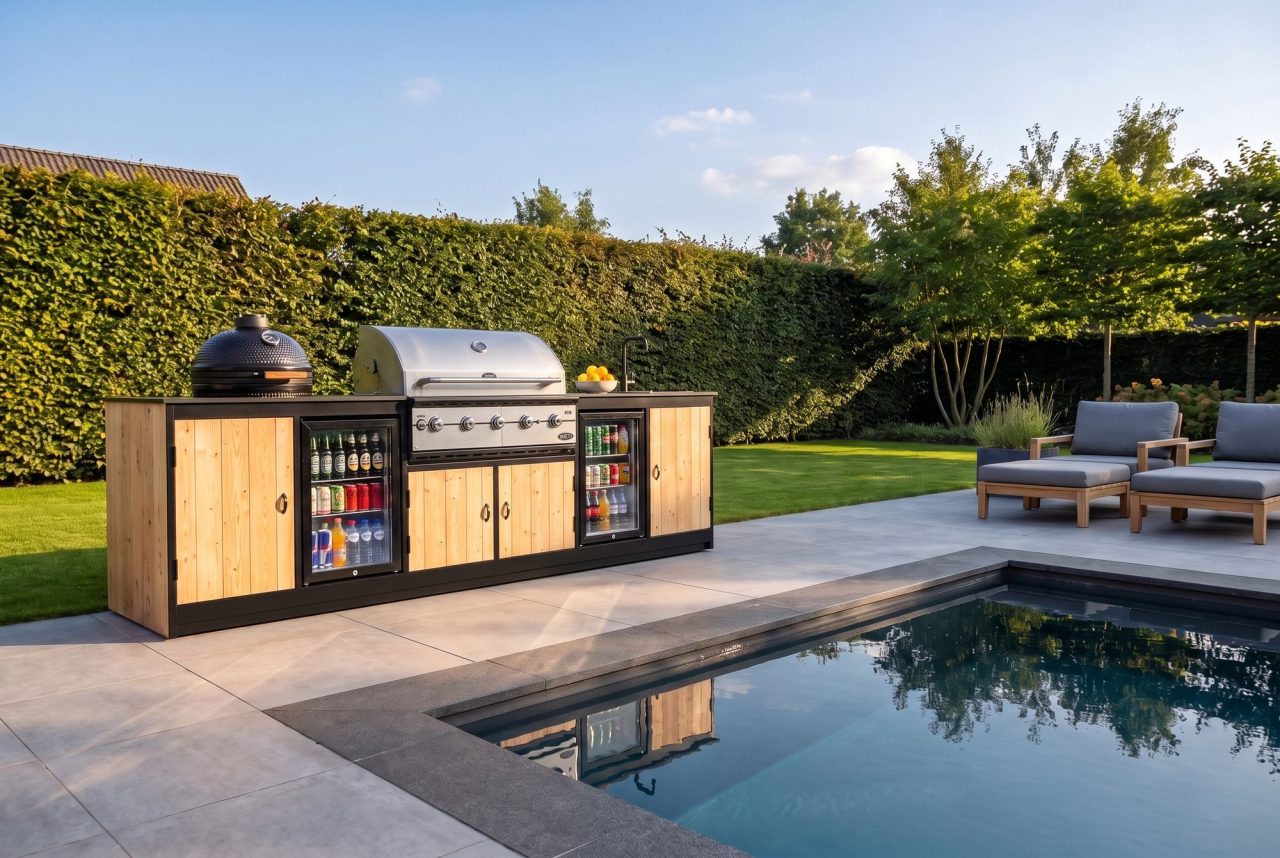
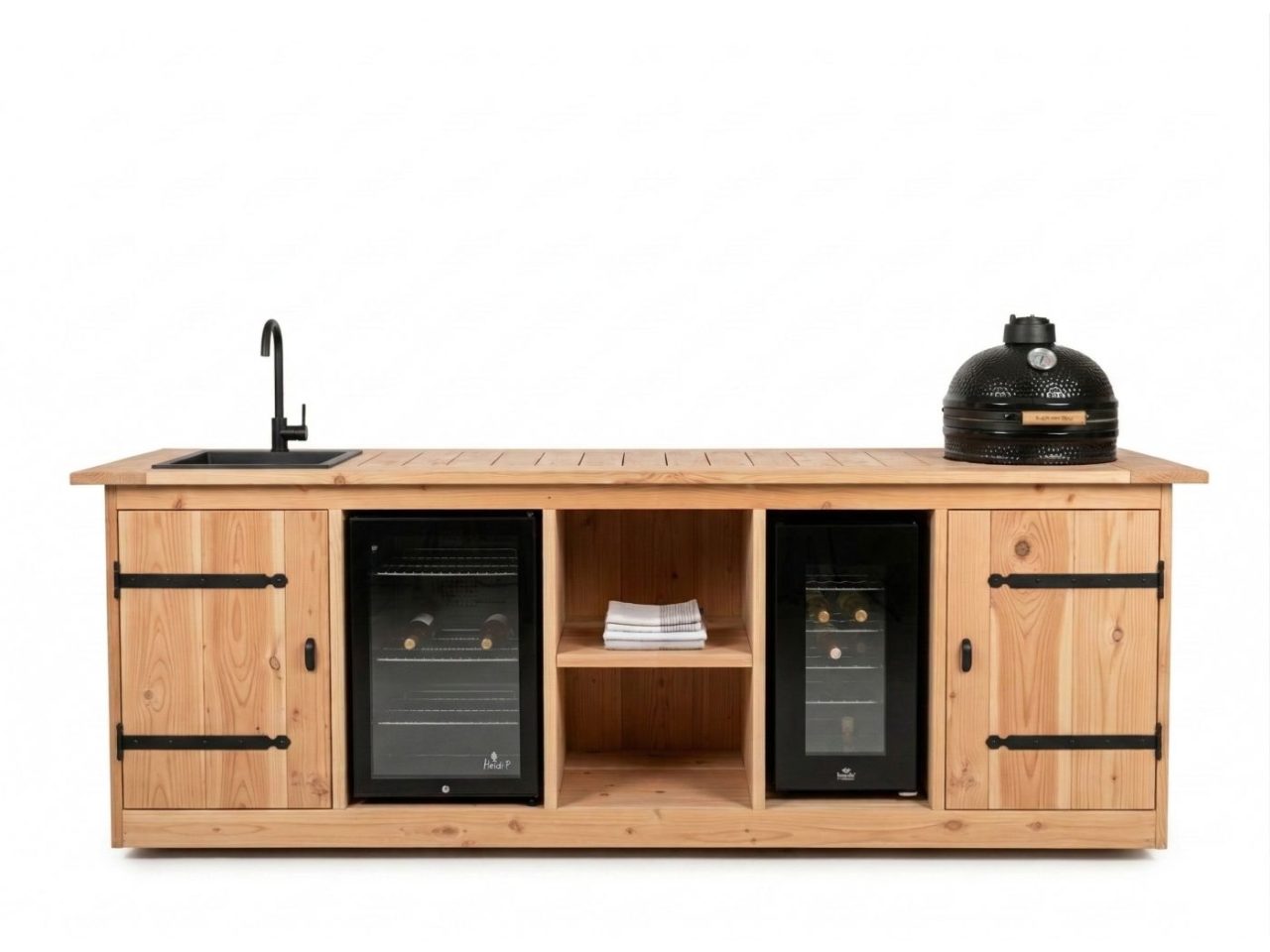
In an outdoor kitchen, the kamado works at worktop height, recessed into the worktop, so you stand upright at the grid with your tongs. We build standard models with a kamado of 16 inches (grid about 41 cm) or 18 inches (about 46 cm), for example the VARETTI Mirena 578 with a 16-inch kamado next to a Grandhall Premium G4 gas grill.
If you already have your own kamado, that works too: the worktops of our XL models have a cut-out for kamados up to 60 cm in diameter. Because ceramic is heavy, all our outdoor kitchens stand on castors. So you can still roll the whole thing comfortably into place.
What you should know before buying
A kamado also has characteristics you should allow for. It is heavy, so plan any change of location properly, once. It costs more than a steel grill of the same size. It takes longer to heat up, and controlling the air takes a little practice: expect a few barbecues before you can keep the temperature neatly on course. And ceramic is sensitive to hard knocks, so handle the lid with care.
If you plan for all that, you get an appliance that combines a smoker, a grill and a pizza oven in one dome. That is why kamado owners are so enthusiastic.
Frequently asked questions
What does kamado mean?
Kamado is a Japanese word meaning stove, hearth or oven. The name goes back to the traditional closed cooking stoves made of earth and clay that were used in Japan to cook rice. The modern kamado is the ceramic grill developed from this principle: a thick-walled, egg-shaped oven in which you control the temperature with air vents.
What is the difference between a kamado and a normal grill?
The difference between a kamado and a normal grill lies mainly in the ceramic wall. A kamado insulates, holds the temperature steady for hours between 70 and 400 degrees and uses less charcoal. A steel kettle barbecue is lighter and cheaper, loses heat through its metal and fluctuates in temperature. For low and slow cooking of 8 hours or more, the kamado therefore has a clear advantage.
Is a Big Green Egg the same as a kamado?
A Big Green Egg is a kamado, and kamado is also the umbrella term for many other brands. Kamado is the generic name for ceramic grills with air vents. Big Green Egg is the best-known brand within this group. Other brands work on the same principle: a thick ceramic dome, an air inlet at the bottom and an air vent at the top.
Why does a kamado cost more than a steel grill?
A kamado costs more than a steel grill because of its material and manufacture. The thick ceramic dome is fired and has to withstand large temperature differences for years. It is this ceramic you are paying for: it insulates, distributes heat evenly and reduces charcoal consumption. In a Varetti outdoor kitchen, the kamado comes already recessed into the worktop, with a 16- or 18-inch grid diameter.
Which size of kamado should you choose for an outdoor kitchen?
For an outdoor kitchen you will usually choose a 16- or 18-inch kamado, meaning a grid of about 41 or 46 cm in diameter. A 16-inch model is enough for a family. If you often grill for six or more people, 18 inches gives you noticeably more grill space. If you already have your own kamado, choose a worktop with a cut-out of up to 60 cm in diameter.
What can you cook on a kamado?
On a kamado you can smoke, grill, bake and cook low and slow for hours. Think smoked salmon at around 90 degrees, pulled pork at 110 degrees with a core temperature of 90 to 96 degrees, steaks at 250 degrees and pizza at 300 to 400 degrees on the pizza stone. With a rib rack or a cast-iron pan you can expand the possibilities even further.