There are three reasons to choose an outdoor kitchen made of Douglas fir. The wood is naturally durable (durability class 3, 10 to 15 years outdoors without ground contact), it is strong enough for a structure with a heavy kamado inside, and it offers value for money that keeps a complete kitchen within reach. There are drawbacks too. You will find them named openly here, because anyone who buys an outdoor kitchen purely for its advantages is disappointed after two summers.
What makes Douglas fir suitable for outdoors?
Douglas fir is suitable for outdoors because its heartwood contains resin that hardens over time, protecting the wood from within against fungi and rot. This puts Douglas fir in durability class 3 under DIN EN 350, and European-grown Douglas fir in class 3 to 4: kept off the ground, it lasts 10 to 15 years untreated. Treat it with oil or stain and you extend that.
Compared with spruce or pine, Douglas fir is also harder and heavier. According to the German home improvement site Hausjournal, it is one of the hardest European softwoods, and you notice that in how straight a kitchen frame stays.
One more thing: Douglas fir shrinks very little. So a worktop that holds chopping boards and pans stays level season after season.
Why wood planed on both sides and dried makes the difference
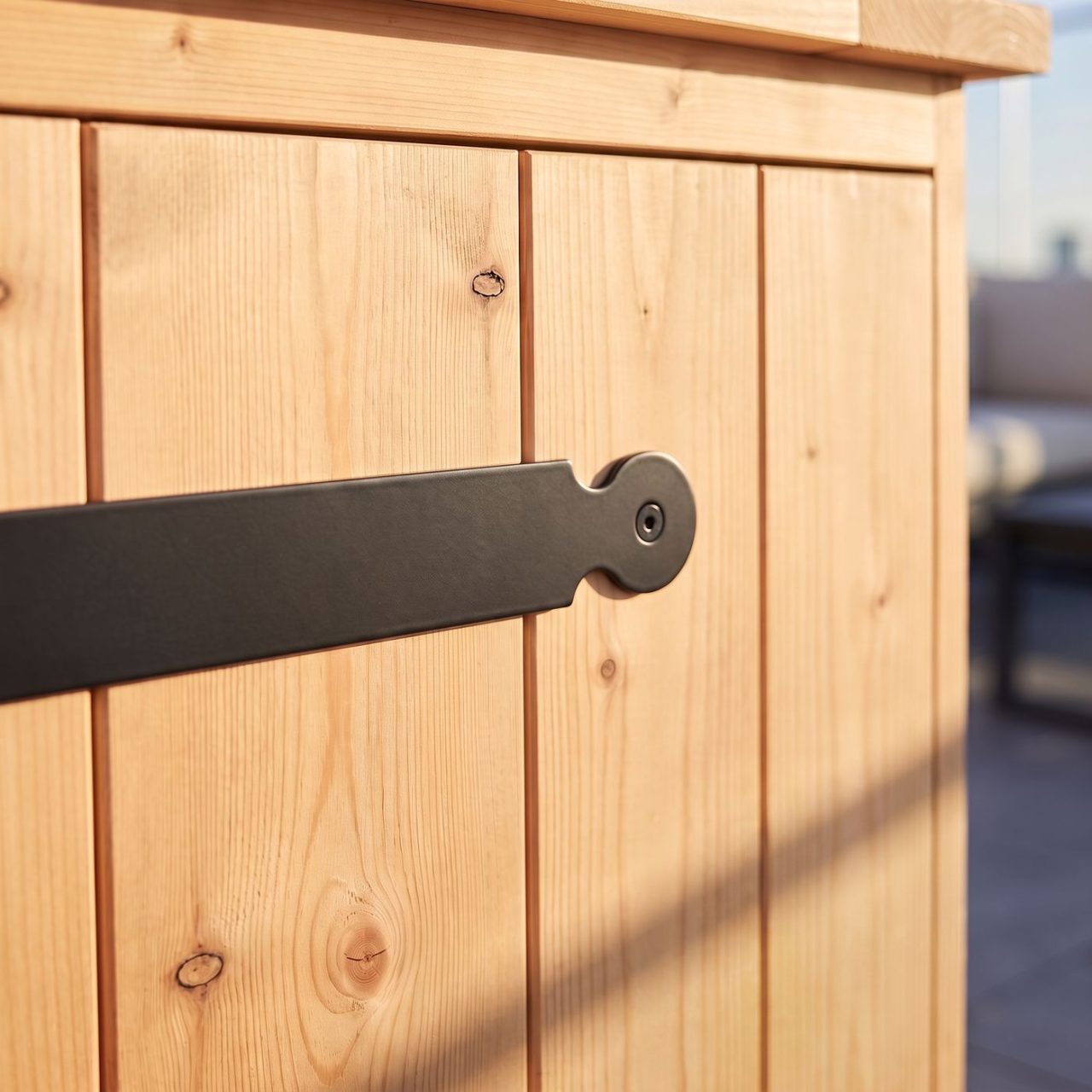
We build our outdoor kitchens in our workshop on the Slachthuiskade in Almelo, in the east of the Netherlands near Enschede, from Douglas fir that is planed on both sides and dried. The drying happens before a single screw goes into the wood.
Fresh Douglas fir contains a lot of moisture. If you work it wet, the frame warps in the first dry summer and joints open up. Dried wood has already done that moving. The planing gives a smooth surface and spares you splinters in your forearm while you cook.
What to allow for with Douglas fir
Douglas fir has drawbacks too, and keeping quiet about them would be nonsense. Untreated, the wood turns grey: within one to two years the warm, reddish-blond tone becomes silver grey. Some people love it. Others are annoyed by it.
If you want to keep the original colour, you have to oil or stain it every year. Every spring, all over again. And yes, that gets tiresome at some point, especially when the kitchen is 3 metres wide and the fence in the same shade needs doing as well. If you opt for wood stained black, expect the colour to lighten slowly in full sun.
Douglas fir can also exude resin, especially where the sun shines fully on the wood. A drop of resin on the frame is harmless and can be removed with a scraper, but it is sticky and sometimes comes back. And although Douglas fir is hard for a softwood, it remains softer than hardwood. A falling cast-iron pan leaves a dent, and the dent stays.
Which wood is suitable for an outdoor kitchen?
For an outdoor kitchen, Douglas fir, scaffolding boards and hardwood are the three common choices, and Douglas fir sits right in the middle on price and lifespan. An outdoor kitchen made of scaffolding boards is cheaper and has a rough, lived-in look, but scaffolding wood is usually spruce, which falls into durability class 4 (5 to 10 years) and therefore needs care sooner outdoors. Hardwood such as bangkirai lasts longest (class 2, 15 to 25 years) but is considerably more expensive and its weight makes construction more demanding.
Douglas fir combines a long lifespan with a price at which a complete outdoor kitchen remains achievable. On the page about types of wood for an outdoor kitchen, we compare the three in more detail.
How do you look after a Douglas fir outdoor kitchen?
You look after a Douglas fir outdoor kitchen with a yearly treatment of stain or wood oil for your outdoor kitchen, ideally in spring. Lightly sand the wood before oiling so the oil adheres better. Wipe up grease splashes from cooking straight away with a damp cloth before they soak into the wood.
We can also give the wood a nano coating, so grease and moisture adhere less and cleaning up after an afternoon of grilling is quicker. A cover in winter is optional, but it noticeably extends the life of the worktop.
Douglas fir outdoor kitchens in five widths
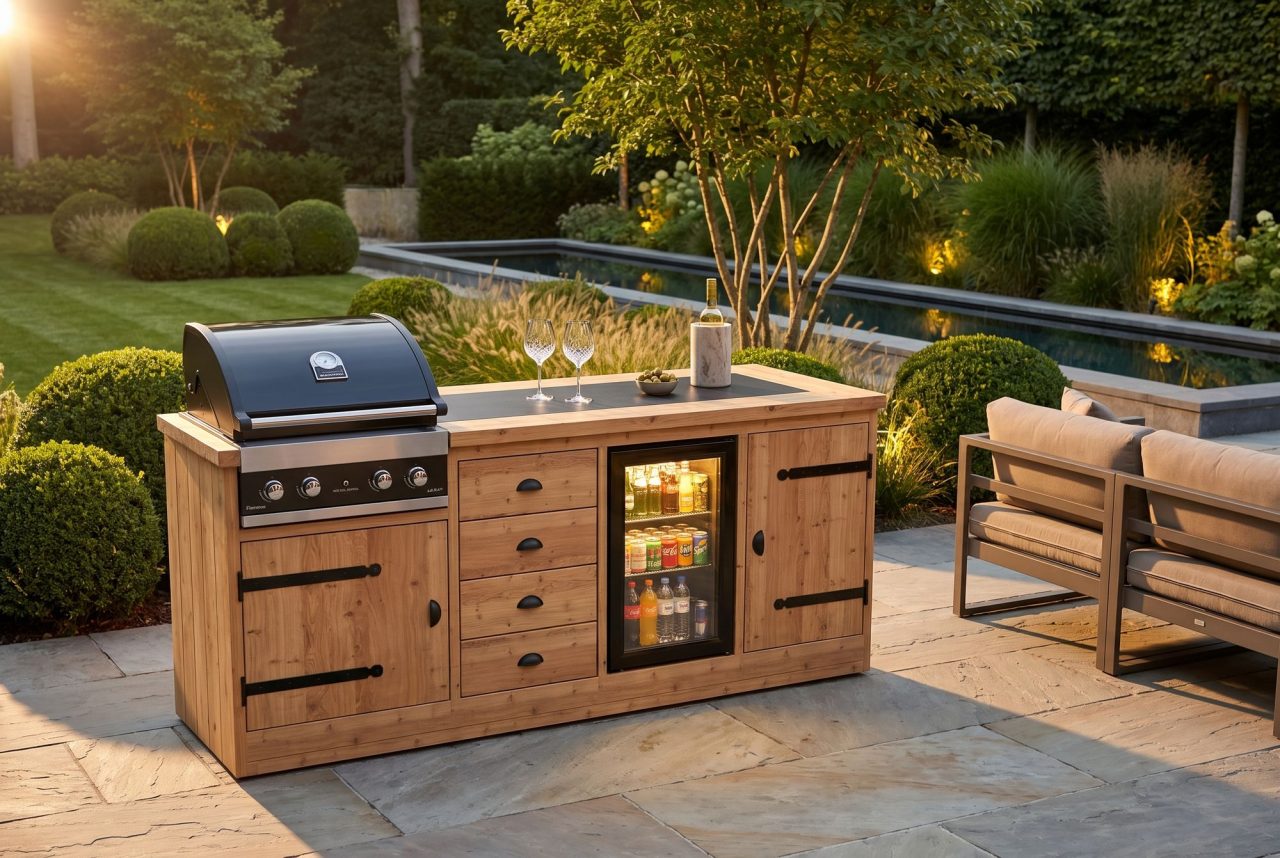
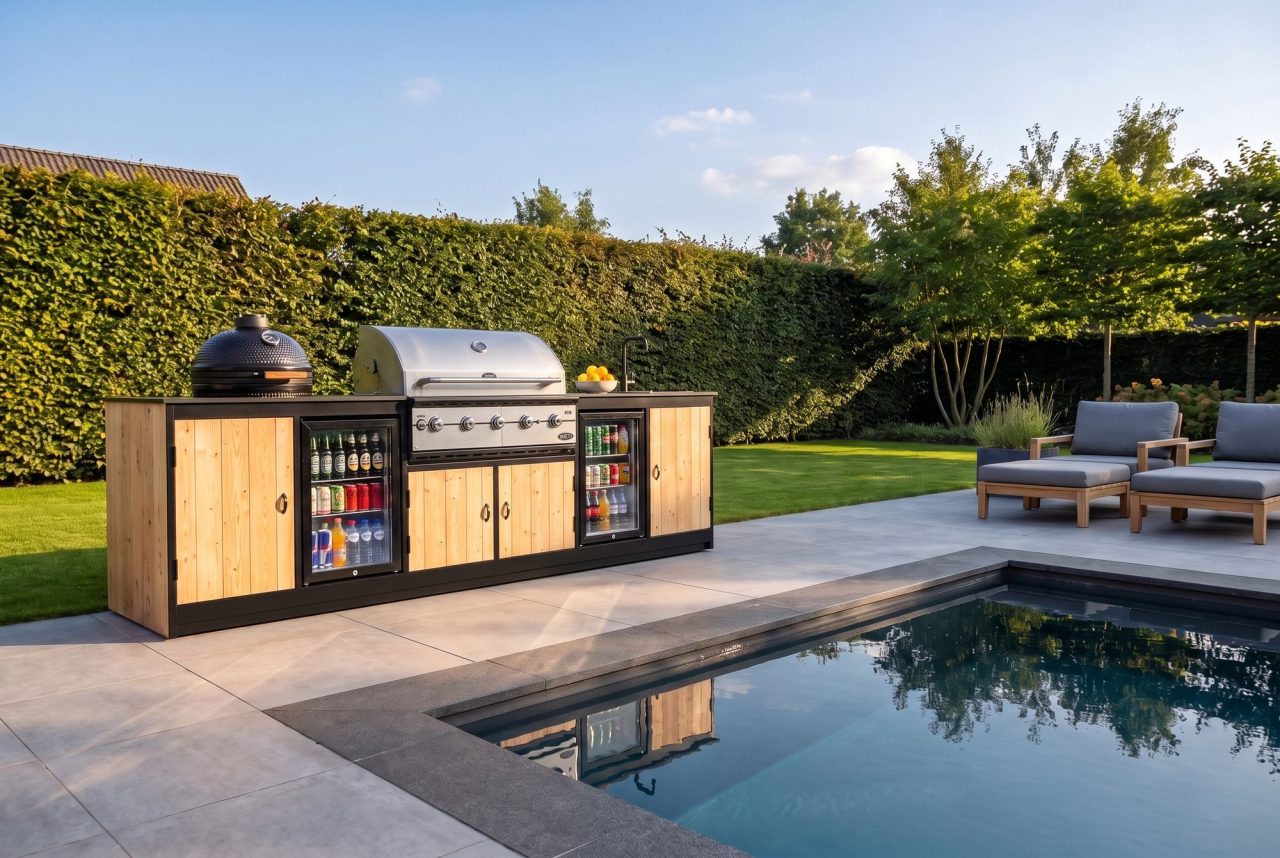
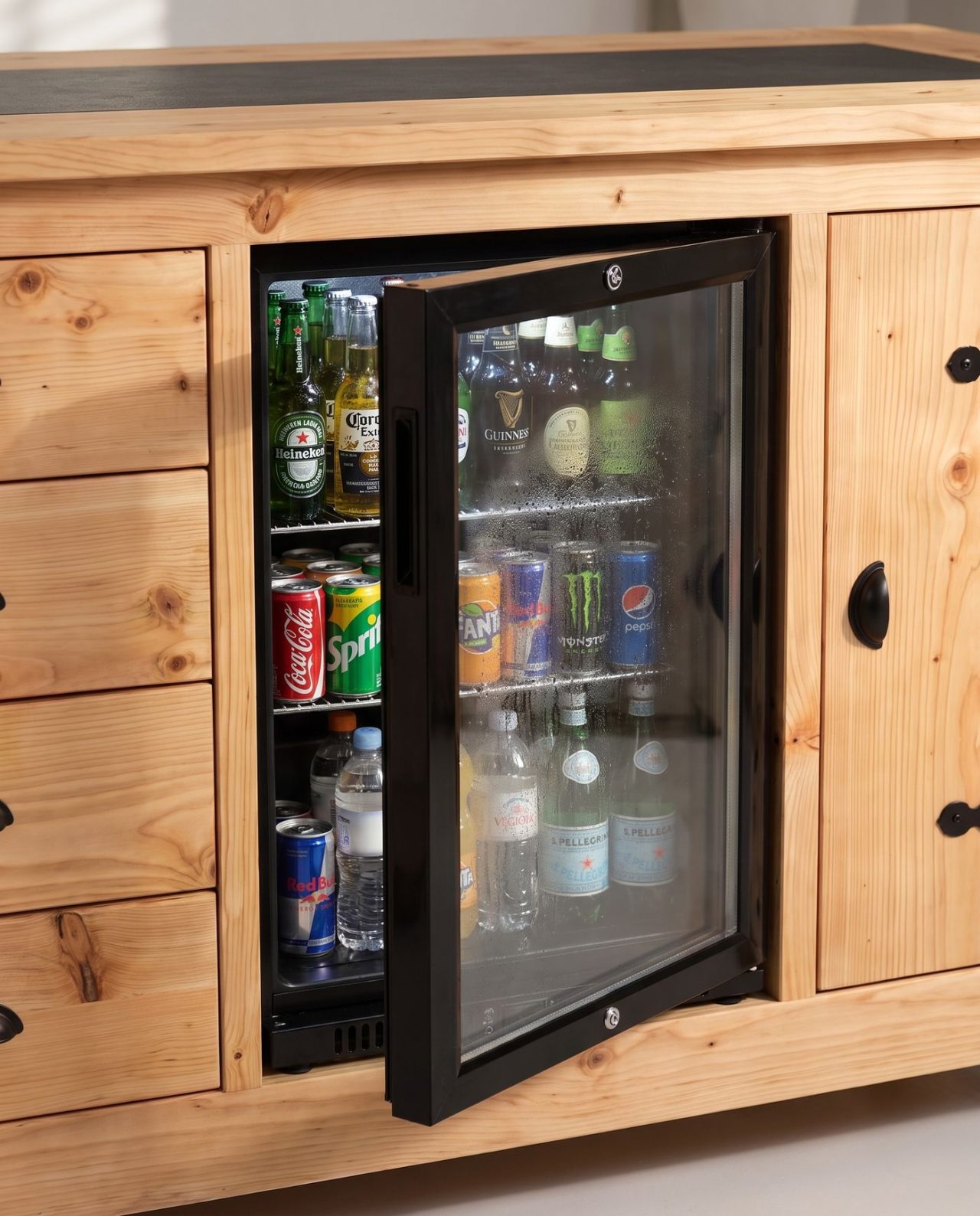
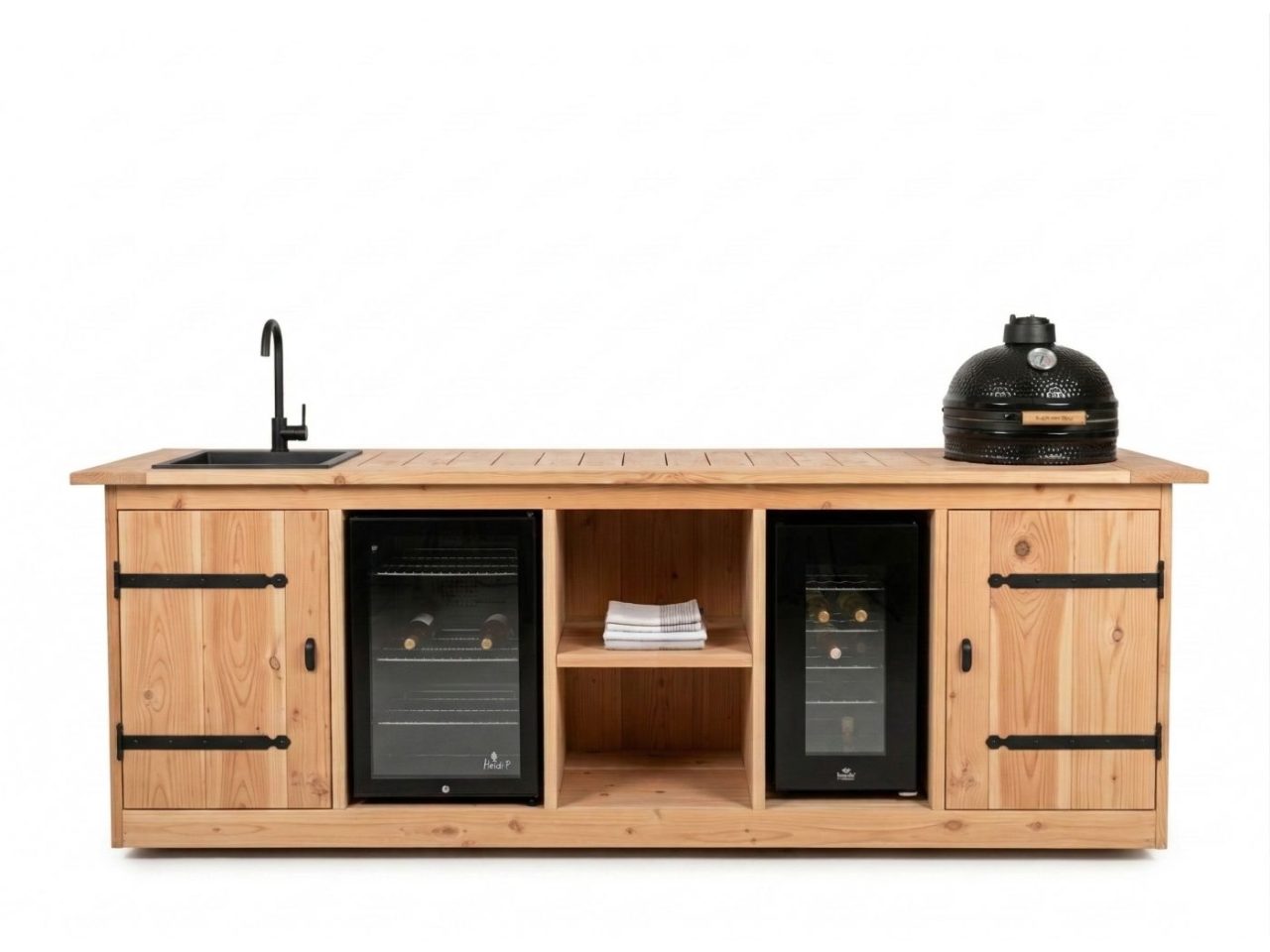
Our Douglas fir outdoor kitchens come in 22 standard models across five widths: 109, 157, 205, 253 and 301 centimetres. Every width can be combined with a 16- or 18-inch kamado, a built-in gas grill from Grandhall or Boretti, a 70-litre fridge or a wine cooler for 18 bottles.
You can choose the worktop in Douglas fir or in 12-millimetre sintered stone, in colours such as Black Betty, Snowy White, Granny Grey and Gold Flames. If you need a different size for your patio, we build to measure via the configurator. Everything is made in our workshop in Almelo and delivered fully assembled.
Frequently asked questions
Is Douglas fir suitable for outdoor use?
Douglas fir is well suited to outdoor use: it falls into durability class 3 and, kept off the ground, lasts 10 to 15 years, even untreated. The resin in the heartwood hardens over the years and protects the wood from within against fungi and rot. With a yearly treatment of oil or stain, a Douglas fir outdoor kitchen lasts even longer.
How long does a Douglas fir outdoor kitchen last?
A Douglas fir outdoor kitchen lasts 10 to 15 years untreated, provided the wood is kept off the ground. Treat it every year with oil or stain and you extend that lifespan. The basics are just as important: dried and planed wood, stainless steel screws and a level base so the frame stays true.
Does a Douglas fir outdoor kitchen turn grey?
A Douglas fir outdoor kitchen turns grey if you leave the wood untreated: within one to two years the reddish-blond tone becomes silver grey. That is a matter of taste; the strength is unaffected. If you want to keep the original colour, treat the wood with oil or stain every spring. Douglas fir stained black, on the other hand, slowly lightens in full sun.
What is the difference between an outdoor kitchen made of Douglas fir and one made of scaffolding boards?
The difference between Douglas fir and scaffolding boards lies in durability and look. Douglas fir is harder, shrinks little and falls into durability class 3. Scaffolding wood is usually spruce in class 4, cheaper and in need of care sooner outdoors. Scaffolding boards look rough and lived-in, Douglas fir warmer and cleaner. For a kitchen that will stand outside for years, Douglas fir is the more solid choice.
Where does Varetti build its Douglas fir outdoor kitchens?
Varetti builds all its Douglas fir outdoor kitchens in its own workshop at Slachthuiskade 36 in Almelo, near Enschede and the Dutch-German border, from Douglas fir planed on both sides and dried. There are 22 standard models in widths from 109 to 301 centimetres, plus made-to-measure via the configurator. Every kitchen is delivered fully assembled. You can visit our showroom by appointment.